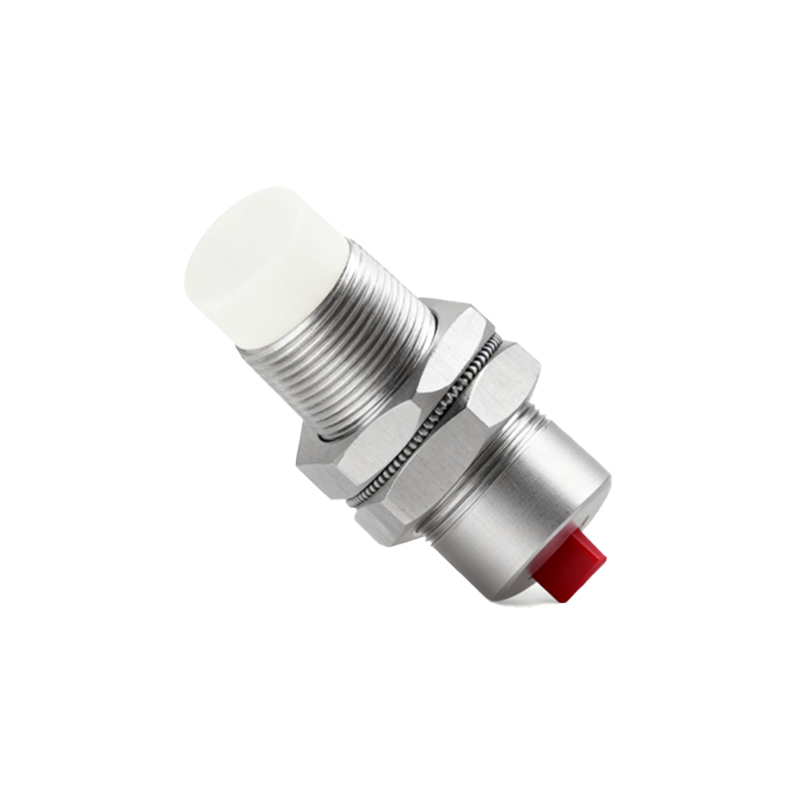
In the realm of industrial automation and control systems, proximity inductive sensors stand as fundamental components for non-contact object detection. These robust and reliable devices are engineered to detect the presence or absence of metallic objects without any physical contact, making them indispensable in harsh manufacturing environments. Their operation is rooted in the principles of electromagnetic induction, offering a blend of precision, durability, and versatility that few other sensing technologies can match.
The core working principle of a proximity inductive sensor involves an oscillator circuit that generates a high-frequency electromagnetic field at the active face of the sensor. This field is emitted from a coil wound around a ferrite core. When a metallic object enters this oscillating field, eddy currents are induced on the surface of the target. These eddy currents draw energy from the oscillator, resulting in a measurable energy loss or amplitude reduction. An evaluation circuit within the sensor monitors this change in oscillation amplitude. Once the amplitude drops below a predefined threshold—indicating the object is within the specified sensing range—the sensor's output state switches, typically from open to closed (for a PNP normally-open configuration) or vice versa. This switching action provides a clear signal to a programmable logic controller (PLC) or other control unit, triggering subsequent actions in the machinery, such as stopping a conveyor, initiating a weld, or counting parts.
Key performance specifications define the suitability of an inductive sensor for a given application. The sensing distance is a critical parameter, typically standardized as the nominal operating distance (Sn). It is crucial to note that this rated distance is defined for a standard target made of mild steel (e.g., Fe360). For other metals, a correction or reduction factor must be applied; for instance, stainless steel may reduce the effective range by 20-30%, while copper or aluminum can reduce it by 50% or more. Hysteresis is another vital characteristic, representing the difference between the switch-on point (as the target approaches) and the switch-off point (as it moves away). This built-in hysteresis prevents output chattering when a target is positioned precisely at the sensing limit, ensuring stable switching. Furthermore, repeat accuracy defines the sensor's consistency in detecting the same target under identical conditions, a factor paramount for high-precision positioning tasks.
The applications for inductive proximity sensors are vast and varied across industries. In material handling, they are used for pallet detection, conveyor jam prevention, and bottle cap presence verification on filling lines. In automotive manufacturing, they monitor robot end-effector positions, detect pistons in cylinders, and confirm the closure of stamping press guards for safety. Machine tools employ them for tool breakage detection, spindle positioning, and workpiece clamping confirmation. Their inherent resistance to environmental contaminants—such as dust, oil, coolant, and non-metallic debris—makes them superior to optical or capacitive sensors in dirty or wet conditions. The availability of different housing materials, like nickel-plated brass, stainless steel (particularly V4A/AISI 316L for corrosive environments), or PBT plastic, allows for deployment in chemically aggressive settings.
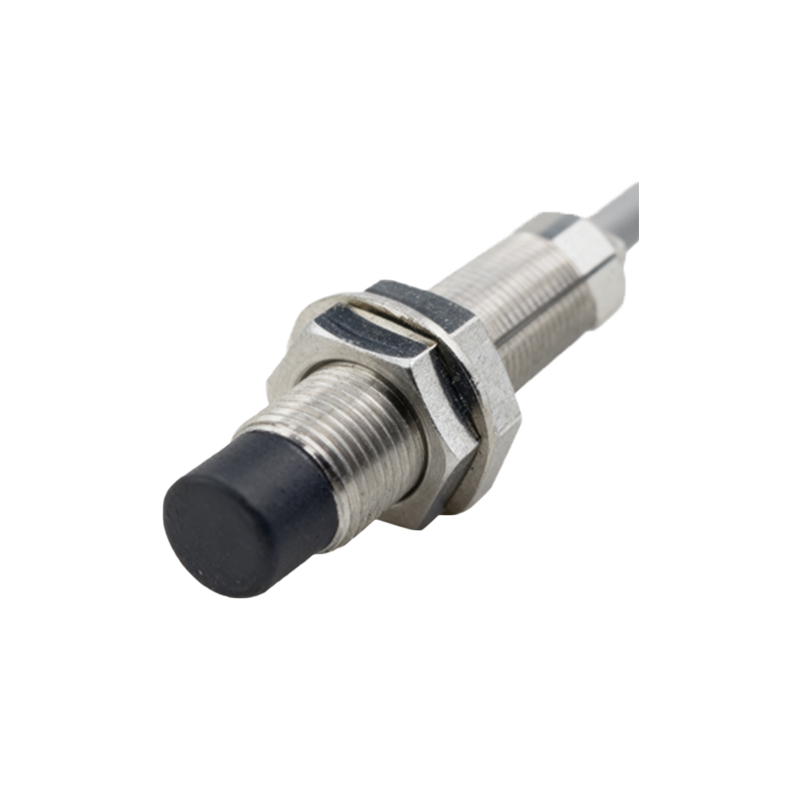
When selecting an inductive proximity sensor, engineers must consider several factors beyond just the sensing range. The target material and size directly impact performance; the target should generally be larger than the sensor's face for reliable detection at the rated distance. Output configuration is crucial for integration: PNP (sourcing) and NPN (sinking) transistor outputs are standard, with 2-wire, 3-wire, and 4-wire (with dual independent outputs or analog output) variants available. The choice depends on the PLC input module specifications. Housing style is selected based on mounting constraints: cylindrical threaded barrels (e.g., M8, M12, M18, M30) are common, while rectangular or slot-style housings suit specific fixturing needs. Protection ratings per IEC standards, such as IP67 (protection against dust immersion and temporary water immersion) and IP69K (protection against high-pressure, high-temperature washdowns), are essential for reliability in demanding plants. Additionally, special variants like factor-1 sensors (capable of detecting all metals at the same range), weld-field immune models (for use near resistance welding equipment), and analog output sensors (providing a continuous signal proportional to distance) address niche but critical requirements.
In conclusion, proximity inductive sensors are a cornerstone of modern industrial sensing. Their non-contact nature, immunity to environmental challenges, and straightforward integration into control systems make them a preferred choice for detecting metallic objects. A thorough understanding of their operating principles, key specifications, and the detailed selection criteria outlined above enables engineers and technicians to deploy these sensors effectively, ensuring enhanced machine reliability, improved safety, and optimized production efficiency across countless automated processes.