In the intricate world of industrial automation and machinery monitoring, proximity speed sensors stand as critical components for ensuring operational efficiency, safety, and predictive maintenance. These sensors, often non-contact in nature, detect the presence, absence, or speed of a target object—typically a metallic gear tooth, shaft keyway, or encoder disc—by generating an electromagnetic field or utilizing other principles like capacitive or inductive sensing. Their primary function in speed measurement is to provide real-time data on rotational or linear velocity, which is indispensable for process control and equipment protection.
The operational principle of common inductive proximity speed sensors involves an oscillator circuit that creates a high-frequency electromagnetic field at the sensing face. When a metallic target approaches this field, eddy currents are induced in the target, causing a change in the oscillator's amplitude. This change is detected and converted into a digital signal, often a pulse train where the frequency of pulses corresponds directly to the target's speed. For instance, in monitoring a rotating shaft with a keyway or gear, each passing tooth triggers a pulse. By counting these pulses over a known time interval, the rotational speed in revolutions per minute (RPM) can be accurately calculated using the formula: Speed (RPM) = (Pulse count per revolution × Frequency of pulses) / 60. This data is then fed into programmable logic controllers (PLCs) or supervisory control and data acquisition (SCADA) systems for real-time analysis and control actions.
The applications of proximity speed sensors are vast and varied across industries. In automotive manufacturing, they monitor the speed of assembly line conveyors and robotic arms to synchronize operations. Within the energy sector, particularly in wind turbines and gas turbines, these sensors are vital for monitoring shaft speed to prevent overspeed conditions that could lead to catastrophic failure. In the pulp and paper industry, they ensure consistent web speed in rolling machines, while in metal processing, they help control the speed of rolling mills and cutting equipment. Their role extends to condition monitoring, where changes in vibration signatures or speed fluctuations can indicate issues like bearing wear, imbalance, or misalignment long before a breakdown occurs, enabling predictive maintenance strategies.
Selecting the appropriate proximity speed sensor requires careful consideration of several parameters. The sensing range, or the maximum distance at which the sensor can reliably detect the target, must be suitable for the application. Response frequency defines how quickly the sensor can react to changes, crucial for high-speed machinery. Environmental factors such as temperature extremes, humidity, dust, oil, and corrosive chemicals dictate the required housing material and ingress protection (IP) rating. Output type is another key decision; options include NPN/PNP digital outputs, analog voltage/current outputs proportional to speed, or even IO-Link for advanced diagnostics and parameterization. Proper installation is equally critical, ensuring correct alignment, gap distance, and secure mounting to avoid false triggers or signal loss.
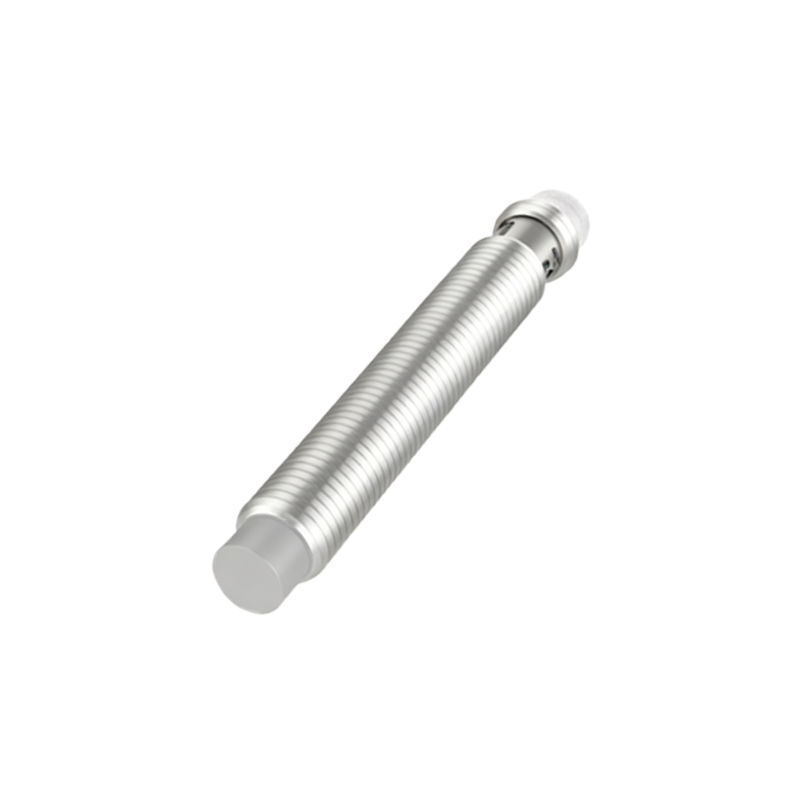
The advantages of using proximity speed sensors are numerous. Their non-contact nature eliminates mechanical wear, leading to longer service life and reduced maintenance. They offer high accuracy and repeatability in speed measurement, essential for precision control. With no moving parts, they are highly reliable in harsh industrial environments. Furthermore, modern sensors integrate self-diagnostic features, providing alerts for issues like sensor head contamination or wiring faults, thereby enhancing system uptime.
In conclusion, proximity speed sensors are indispensable tools in the industrial engineer's arsenal. They provide the essential data link between physical motion and control systems, driving automation, enhancing safety, and enabling smarter maintenance. As Industry 4.0 and the Industrial Internet of Things (IIoT) evolve, the integration of these sensors with intelligent networks will further amplify their role, facilitating data-driven decision-making for optimized productivity and asset management. Understanding their function, application, and selection criteria is paramount for any professional involved in the design, operation, or maintenance of modern industrial machinery.