In the rapidly evolving landscape of industrial automation and consumer electronics, the integration of touchscreen interfaces with proximity sensing technology has become a cornerstone of modern electrical design. This synergy enhances user interaction, improves safety, and optimizes energy efficiency across various applications, from manufacturing floors to smart home devices. As an experienced electrical engineer, I will delve into the technical principles, implementation strategies, and future trends of this powerful combination.
Touchscreens, primarily based on capacitive or resistive technologies, allow direct manipulation of digital controls through physical touch. Capacitive touchscreens, widely used in smartphones and industrial panels, detect changes in electrical fields caused by conductive objects like human fingers. Resistive touchscreens, common in rugged environments, respond to pressure applied to their surfaces. When paired with proximity sensors—devices that detect the presence or absence of nearby objects without physical contact—these systems gain an additional layer of intelligence. Proximity sensors, including inductive, capacitive, and infrared types, can trigger actions based on object distance, such as waking a device from sleep mode or activating safety protocols in machinery.
The integration process involves careful consideration of hardware compatibility and software algorithms. For instance, in an industrial control panel, a capacitive proximity sensor might be embedded around the touchscreen to detect an operator's approach. This sensor can then activate the display backlight or preload relevant data, reducing response time and power consumption. In automotive infotainment systems, infrared proximity sensors often prevent accidental touches by disabling the touchscreen when a hand is too close during driving. Engineers must address challenges like electromagnetic interference (EMI) between components, ensuring sensors and touchscreens operate reliably in noisy electrical environments. Calibration is critical; proximity sensors need precise threshold settings to avoid false triggers, while touchscreens require accurate sensitivity tuning to maintain responsiveness.
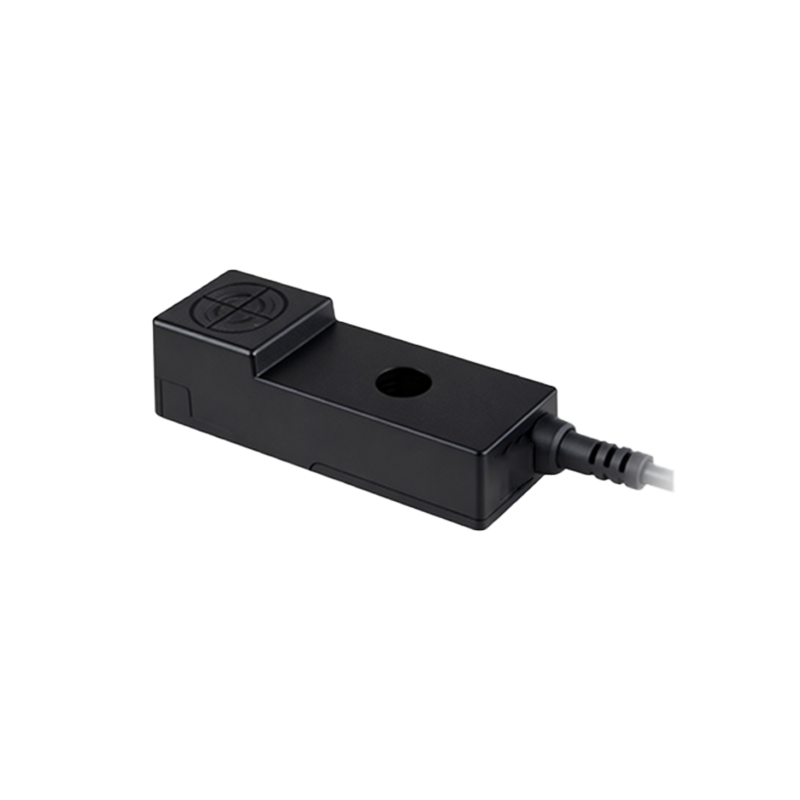
From a design perspective, selecting the right sensor type depends on the application. Inductive proximity sensors are ideal for detecting metallic objects in factory automation, whereas capacitive sensors excel in sensing non-metallic materials or human presence. Infrared sensors offer long-range detection suitable for gesture control in consumer electronics. Integrating these with touchscreens often involves microcontrollers or programmable logic controllers (PLCs) that process input signals and execute commands. For example, in a smart thermostat, a proximity sensor can detect user approach, waking the touchscreen interface to adjust temperature settings seamlessly. This not only improves user experience but also extends device lifespan by minimizing screen-on time.
Energy efficiency is a significant advantage of this integration. By using proximity sensors to monitor activity, systems can enter low-power states when idle, reducing overall energy consumption. In large-scale installations like building management systems, this can lead to substantial cost savings and environmental benefits. Safety enhancements are equally important; in hazardous industrial settings, proximity sensors can deactivate machinery if a worker gets too close, while touchscreens provide clear visual feedback for emergency overrides. The combination also supports accessibility, allowing customized interfaces for users with disabilities through adaptive sensing and touch responses.
Looking ahead, advancements in artificial intelligence (AI) and the Internet of Things (IoT) are set to revolutionize touchscreen-proximity sensor systems. AI algorithms can predict user intent based on proximity data, enabling anticipatory actions like pre-loading applications. IoT connectivity allows remote monitoring and updates, facilitating predictive maintenance for industrial equipment. Emerging technologies such as haptic feedback touchscreens and 3D gesture-sensing proximity detectors will further blur the line between physical and digital interactions. Engineers must stay abreast of these trends, focusing on robust cybersecurity measures and interoperability standards to ensure secure, scalable deployments.
In conclusion, the fusion of touchscreen and proximity sensor technologies represents a pivotal development in electrical engineering. By enabling intuitive, efficient, and safe interactions, this integration drives innovation across sectors. Successful implementation requires a deep understanding of both hardware and software aspects, coupled with a forward-thinking approach to emerging challenges. As we move toward more interconnected and automated systems, mastering this synergy will be essential for creating next-generation electrical solutions that meet evolving user demands and sustainability goals.