In the realm of industrial automation and control systems, proximity switch sensors are indispensable components. Their primary function is to detect the presence or absence of an object without physical contact, relying instead on changes in an electromagnetic field, light, or sound. The core of this non-contact detection lies in the sensor's sensing point—a critical concept for engineers to master for optimal system design, installation, and troubleshooting.
The sensing point, often referred to as the operating point or switching point, is the precise distance from the sensor's active face at which it reliably detects a standard target and changes its output state. This is not a single, fixed distance but rather a defined range influenced by the sensor's technology and specifications. Understanding this parameter is paramount. For inductive proximity sensors, the standard target is typically a square of mild steel (Fe360) with a side length equal to the sensor's rated sensing distance or three times the nominal sensing distance (Sn), depending on the standard (e.g., IEC 60947-5-2). For capacitive sensors, the target material's dielectric constant plays a significant role, and for photoelectric sensors, the target's reflectivity and size are key factors.
Several technical specifications define and constrain the sensing point. The rated operating distance (Sn) is the nominal value used to classify the sensor. However, the effective operating distance (Sr) is the practical range under specified conditions, including voltage and temperature. Due to manufacturing tolerances and environmental factors, this effective distance can vary between 90% and 110% of Sn. For reliable operation, the assured operating distance (Sa) is used. This is a guaranteed switching distance, typically 0 to 81% of Sn, within which the sensor will always actuate under all permitted conditions. Designing with the assured distance ensures fail-safe operation, preventing failures due to mechanical misalignment or drift.
The choice of target material dramatically affects the sensing point. Inductive sensors are tuned for ferrous metals. For non-ferrous metals like aluminum, brass, or copper, the effective sensing distance is reduced—a phenomenon quantified by a reduction factor. Stainless steel, depending on its grade, also typically has a reduction factor less than 1.0. Engineers must consult sensor datasheets for these correction factors to calculate the real-world sensing distance. Capacitive sensors are less affected by metal type but are highly sensitive to material density and moisture content.
Environmental conditions are non-negligible. Temperature fluctuations can cause thermal drift, slightly shifting the sensing point. High ambient temperatures can reduce the sensing distance and potentially damage the sensor. Electrical noise from variable frequency drives (VFDs) or welding equipment can cause false triggering. Proper shielding, grounding, and maintaining a safe distance from noise sources are essential. For sensors in washdown or outdoor environments, an appropriate Ingress Protection (IP) rating is necessary to prevent contamination from liquids or solids that could alter the sensing characteristics.
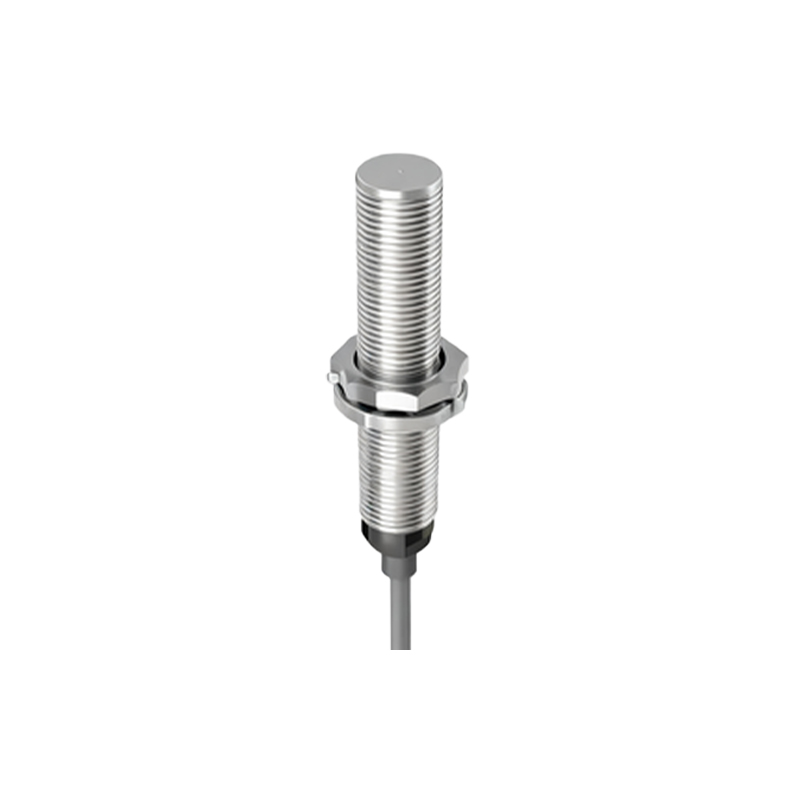
Installation practices directly impact sensing point accuracy and longevity. A fundamental rule is to maintain adequate clearance around the sensor's active face. Mounting the sensor flush in metal creates a shielding effect, reducing its effective range. Non-flush mountable sensors are designed with shielding to allow side-by-side installation without mutual interference, but they still require a clear frontal area. The approach direction of the target should be perpendicular to the active face to ensure consistent detection. Angled approaches can shorten the effective sensing distance.
In conclusion, the sensing point of a proximity sensor is a dynamic parameter, not a static number. Successful implementation requires a holistic understanding of the sensor's technology, the target's properties, the operating environment, and correct mechanical installation. By designing with the assured operating distance (Sa), accounting for material reduction factors, and mitigating environmental interference, electrical engineers can build robust, reliable, and maintenance-free sensing systems. Always prioritize consulting the manufacturer's detailed technical datasheet over generic catalog values, as it contains the specific data—temperature curves, reduction factors, and response times—necessary for precision engineering in demanding industrial applications.
