In modern industrial automation and smart building applications, proximity sensors have become indispensable components for enabling contactless control of lighting systems. As an electrical engineer with over 15 years of field experience, I will elaborate on the technical principles, design considerations, and practical implementation strategies for creating robust proximity sensor-controlled LED lighting systems.
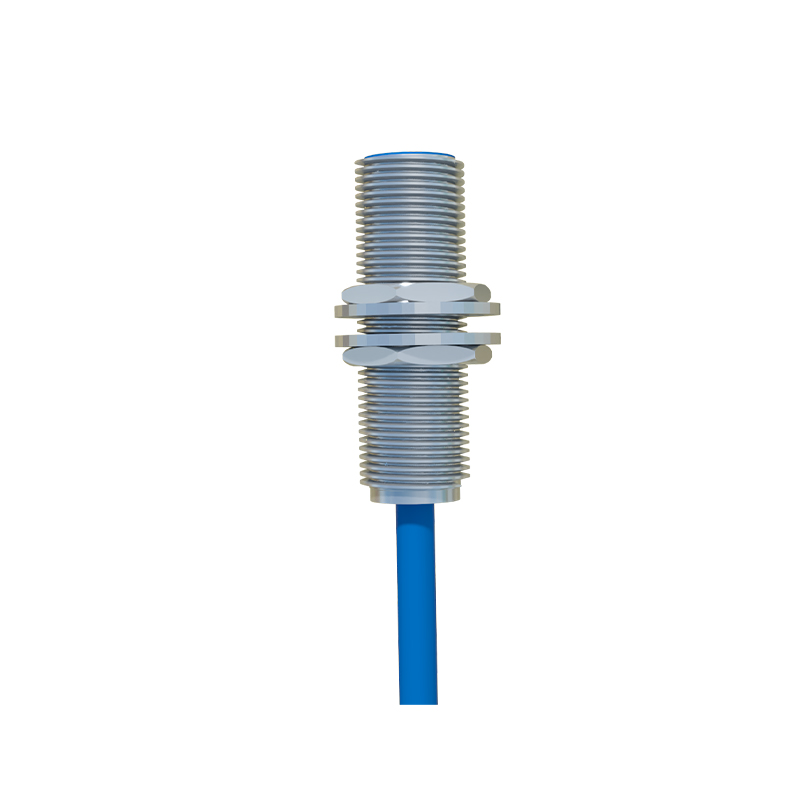
Proximity sensors operate by emitting electromagnetic fields or beams of radiation to detect the presence or absence of nearby objects without physical contact. The most common types used in lighting control include inductive sensors (for metallic objects), capacitive sensors (for both metallic and non-metallic materials), and infrared sensors. When integrated with LED lighting circuits, these sensors can trigger illumination based on predetermined conditions such as human presence, vehicle detection, or material handling operations.
The core circuit design involves interfacing the sensor output with LED drivers through signal conditioning modules. Typically, proximity sensors generate digital (ON/OFF) or analog (distance-proportional) signals that require processing via microcontrollers or programmable logic controllers (PLCs). For instance, a 3-wire DC inductive sensor with NPN output can be connected to a PLC's digital input module, which then activates solid-state relays controlling high-efficiency LED luminaires. Engineers must carefully calculate voltage thresholds, current ratings, and response times—industrial sensors often operate at 10-30V DC with switching frequencies up to 5kHz, while LED drivers may require constant current sources of 350mA-700mA per fixture.
Environmental factors significantly impact system reliability. In manufacturing facilities, engineers must account for electromagnetic interference from heavy machinery by implementing shielded cables and proper grounding techniques. Outdoor applications require sensors with IP67 or higher ingress protection ratings to withstand dust and moisture. Temperature compensation circuits are crucial when deploying systems in environments ranging from -25°C to 70°C, as both sensor sensitivity and LED luminous flux vary with thermal conditions.
Energy optimization represents another critical design aspect. By programming hysteresis bands in the control logic—where LEDs activate at 1-meter detection range but deactivate only when objects move beyond 2 meters—engineers can prevent rapid cycling during borderline proximity scenarios. Integrating daylight harvesting algorithms allows LED dimming proportional to ambient light levels measured by photosensors, achieving up to 60% energy savings compared to continuous operation. Modern implementations often incorporate IoT gateways for data logging, enabling predictive maintenance through analysis of sensor activation patterns and LED driver performance metrics.
Installation best practices include mounting sensors at optimal heights (typically 1.5-2.5 meters for human detection) with precise alignment to detection zones. Engineers should verify minimal sensing distances (Sn) and ensure metallic backgrounds are beyond the sensor's reset distance to avoid false triggers. For large-area coverage, multiple sensors can be networked using RS-485 or Ethernet protocols to create coordinated lighting zones, reducing wiring complexity through distributed control architectures.
Troubleshooting common issues involves systematic verification: First, measure sensor supply voltage during operation to identify power fluctuations. Second, use oscilloscopes to check output signal integrity when interference is suspected. Third, validate PLC logic sequences through simulation software before physical commissioning. Remember that LED flickering often stems from incompatible PWM frequencies between sensors and drivers, requiring filter circuit adjustments or driver replacement.
Future advancements include integration of AI-based predictive algorithms, where sensors not only detect presence but also analyze movement patterns to anticipate lighting needs. The emergence of LiDAR-based proximity sensors promises millimeter-level accuracy for specialized applications like automated warehouse lighting. As Industry 4.0 evolves, proximity-controlled LED systems will increasingly serve dual purposes—providing illumination while generating occupancy data for building management systems.
Through careful selection of sensor technology, robust circuit design, and intelligent control programming, engineers can create lighting solutions that enhance safety, reduce energy consumption, and adapt dynamically to operational environments. The convergence of sensing technologies with efficient LED lighting continues to redefine automated illumination standards across industrial and commercial sectors.