For two decades, I've watched laser-based methane detectors (LMDs) evolve from fragile lab curiosities to field-deployed tools. The marketing brochures tout unbeatable accuracy, selectivity, and stability. In the controlled chaos of a gas plant, a coal mine ventilation shaft, or a leak survey in a desert, the story is different. Forget the basics; let's talk about what happens when theory meets mud, vibration, and human error.
Experience Correction: The Gaps Between Spec and Reality
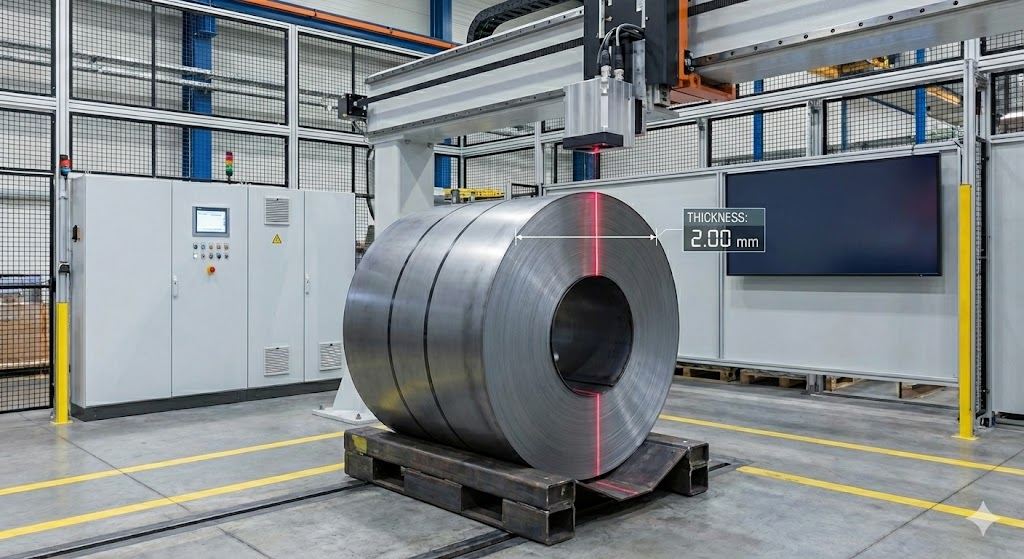
The paramount selling point is immunity to cross-interference. Tunable diode laser absorption spectroscopy (TDLAS) at 1653 nm is indeed highly selective for methane. However, I've documented multiple instances where high concentrations of water vapor (near saturated pipelines post-pigging) or dense, cold hydrocarbon plumes (from condensate tanks) caused significant reading drift or temporary signal attenuation. The laser isn't being absorbed by another gas; the issue is physical. Particulate matter and aerosolized condensate can scatter the beam, reducing signal strength. The onboard algorithm may interpret this as a clean path, leading to under-reporting. A unit rated for 0-100% LEL might show a stable 10% LEL reading while actual methane is accumulating dangerously at 40% LEL because a fine oil mist is coating the optics. The fix isn't in software; it's a rigorous, daily lens inspection and cleaning protocol most sites neglect. Furthermore, the stated response time (T90) is typically measured in a lab with a calibrated gas jet directly on the sensor. In open-path configurations, atmospheric turbulence can delay the "seeing" of a plume, adding 5-15 seconds to the response in windy conditions—an eternity in emergency scenarios.
Boundary Conditions: When to Leave It in the Truck
Laser methane detectors are not universal tools. Their failure modes are specific and critical to recognize.
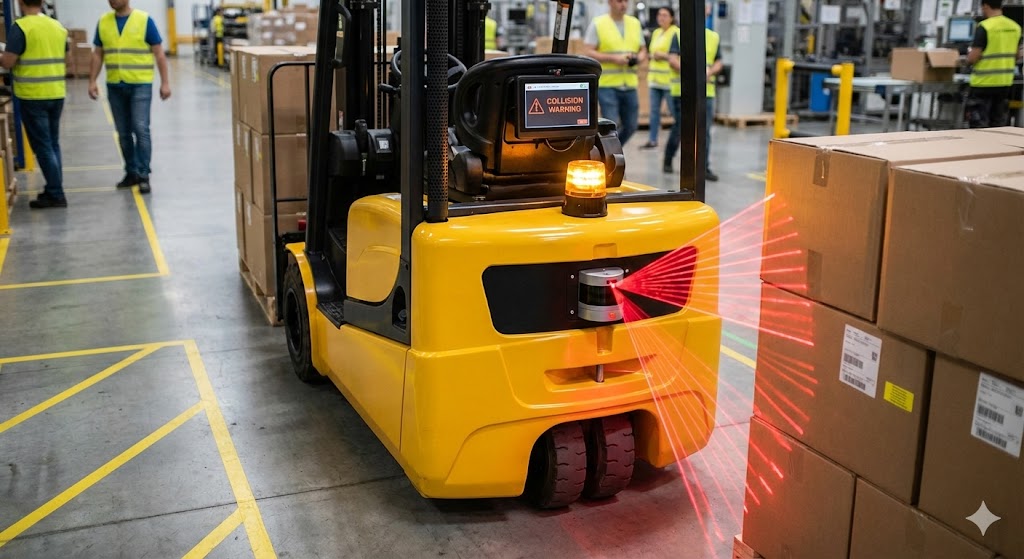
1. Confined Spaces with Potential for Rapid Gas Buildup: Do not rely solely on an LMD for personal safety in a tank entry or sewer inspection. Its sampling is point-to-point or single-point. A pocket of pure methane can exist between the beam path or outside the diffusion sensor's immediate intake. A catalytic bead or infrared point detector, properly positioned, is still the mandated primary guardian for life safety in permit-required confined spaces. The LMD is a superb *complement* for pre-screening and boundary monitoring.
2. High-Pressure Jet Releases: The quantitative accuracy of most LMDs is calibrated for diffuse leaks or ambient concentration mapping. A high-pressure jet from a pinhole leak at 50 bar can cause localized pressure and temperature effects that distort the absorption line shape, leading to substantial quantification errors—often underestimates by a factor of 2 or more. Use it for finding the leak, not for calculating the exact mass emission rate in such conditions without specialized high-pressure calibration.
3. Areas with Intense Vibration or Thermal Cycling: The laser diode and optical alignment are sensitive. Mounting an open-path unit on a constantly vibrating compressor skid, without custom-designed dampening mounts, will lead to chronic misalignment, frequent false alarms (or dropped signals interpreted as "zero"), and reduced hardware lifespan. Similarly, rapid thermal cycles from direct desert sun to night chill can cause internal condensation, fogging the receiver lens.
Counter-Intuitive Conclusion: Higher Precision Can Increase Risk
Here's the hard truth: The digital precision of an LMD (e.g., reading 1.87% vol CH4) can foster a dangerous complacency that analog gauges and go/no-go alarms do not. Operators and managers start to trust the number absolutely. They engage in "threshold creep"—debating whether an action level of 2.0% is really different from 2.2%, delaying intervention. With old-school detectors, the alarm was the event. With LMDs, the constant stream of data can become a distraction. The most significant risk mitigation I've implemented is not a hardware upgrade, but a procedural one: *Digitally clamp the readout*. On control room screens, display only "NORMAL," "INVESTIGATE," and "ALARM" based on pre-set, non-negotiable thresholds. The precise concentration data should be logged for engineers but hidden from operators. This uses the technology's stability while defeating its potential to induce analytical paralysis during a developing incident. The machine's job is to measure; the human's job is to decide. Don't let the former undermine the latter.