Forget the pristine curves in the datasheet. After two decades on factory floors, in mining pits, and on automated lines, I've learned that the real performance of an inductive or capacitive proximity sensor is defined by its failures, not its specifications under ideal conditions. Let's cut to the chase.
Experience Correction: The Gritty Reality vs. Theoretical Specs
The stated sensing distance (Sn) is a laboratory fantasy. In practice, metal shavings, conductive dust, or even a consistent film of cutting fluid can create a "false bridge," effectively extending the sensing zone erratically. I've documented cases where a sensor rated for an 8mm range on mild steel triggered consistently at 11mm due to ferritic dust accumulation, causing premature actuator signals and cycle faults. The repeatability tolerance? Often tripled in high-vibration environments like stamping presses. Rely on the 70-80% rule: for reliable operation, your actual mounting distance should not exceed 70-80% of the nominal Sn. Furthermore, the "standard target" (usually Fe37 steel) is a myth. Sensing distance on austenitic stainless steel (e.g., 304, 316) can drop to as low as 50% of Sn, and on aluminum or copper, it's typically 30-40%. If your application involves non-ferrous metals, derate aggressively.
Boundary Conditions: Where It Will Fail
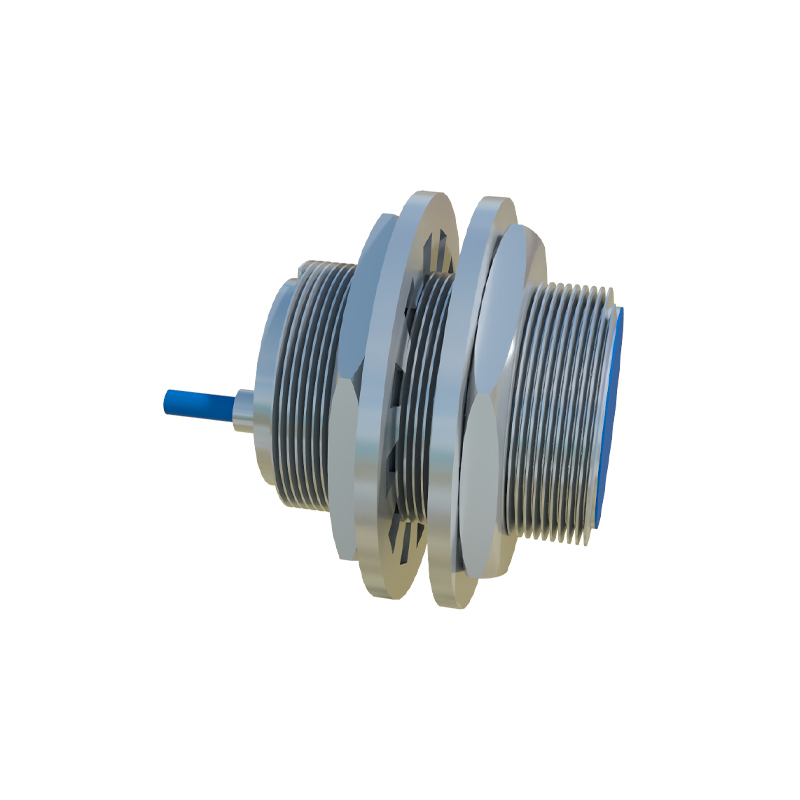
These are not universal tools. Know their breaking points.
1. Extreme Electromagnetic Noise: Placing a standard DC sensor within 50cm of a variable frequency drive (VFD) or AC motor contactor without proper shielding is a recipe for phantom pulses. I've traced countless "ghost" triggers to induced currents in the sensor's cable acting as an antenna.
2. Conductive Media Immersion: Capacitive sensors for level detection will fail catastrophically if the conductive medium (e.g., salty water, ionic fluids) coats the face. This creates a permanent "target present" state. In such cases, a shielded (flush-mountable) inductive sensor for a float or a completely different technology (ultrasonic) is mandatory.
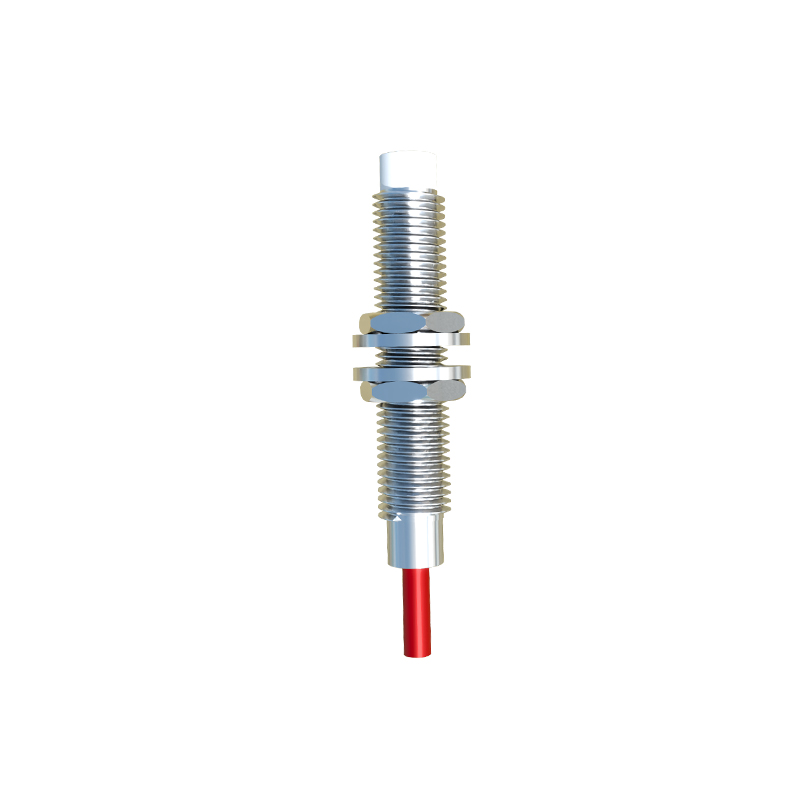
3. High-Speed Small Targets: The response frequency on a datasheet assumes a large target. Trying to detect a M3 bolt head moving at 2 m/s? The effective sensing distance shrinks. The target must be within the active field long enough for the oscillator to dampen and the output to switch—a minimum dwell time often overlooked. For small, fast targets, you need a sensor with a faster response (e.g., 5 kHz+) and you must calculate the minimum detectable target size at speed.
4. Temperature Gradients: A sensor rated for -25°C to 70°C does not perform uniformly across that range. At the lower extreme, housing materials contract, potentially altering the internal coil alignment and reducing Sn by up to 15%. At the high end, oscillator drift can occur, leading to instability.
Counter-Intuitive Conclusions: Data-Driven Insights That Defy Common Sense
1. Sometimes, a Less Sensitive Sensor is Superior: In environments saturated with metal particulate, selecting a sensor with a shorter nominal sensing distance or a reduced hysteresis (switching differential) can enhance stability. It becomes less "greedy" for distant interference. I've solved more instability issues by downgrading sensor range than by "upgrading" to a more sensitive one.
2. Cable Choice Matters More Than the Sensor Brand: A high-quality, shielded cable with a continuous braid and a robust jacket is non-negotiable. Over 60% of noise-related failures I've diagnosed originated from compromised cabling—damaged shields, improper grounding, or using unshielded cable for runs over 2 meters. The sensor is only as good as its nervous system.
3. The "Fail-Safe" Logic Dilemma: Normally Open (NO) vs. Normally Closed (NC) is a fundamental safety choice. The counter-intuitive part: in a wire-break (open circuit) scenario, a NO sensor will fail "off" (no signal), while an NC sensor will fail "on" (signal present). If your machine logic interprets a signal as "permission to proceed," a failed NO sensor causes a safe stop, but a failed NC sensor can cause an unsafe start. The "safe" state depends entirely on your control logic's interpretation of the signal, not the sensor's inherent state.
4. Plastic Housings Can Outperform Metal in Corrosive Environments: While metal housings (e.g., brass, stainless steel) seem more robust, in prolonged