For two decades, I've watched engineers get burned by the glossy promises of inductive proximity sensor datasheets. The real world doesn't operate in a 23°C lab with clean air. Let's cut through the marketing and talk about what actually happens when the rubber meets the road.
Experience Correction: The Harsh Reality of "Standard" Specs
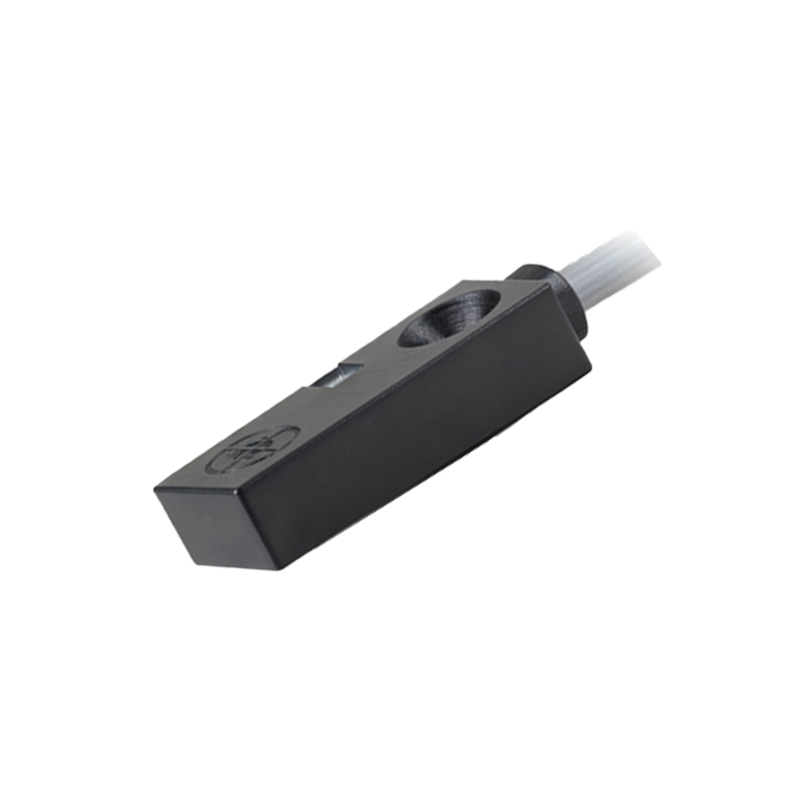
The repeat accuracy and switching frequency listed are theoretical maximums. In practice, they are the first casualties of hostile environments. Take switching frequency. A sensor rated at 5 kHz might achieve that detecting a perfect, ground-referenced steel target. Introduce a worn, oxidized, or vibrating target on a high-speed conveyor, and effective frequency can drop by 40-50%. The issue isn't the oscillator; it's the damping and signal-to-noise ratio at the edge of the sensing field. Similarly, the standard sensing distance (Sn) is calibrated for mild steel (Fe360). Switch to stainless steel (AISI 304), and you lose up to 30% of that range. For aluminum? Expect a 40-50% reduction. The datasheet doesn't lie, but it assumes ideal, static conditions that rarely exist. I've seen more failures from thermal drift in unregulated foundry environments than from component failure. A sensor rated for -25 to 70°C might hold its electrical specs, but the housing and seal materials can become brittle or degrade, leading to ingress long before the electronics quit.
Boundary Conditions: When to Walk Away
These sensors are not universal solutions. Deploying them outside their physical operating window is a recipe for chronic downtime.
1. Extreme Target Materials: Avoid using standard sensors for non-ferrous metals with high electrical conductivity and low permeability, like copper or brass, in critical positioning applications. The eddy current formation is weak and inconsistent, leading to unreliable switching. For these, you need a specialized "factor 1" sensor, and even then, the range is severely compromised.
2. Conductive Contaminants: This is the silent killer. Environments with metal dust, chips, or conductive coolant mist are no-go zones for standard inductive sensors. Aluminum or steel dust can accumulate on the face, effectively "short-circuiting" the sensing field. The sensor may latch on permanently or exhibit erratic behavior. No IP69K rating will save you from this.
3. Embedded Installation in Non-Metallic Hosts: The classic installation guide shows flush-mounting in a metal bracket. Mount the same sensor flush in a thick plastic or composite structure, and its effective range can increase unpredictably by 15-20% due to the absence of damping from surrounding metal. This can cause unintended actuation.
4. High-Speed, Small-Target Applications: Trying to detect the teeth of a 0.5mm pitch steel gear spinning at 3000 RPM? A standard barrel sensor's field is too diffuse. You'll get a blended, averaged signal, not clean pulses. This demands a specialized, high-frequency, shielded sensor with a very narrow field.
Counterintuitive Conclusions: Data That Defies Common Sense
1. Sometimes, a "Worse" Sensor is Better: In high-vibration applications (e.g., stamping presses), a sensor with a slightly longer hysteresis (the difference between switch-on and switch-off point) can provide vastly more stable operation than a "high-precision" low-hysteresis model. The hysteresis provides a noise deadband, preventing chatter. Precision isn't always the goal; robustness is.
2. Shielding Can Be a Detriment: Engineers default to shielded (flush-mountable) sensors for compactness. However, in applications requiring precise edge detection or with adjacent metallic structures, an unshielded sensor often performs better. Its conical field provides a sharper fall-off characteristic at the cost of lateral sensitivity. The unshielded sensor can give you a more definitive signal at the exact point of interest.
3. The Power Supply is Part of the Sensor: Lab tests use clean, regulated power. On the factory floor, voltage dips and EMI from motor drives are rampant. A sensor's stated current consumption is at nominal voltage. During a 10% line dip, the current draw of a 3-wire DC sensor can spike momentarily as its internal regulation struggles, potentially overloading a marginal power supply and causing a cascade failure. Overspec the PSU by 30% on current, not 10%.
4. Temperature's Asymmetric Impact: Cold is often harder on these sensors than heat. While heat accelerates electronic aging, extreme cold (-30°C and below) dramatically increases the brittleness of PVC cables and can cause condensation inside