Forget the pristine lab data. After two decades on factory floors, in mining pits, and on offshore rigs, I've learned that a proximity sensor's true spec sheet is written by grease, vibration, and electromagnetic chaos. The theoretical sensing distance? It's the first casualty. A standard 8mm-range inductive sensor, calibrated for mild steel, will see its effective range drop by up to 40% when targeting 304 stainless steel in a high-temperature environment. The datasheet won't tell you that the residual magnetism in a target after welding can create a "ghost signal," causing the sensor to hold on for 50-100ms after the target has physically moved—enough to crash a high-speed pick-and-place arm. The industry's obsession with IP67/IP69K ratings for washdown environments is a red herring if you ignore chemical compatibility. A common FKM (Viton) seal will swell and fail within weeks when exposed to certain synthetic cutting oils, leading to ingress not through the body, but through the cable gland, a failure point rarely highlighted in marketing materials.
Let's talk about the boundary conditions where these workhorses turn into liabilities. First, the "non-ferrous" promise of capacitive sensors. They are notoriously unreliable in environments with variable humidity or airborne conductive dust (e.g., carbon fiber machining). A layer of condensation or dust on the face can permanently alter the dielectric constant, causing false triggers or dead zones. They are a terrible choice for any application involving non-homogeneous materials, like detecting the level of grain in a silo—the varying density and moisture content make the reading a guess, not a measurement. Second, ultrasonic sensors in high-velocity airflows. The physics are clear: airflow over the transducer face creates pressure waves that distort or completely drown out the return echo. Placing one near a vent or fan is a guaranteed path to erratic behavior. Finally, the silent killer: ground loops in DC 2-wire systems. In large, multi-machine installations with disparate grounding points, a potential difference of just a few volts can leak through the sensor's leakage current, enough to keep a PLC input perpetually "ON." I've seen entire lines halted by a sensor that tested perfectly in isolation.
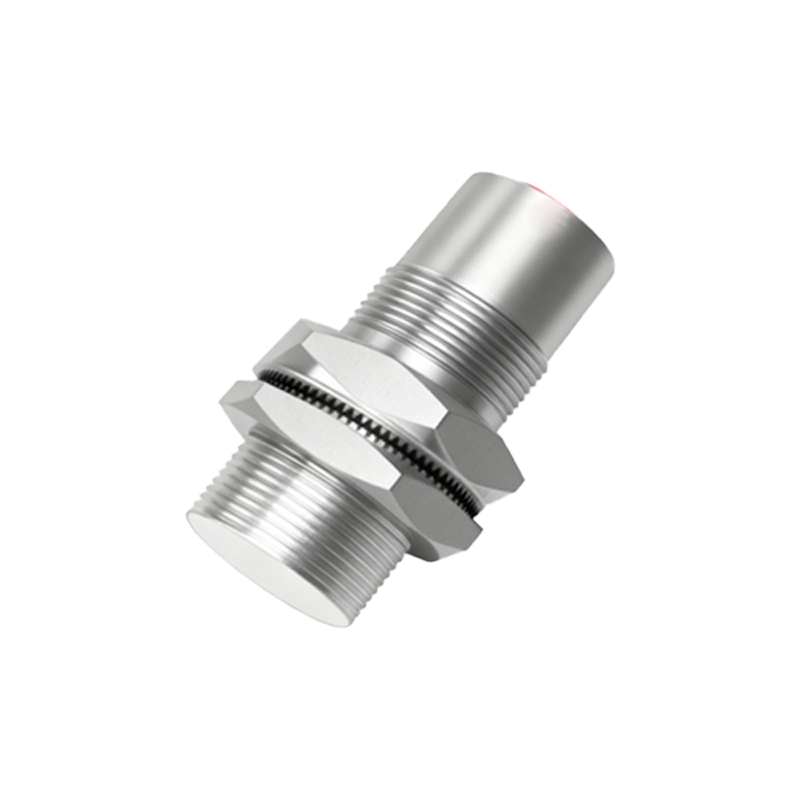
Now for the counter-intuitive conclusions. One: Sometimes, a less accurate sensor is more reliable. High-resolution analog sensors boasting 0.1-micron repeatability are often overkill and become noise antennas in electrically noisy environments. A robust, lower-resolution digital switch with heavy-duty shielding will outlast and outperform its precise counterpart in 90% of industrial applications, providing binary reliability where analog nuance only invites failure. Two: The "fail-safe" logic (normally open vs. normally closed) is often chosen backwards. The instinct is to use a Normally Open (NO) sensor so a broken wire looks like an "off" state. However, in critical safety or stoppage circuits, you must design for the most likely failure mode. In constant-motion applications, sensor wear is inevitable. A worn-out NO sensor will simply stop detecting, failing silently. A Normally Closed (NC) sensor in the same circuit, when worn, will typically fail to a closed state, creating a constant "target detected" signal that can be programmed to trigger a maintenance alarm, preventing catastrophic undetected failure. Three: Price is a poor predictor of longevity in extreme environments. A standard $50 sensor with a properly designed, external protective boot and a dedicated isolated power supply will consistently outlive a $200 "ruggedized" model installed with complacency. The integration ecosystem—mounting, cabling, power conditioning—accounts for 80% of field reliability. The sensor itself is often just the final, and least fragile, component in the chain.