Forget the datasheet. After two decades of deploying proximity sensors in environments ranging from foundry floors to offshore rigs, I've learned that their true performance is defined in the gaps between theoretical specs and brutal reality. Here’s what you won’t find in the manual.
Experience Correction: The Myth of "Guaranteed" Sensing Distance.
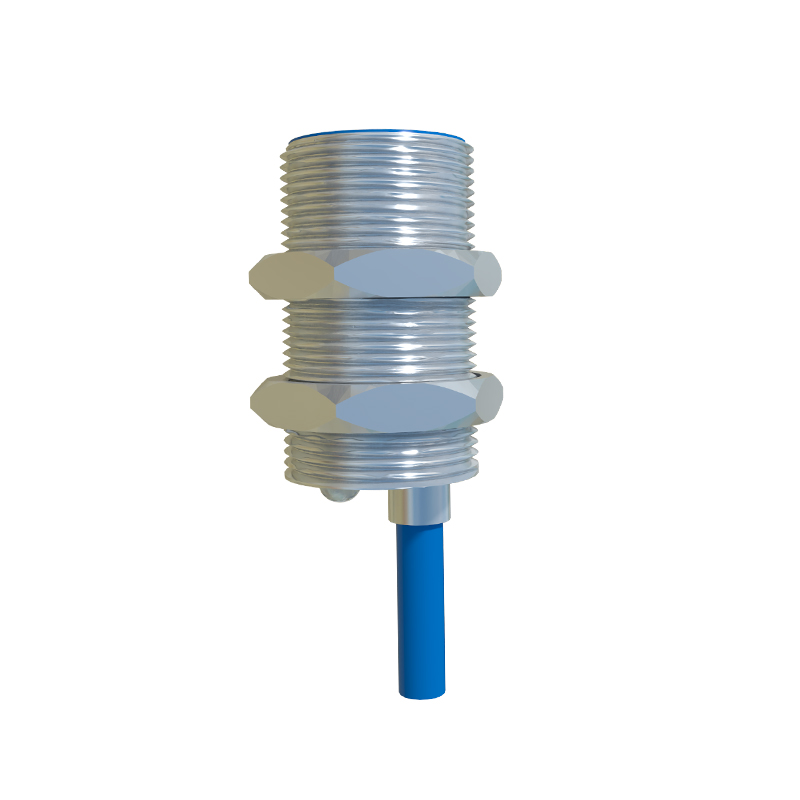
The nominal sensing distance (Sn) is a laboratory fantasy. In practice, three factors systematically degrade it. First, target material composition is never pure. A sensor calibrated for "mild steel" will underperform by up to 40% when detecting hot-rolled steel with higher carbon content or mill scale. Second, ambient temperature isn't just about operational range. A capacitive sensor rated for -25°C to 70°C will see its effective sensing distance for a plastic pellet shrink by nearly 30% at the temperature extremes due to changes in dielectric constant, not electronics failure. Third, the "dirty secret" is voltage fluctuation. A 24VDC sensor operating at 22V might lose 15% of its Sn. The fix isn't a bigger sensor; it's derating. My rule: for critical applications, never plan to use more than 60% of the published Sn. Treat the full Sn as a reserve for degradation, not a design parameter.
Boundary Conditions: When to Walk Away.
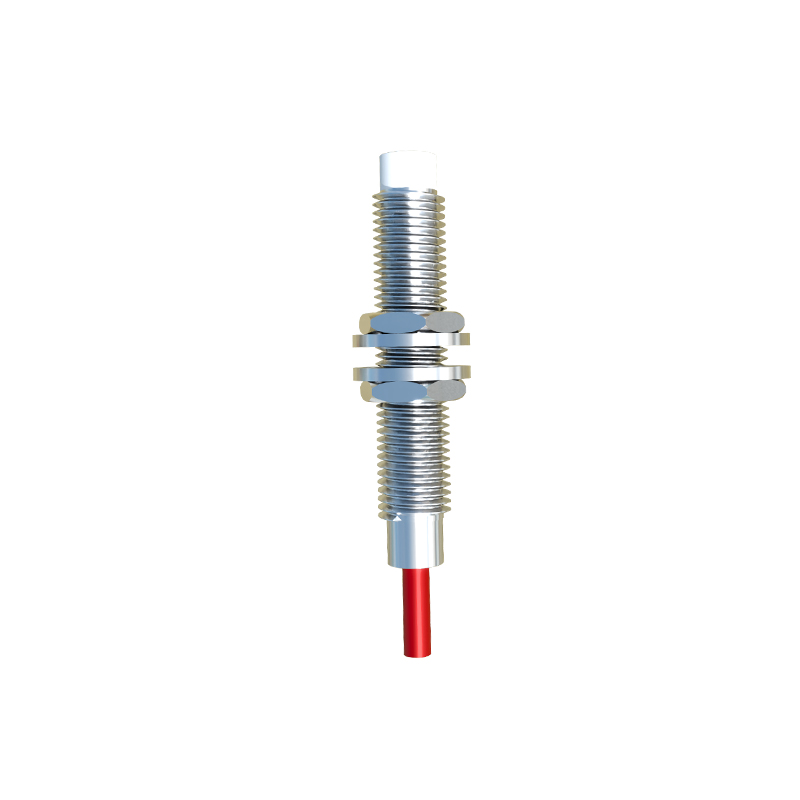
Proximity sensors are not universal detectives. Their failure modes are specific and catastrophic if ignored.
1. Conductive Dust Environments (e.g., graphite, metal powder): Inductive and capacitive sensors will fail. Dust builds up on the face, creating a false "target present" signal or causing internal short circuits. Purged housings are a temporary bandage; the only reliable solution is a completely different sensing principle, like mechanical limit switches or ultrasonic sensors with self-cleaning cycles.
2. High-Speed, Non-Ferrous Targets (e.g., aluminum can sorting at 3000 units/minute): Standard inductive sensors struggle with response time and "see-through." A thin, fast-moving aluminum can may not induce a sufficient eddy current field for detection. Here, you need a factor-1, all-metal inductive sensor or a specialized high-frequency model. The cost triples, but the alternative is a 5% misdetection rate, which is unacceptable.
3. Extreme Electromagnetic Interference (EMI) Fields (e.g., near large VFDs, welding stations): Shielding is often inadequate. I've documented cases where a 500A welding arc caused a sensor 15 meters away to latch permanently "on." The boundary is not distance; it's the rate of current change (di/dt). If you're within 10 meters of equipment with uncontrolled arc discharge or large inductive loads switching, opt for fiber-optic or pneumatic sensors. The added complexity is cheaper than a production line ghost signal.
Counterintuitive Conclusion: Sometimes, a "Less Accurate" Sensor is Superior.
The industry's obsession with precision and repeatability is often misplaced. For a binary detection task in a harsh environment, a sensor with slightly worse repeatability but vastly superior environmental immunity will deliver higher overall system reliability. For instance, in a hydraulic cylinder position feedback application, a rugged, long-stroke inductive sensor with a ±0.5mm repeatability will outperform a laser sensor with ±0.05mm repeatability every time. Why? The laser's lens is instantly blinded by oil mist or condensation. The inductive sensor, with its larger hysteresis and forgiving sensing field, provides a stable, noise-immune signal. The data shows that mean time between failures (MTBF) increases by a factor of 3-5 when you prioritize robustness over nominal precision for dirty, wet, or vibratory applications. Don't buy specs; buy proven performance in chaos. The most expensive sensor is the one that fails, not the one that's "over-specified."