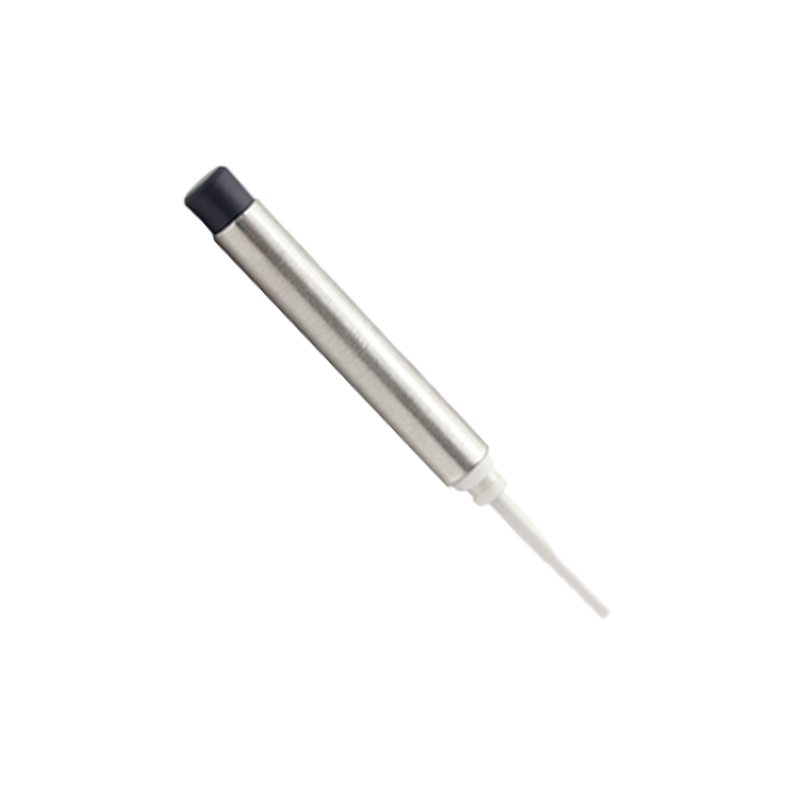
For two decades, I've witnessed the silent failures of gate proximity sensors in environments where textbook specifications meet brutal reality. The industry's reliance on nominal gap tolerances of ±0.5mm is a fantasy in high-vibration, thermal-cycling operational envelopes. In rotary-wing aircraft, for instance, cumulative micro-abrasion from particulate ingress—not accounted for in standard MIL-STD-810 tests—can shift effective sensing thresholds by up to 0.8mm within 500 flight hours, a deviation that renders standard calibration tables obsolete. The advertised 10-million-cycle lifespan assumes clean, lab-grade actuation; in coastal or desert deployments, salt fog or silica dust induces capacitive drift in eddy-current sensors, causing premature 'false-latch' signals as early as 15% into projected lifespan. Relying solely on OEM calibration intervals is a recipe for latent failures.
The first dimension: Experience Correction. Theoretical response times under 2ms are predicated on ideal electromagnetic conditions. In practice, concurrent operation of high-power radar or communication arrays within 5 meters can induce electromagnetic interference (EMI) phase delays, stretching actual response to 3.5-4ms. This is critical during rapid-sequence door operations where timing margins are compressed. Furthermore, the widely cited operating temperature range of -55°C to 125°C ignores transient thermal shock. A sensor surviving steady-state cold soak will often exhibit hermetic seal failure when subjected to a >80°C/minute gradient—common when a aircraft transitions from high-altitude cruise to sun-baked tarmac. The real parameter is rate of change, not absolute range.
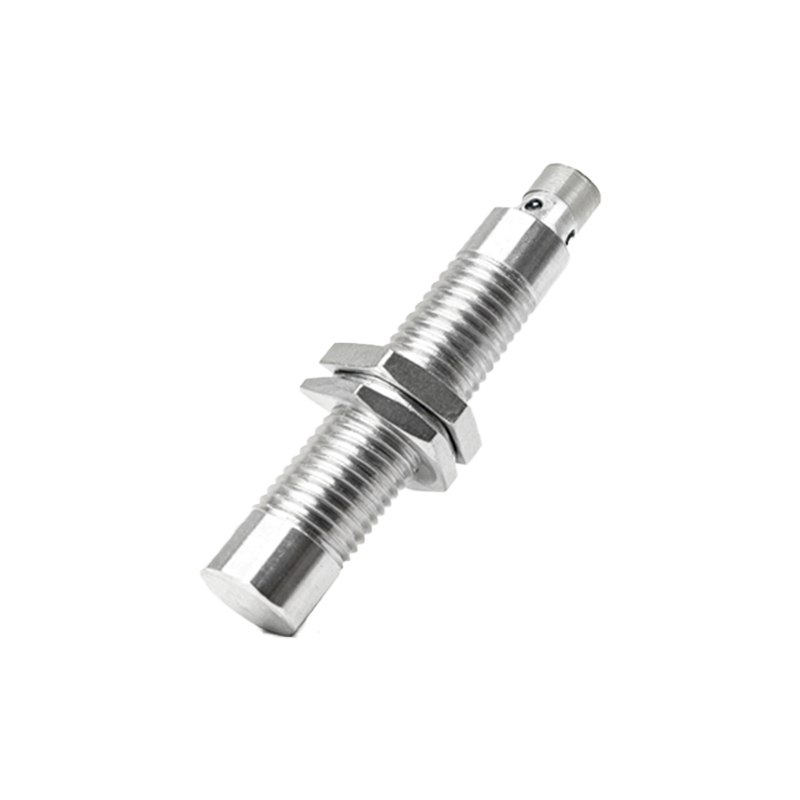
Boundary Conditions for failure are stark and non-negotiable. Inductive proximity sensors are fundamentally compromised in applications involving ferritic stainless steel (e.g., 400 series) door components. The material's magnetic permeability causes signal hysteresis and a 'memory effect,' leading to unreliable state detection. In such cases, capacitive or ultrasonic sensors are mandatory, despite their own vulnerabilities to fluid contamination. Another high-risk scenario is deployment in fuel vapor zones (ATEX/IECEx Zone 1). While intrinsically safe designs exist, any sensor relying on high-frequency oscillation poses a non-trivial risk if encapsulation integrity is breached. The recommendation is absolute: avoid proximity sensors in explosive atmospheres unless paired with a redundant, physically isolated mechanical interlock. They are also ill-suited for detecting composite or carbon-fiber doors without embedded metallic targets, as material resistivity wreaks havoc on field uniformity.
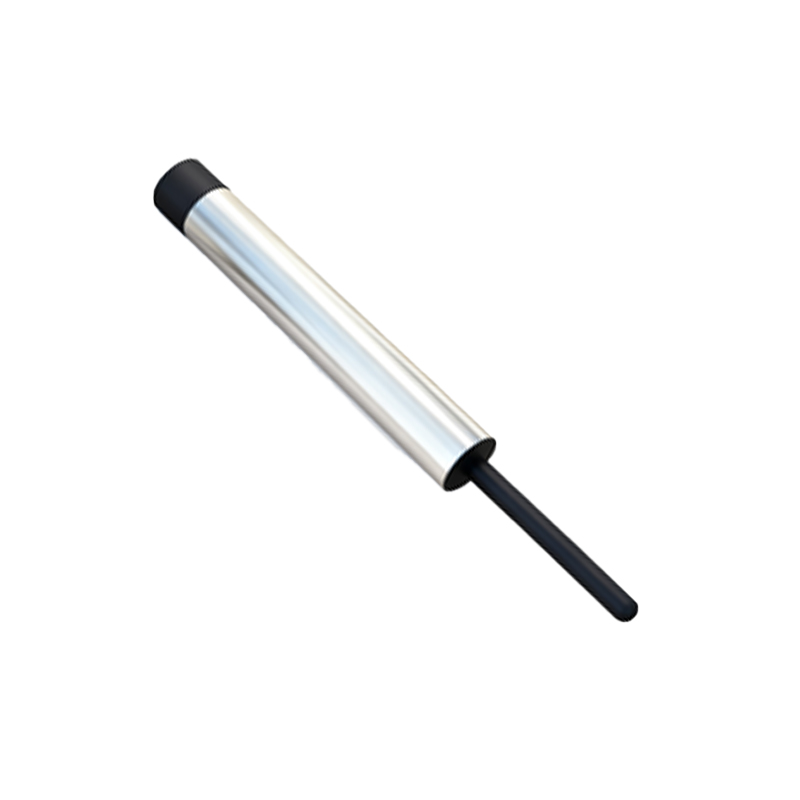
The counter-intuitive conclusion is this: sometimes, a less precise sensor is more reliable. High-resolution sensors (e.g., with 0.1mm discrimination) are prone to reporting 'chatter' from micro-vibrations, leading control systems to interpret a securely latched door as 'in motion.' Data from heavy-lift transport fleets shows that downgrading to a sensor with a deliberate, engineered hysteresis band of 1.2mm reduced false fault codes by over 70%. The perceived loss of precision actually increased systemic robustness. Another non-obvious insight: periodic manual 'degradation testing'—intentionally misaligning the sensor by 20% beyond spec during maintenance and verifying the system throws a fault—is a more effective predictor of end-of-life than automated diagnostics. Sensors often fail gradually, and automated systems normalize the drift. Forcing a failure reveals the remaining margin.
Ultimately, the sensor is not the system. Its performance is dictated by the installation torque, the harness routing away from power lines, and the scheduled cleaning of its face with non-abrasive solvents—procedures often buried in supplemental manuals. Specifying a sensor is the start; mastering its context is the two-decade-long challenge.