For two decades, I've specified, integrated, and cursed laser 2D sensors in environments ranging from pristine automotive clean rooms to sulfur-dusted mining tunnels. The question "Are they expensive?" is naive. The real question is: "What is the total cost of a reliable measurement?" The sticker price is just the entry fee. Let's cut through the marketing fluff.
Experience Correction: The Myth of "Lab-Spec" Performance.
Manufacturers tout micron-level repeatability and 0.1% accuracy. In practice, thermal drift in unregulated factory environments can introduce 50-100µm error over a 10°C shift, even for units costing $15,000+. Vibration, often dismissed by mounting guidelines, causes high-frequency noise that averaging filters can't fully eliminate, corrupting edge detection critical for gauging. I've seen a sensor rated IP67 fail in a high-pressure washdown because cyclical thermal shock breached the housing seal—a failure mode never in the datasheet. The real cost? Unplanned downtime and scrap. You're not buying the spec sheet performance; you're buying performance within your specific environmental envelope. A $5,000 sensor with a $3,000 active thermal stabilization and vibration-damping mount often outperforms a $10,000 sensor bolted directly to a machine frame.
Boundary Conditions: Where the Technology Breaks.
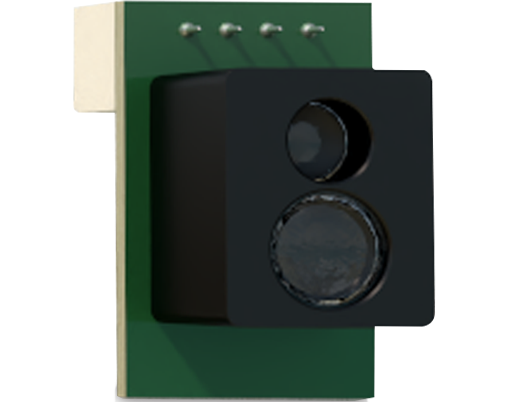
Laser 2D sensors are not universal solutions. Deploy them in these scenarios at your peril:
1. High-Speed, Low-Contrast Targets: Measuring dark, matte rubber on a black conveyor at 3 m/s. The laser speckle noise overwhelms the signal, requiring massive exposure increases that blur edges. The result is unusable data. A structured-light system, though often more costly upfront, may be the only viable solution.
2. Optically Hostile Environments: Steam, oil mist, or consistent airborne particulates (e.g., flour, coal dust). Even "laser line" filters are defeated. Not only does measurement fail, but contamination lenses is a guaranteed maintenance cost. Here, contact or inductive sensors, though lower-resolution, provide higher mean time between failures (MTBF).
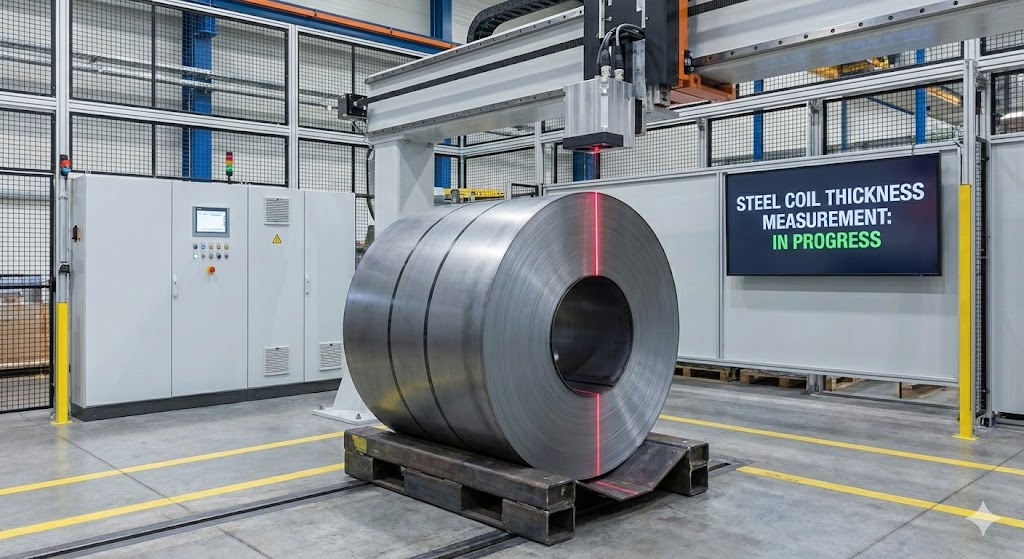
3. Specular or Transparent Materials: Measuring the thickness of polished stainless steel or clear glass. The laser reflects or refracts unpredictably, giving phantom edges. Diffuse coatings or using a sensor with a dedicated coaxial diffuse illumination (a significant cost adder) is mandatory, altering the ROI calculation entirely.
Counter-Intuitive Conclusion: The Cheapest Sensor Can Maximize Total Cost.
The intuitive move is to select the sensor with the bare minimum specs to save capital. This is a catastrophic error in judgment. In high-volume production, the dominant cost driver is not the sensor's purchase price but the *cost of a measurement error*. A $4,000 sensor with 99.9% uptime and 99.99% measurement confidence is exponentially cheaper than a $2,000 sensor with 95% uptime and 98% confidence. Let's quantify: One false rejection of a $500 part per hour, plus 30 minutes of daily downtime for recalibration, can eclipse the $2,000 savings in under a month. Furthermore, premium sensors often offer richer diagnostic data (e.g., internal temperature, laser power degradation, signal-to-noise ratio). This data enables predictive maintenance, preventing $25,000+ line stoppages. Therefore, the "expensive" sensor, through superior reliability and embedded intelligence, delivers a lower total cost of ownership (TCO). The paradox: strategically overspending on the front end is the most effective cost-saving measure.
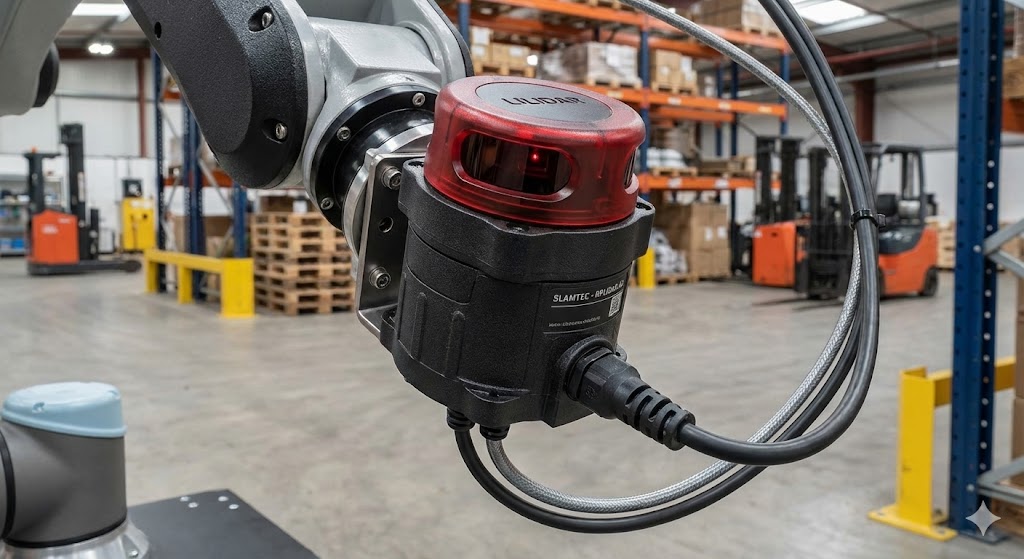
The final verdict on cost is not found on a quote but in a lifecycle analysis. It encompasses purchase price, integration engineering, calibration labor, downtime losses, and scrap cost. A deep technical audit of your actual operating environment against the sensor's *true* (not published) tolerances is the only way to answer the cost question. Anything less is guesswork, and guesswork in industrial automation is the most expensive line item of all.