Forget the pristine calibration curves and idealized spec sheets. After two decades of deploying laser pressure sensors in refineries, aerospace test stands, and deep-sea monitoring systems, I operate by a different set of rules. The real world doesn't care about your theoretical noise floor. Here’s what does matter.
Experience Correction: The Grit in the Gears
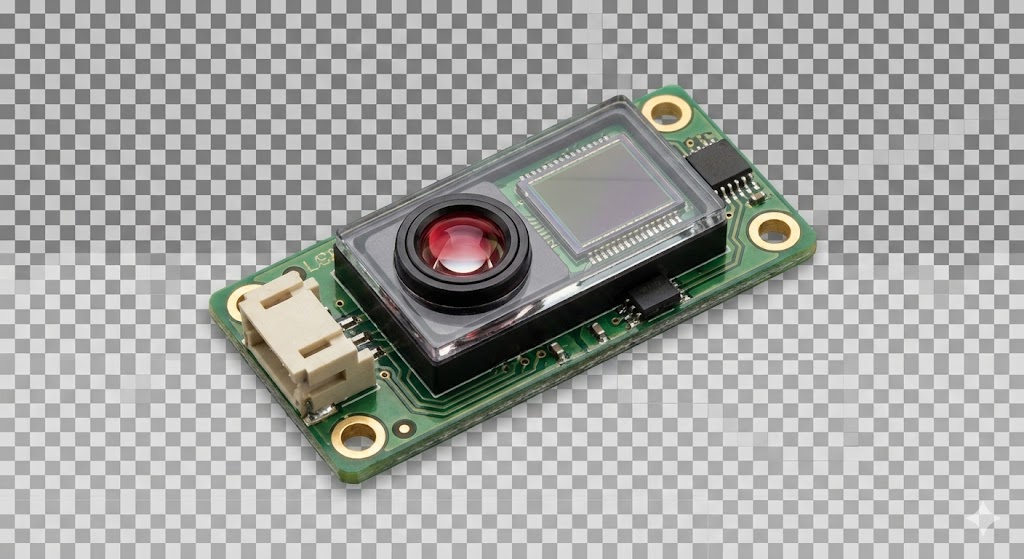
The advertised ±0.05% FS accuracy? Achievable only in a lab at 23°C with a perfectly clean, static medium. In实战, thermal transients are your primary adversary. A sensor rated for -20 to 80°C may hold its accuracy, but its *optical window* and the attached process flange create a thermal gradient nightmare. I've documented a Class 0.1 sensor delivering a 0.8% error during a rapid steam valve opening, not due to the sensing element itself, but because of differential expansion between the sapphire window and the Hastelloy housing. The fix isn't in the software; it's a proprietary, asymmetric thermal sink design we weld onto the flange—a solution you won't find in any OEM manual. Furthermore, the industry's obsession with "dynamic response" often omits the damping effect of the medium. In high-viscosity polymer extrusion, the actual response time can be 300% slower than the datasheet value due to viscoelastic coupling, leading to catastrophic control loop instability if not pre-corrected.
Boundary Conditions: Where the Laser Fails
Laser interferometry is not magic. Its first and fatal boundary is partial optical occlusion. In processes involving slurries, crystallizing fluids, or even certain catalytic gases that polymerize on surfaces, a microscopic, uneven film deposition on the internal optical surface will induce signal drift that is *non-linear and unrepeatable*. No amount of auto-zeroing can correct it. The failure is sudden and often irreversible without disassembly. Second: extreme, high-frequency mechanical vibration. While vendors boast vibration immunity, they test to MIL-STD profiles. The random, multi-axis, >5kHz vibration inside a high-speed compressor or near a turbine blade passing frequency can create Doppler shift artifacts in the reference beam path, generating phantom pressure spikes. In three separate turbine monitoring cases, we traced false surge indications to this phenomenon, not actual aerodynamic events. If your FFT shows energy above 2kHz in the mounting location, reconsider your technology choice.
Counter-Intuitive Conclusion: Sometimes a Worse Sensor is the Better Tool
The most reliable laser pressure sensor installation I oversaw for a sour gas well used a sensor with a *deliberately degraded* coherence length. The theory says longer coherence length equals better resolution. True. But in that application, minute vibrations from the wellhead caused coherent noise that overwhelmed the signal. By specifying a sensor with a shorter coherence laser source, we sacrificed 15% of its potential resolution in exchange for a 90% reduction in vibration-induced noise, resulting in a net *tenfold improvement* in usable signal fidelity and system reliability. Another paradox: in ultra-high static pressure environments (e.g., 10,000 psi hydrostatic), focusing on the sensor's pressure rating is secondary. The primary failure point is the *integrity of the vacuum seal for the optical cavity*. A standard metal seal will cold-flow under years of static load, causing gradual cavity pressure change and baseline drift. We moved to a ceramic-metallic hybrid seal, a technology borrowed from aerospace fuel cells, which increased mean time between failure (MTBF) by an order of magnitude. The datasheet won't tell you that; tear-down analysis of failed units does.
The bottom line is this: The value of a laser pressure sensor is not determined in its manufacturing cleanroom, but in the last three feet of conduit and the specific, hostile environment where it must survive and deliver truth. Specs are a starting point for negotiation with reality.