Forget the pristine data sheets. After two decades of deploying miniature laser distance sensors in steel mills, automated warehouses, and on robotic arms, I've learned that their real-world performance is a negotiation with chaos. The spec that matters most is rarely the one highlighted in bold.
Let's start with Experience Corrections. The advertised accuracy of ±0.1mm is a laboratory fantasy for most compact models. In practice, thermal drift is the silent killer. A sensor rated for 0-50°C might hold its spec, but the *rate* of temperature change is what destabilizes it. Moving a robot-mounted sensor from a 22°C control room into a 5°C refrigerated area causes a transient error spike of up to 0.3mm for 15-20 minutes until the internal optics stabilize. This isn't in the manual. Similarly, the "response time" assumes a perfect, Lambertian surface. Aim at a slightly oxidized aluminum weld seam, and the time-of-flight calculation gets confused by multiple return pulses, adding 2-3ms of latency as the internal DSP tries to decide which signal is correct. Your high-speed pick-and-place cycle just lost its margin.
Now, the Boundary Conditions. These are the scenarios where failure is not a possibility but a certainty.
1. Low-Density Particulate Atmospheres: Everyone warns about thick smoke or dust. The real trap is clean-looking airborne powder, like fine flour or toner. These particles are smaller than the laser wavelength (typically 650nm or 905nm), causing Mie scattering that attenuates the beam gradually and scatters signal, not blocking it outright. The sensor won't fail to read; it will give a slowly creeping, plausible-but-wrong measurement, corrupting data silently.
2. Vibrational Frequencies Above 80Hz: Vibration resistance specs often list a maximum G-force. More critical is the frequency. High-frequency, low-amplitude vibration (common in gearboxes or compressor frames) can induce micro-phasing errors in the laser diode modulation, leading to a periodic error in the sub-millimeter range that is impossible to filter out in software without impacting response time.
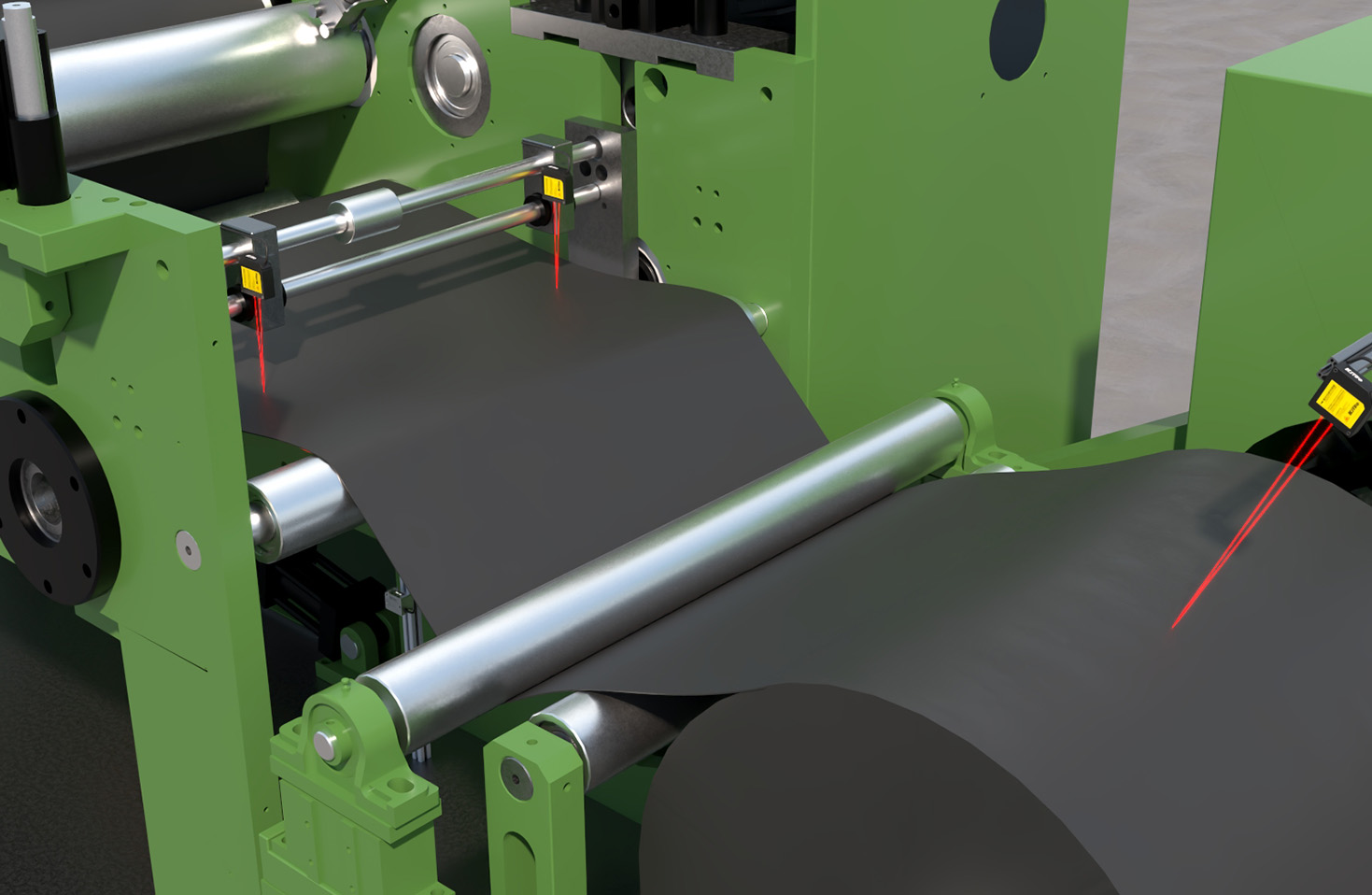
3. Targets with High Infrared Reflectivity: Many black materials are transparent or highly reflective in the near-IR spectrum used by these sensors. A matte black anodized aluminum part can appear as a "noise" or an impossible distance because 90% of the 905nm laser light passes through the surface coating and reflects off the substrate below, creating a false secondary return. This is a guaranteed misread.
Finally, the Counter-Intuitive Conclusions.
* Higher Laser Power Can Reduce Reliability. In confined spaces with reflective walls (e.g., inside a metal chute), a more powerful Class 2 laser creates stronger secondary and tertiary reflections (multipath interference). A lower-power Class 1 laser, with a tighter emission pattern and better background light immunity, often yields more stable readings by reducing this optical noise.
* The "Best" Surface is Not White. While a white, matte surface is the calibration standard, a clean, slightly off-white or light grey surface often provides a *more consistent* signal-to-noise ratio in variable ambient light. Pure white can saturate the receiver in high ambient IR (e.g., sunlight), forcing the AGC to dampen the signal, while a light grey maintains a stable return across a wider lighting range.
* Digital Outputs (IO-Link, USB) Are Not Inherently More Accurate. They simply transmit the sensor's internally processed number with less electrical noise. The critical bottleneck is the *sensor's internal clock crystal* used for time-of-flight calculation. A cheap crystal with ±100ppm frequency stability introduces a fundamental, uncorrectable distance error. An analog 4-20mA output from a sensor with a high-stability TCXO oscillator can, in some cases, provide a more precise *representation of the actual measurement* after calibration, despite being an "older" technology. The takeaway: prioritize the manufacturer's data on clock stability over the communication protocol.
In summary, selecting a miniature laser sensor is not about picking the highest spec. It's about matching the sensor's hidden vulnerabilities—thermal transients, vibrational phasing, and spectral blind spots—against the specific chaos of your application. The data sheet is the starting point for the conversation, not the contract for performance.