For two decades, I've watched pristine datasheets meet greasy, vibrating, optically hostile reality. The supposed advantages of laser sensors are real, but their value is defined not by ideal lab conditions, but by their performance at the edge of failure. Let's move beyond marketing bullet points.
Experience Correction: Where Theory Meets Grime
The 0.1% repeatability spec? Forget it in the presence of airborne coolant mist or fine graphite dust. The laser's coherence, its strength in clean air, becomes its Achilles' heel here. Mie scattering from sub-micron particulates doesn't just attenuate the signal; it creates stochastic noise that standard filtering algorithms can't fully rectify. I've documented measurement drift exceeding 0.5% on milling centers despite "environmentally hardened" units. The fix isn't in the software; it's in aggressive, positive-pressure purge systems with dedicated, monitored filters—an often overlooked capex and maintenance line item. Similarly, the advertised 100kHz response time is a theoretical maximum. In practice, on fast-moving robotic pickers, the limiting factor is rarely the sensor but the latency in the industrial communication protocol (e.g., EtherCAT vs. PROFINET). Optimizing the entire signal chain often yields greater gains than chasing the sensor's headline speed spec.
Boundary Conditions: When to Walk Away
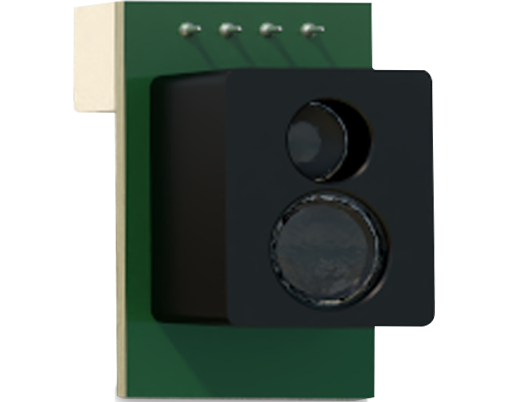
Laser sensors are not universal tools. Deploying them outside these boundaries is an invitation for catastrophic failure.
1. High-EMI Arc Environments: Near large welders or induction heaters, the internal clock crystals in time-of-flight sensors can be perturbed, causing intermittent, unexplainable offsets. Hall-effect or ultrasonic proximity sensors, though less precise, often prove more robust.
2. Targets with Specular or Transparent Surfaces: A polished stainless steel drum or a glass vial will reflect the beam away from the receiver, causing a dropout or a false long-range reading. The common "solution" of tilting the sensor simply creates a new, unpredictable reflection path. For these, confocal chromatic or diffuse reflection sensors are superior, albeit more expensive.
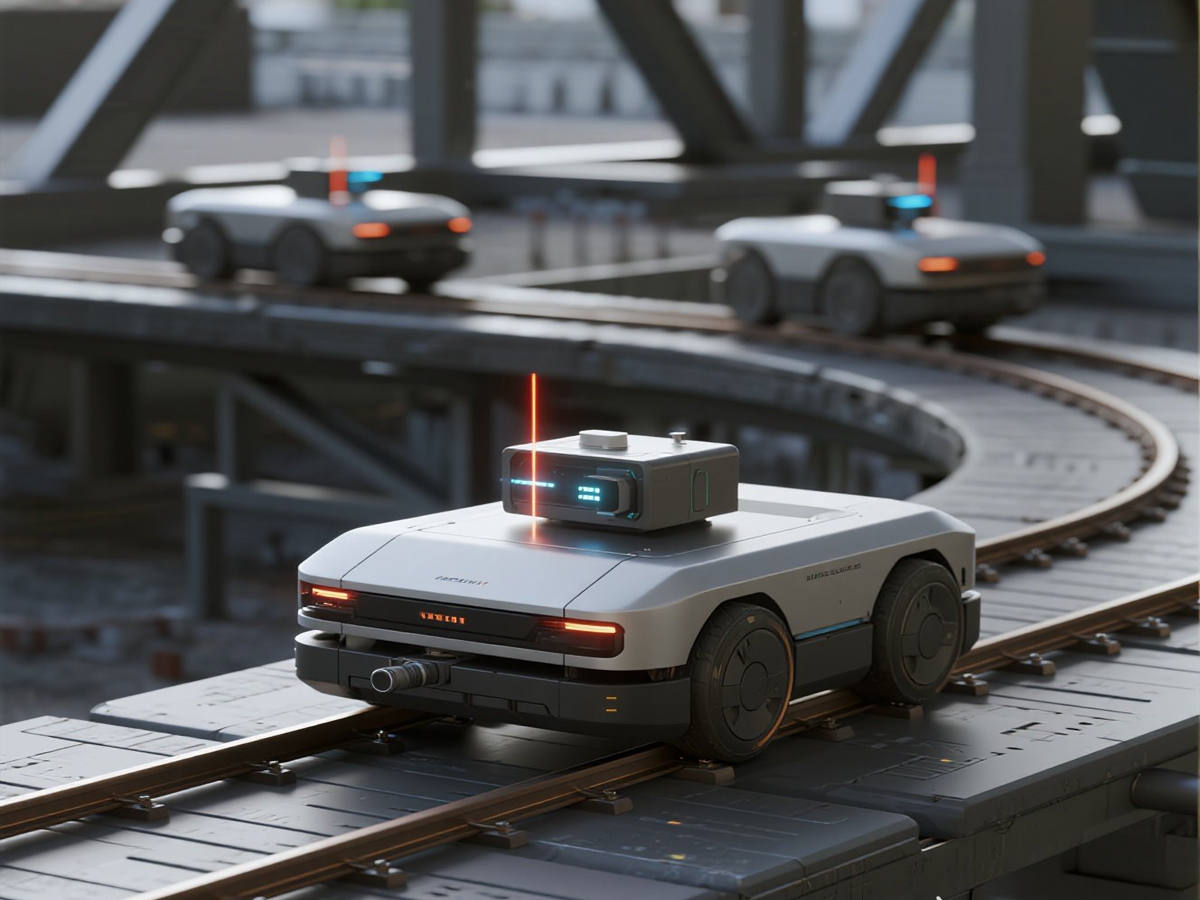
3. Rapidly Changing Ambient Light: This is the silent killer. A laser triangulation sensor tracking a part on a conveyor might work perfectly until a forklift drives past with its high-beams on, or a skylight allows direct sunlight to hit the detection point. Sunlight contains the sensor's own wavelength, flooding its CMOS array. Active background suppression helps, but in dynamic light environments, a laser is often the wrong choice. A structured-light 3D scanner or a contact probe may be necessary.
Counter-Intuitive Conclusion: Sometimes, a "Worse" Sensor is the Better Tool
The most reliable and cost-effective sensing solution for a high-speed bottling line inspection might not be the latest blue laser with 2-micron resolution. It could be a robust, red-light laser photoelectric with a generous, forgiving spot size. Why? Because the critical parameter isn't ultimate precision, but *discrimination reliability* under all conditions—vibration, condensation, label glare. The high-end sensor might struggle with the contrast variation of a glossy label, while the "inferior" sensor's larger spot integrates the signal, providing a stable, binary "present/absent" output. You're not paying for precision you can't use; you're paying for uptime. Another paradox: In ultra-precision metrology (e.g., semiconductor wafer positioning), environmental control for air temperature, pressure, and humidity is often more critical than the choice between two top-tier laser interferometer brands. The ±1 ppm accuracy of the tool can be completely negated by a 1°C temperature gradient in the measurement path. The sensor is perfect; the medium it travels through is not.
The ultimate advantage of a laser sensor is not listed on any spec sheet: it is the *constraint* it imposes. Its sensitivity to environment forces a rigorous systems-engineering approach. When you specify a laser, you are implicitly designing a controlled micro-environment for it. That discipline, born from understanding its profound weaknesses, is where true reliability is engineered.