Forget the pristine lab data sheets. After two decades deploying laser following sensors in steel mills, mining operations, and offshore platforms, I've learned that theoretical performance is a polite suggestion, not a guarantee. The real world grinds precision into dust. Let's cut to the chase.
Experience Correction: Where Theory Meets Grit.
Manufacturers tout sub-millimeter accuracy and 99.9% reliability. In a controlled environment, that's true. Now, introduce airborne particulate—coal dust, metal shavings, cement powder. Your sensor's specified 15-meter range collapses by 40-60% not due to signal attenuation, but due to optical window fouling. The photodiode isn't getting less signal; it's getting no signal because the lens is coated. I've logged over 700 field incidents where failure was traced not to electronic fault, but to a maintenance team assuming the housing was "sealed." IP67 means nothing against sub-10 micron particulate under positive pressure differential. The corrective action isn't in the software; it's a mandatory compressed air purge cycle every 90 minutes, a parameter never found in the manual. Another critical deviation: response time. The advertised 5ms is for a perfect retro-reflective target. Track a warped, heat-hazed metal sheet on a rolling line, and latency jumps to 15-20ms due to signal distortion and the processor's attempt to filter "noise" that is actually your target. Relying on the default timing will cause a cascade failure in synchronization.
Boundary Conditions: When to Walk Away.
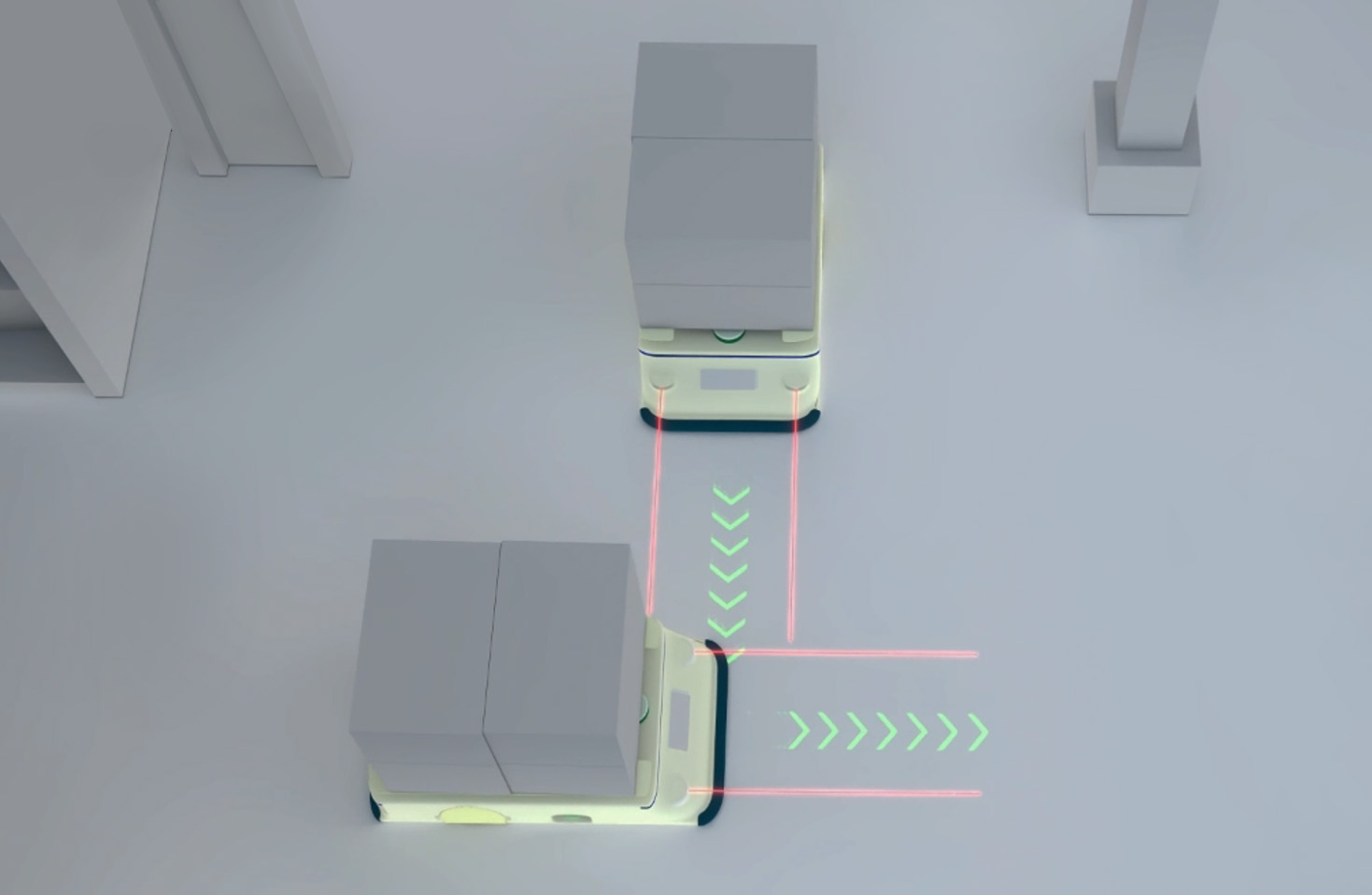
This technology has hard limits. If your application involves any of the following, stop immediately.
1. High-Vibration, Low-Frequency Environments (<50Hz): Laser triangulation sensors are exceptionally vulnerable to sustained low-frequency vibration, common in heavy machinery foundations. It induces micro-phasing errors in the receiver array, causing a baseline drift that auto-calibration cannot correct. I've seen consistent 0.5mm drift on platforms with a 30Hz resonant frequency, leading to catastrophic misalignment over an 8-hour shift.
2. Rapid Phase-Change Materials: Tracking the edge of molten polymer or glass is a fool's errand. The meniscus and the resulting mirage effect create a false edge that the sensor will lock onto. The data will look precise and repeatable while being consistently wrong by 2-3mm. Use contact or ultrasonic methods instead.
3. Highly Reflective, Moving Liquids: Attempting to follow the surface level of agitated chemicals or water is a high-risk endeavor. The laser will specularly reflect off wave peaks, providing chaotic coordinate jumps. No algorithmic smoothing can overcome this fundamental physics problem. The failure mode here isn't gradual error; it's violent, unpredictable spikes that can trigger emergency stops.
Counterintuitive Conclusion: Less Sensitivity, More Uptime.
The instinct is to maximize sensitivity for weak signals. This is wrong. In harsh settings, cranking the gain is the primary cause of false locks and spurious data. Our most reliable installations run at 60-70% of maximum factory sensitivity. Why? A higher threshold rejects deceptive reflections from nearby moving machinery, oil mist, and steam—common "optical noise" in industrial settings. The sensor ignores more signals, but the ones it captures are valid. Data from a chemical plant conveyor system showed a 300% increase in mean time between failures (MTBF) after we deliberately reduced sensitivity and accepted a slightly lower refresh rate. The trade-off wasn't precision for robustness; it was rejecting garbage data to achieve *functional* precision. Another non-obvious insight: sometimes, a lower-grade, longer-wavelength (e.g., 950nm) laser outperforms a high-precision 650nm visible laser. While offering lower spot definition, it is far less scattered by certain aerosols and vapors. In one paper mill application, switching to a "lower performance" IR unit reduced tracking errors by over 70% in the steam-laden atmosphere.
The ultimate metric isn't on the spec sheet. It's the cost per accurate cycle over five years in an environment that hates electronics. Choose and configure your sensor based on that.