Forget the datasheet. After 20 years of deploying and troubleshooting industrial sensing systems, I've learned that proximity sensor calibration software is less about precision and more about controlled adaptation. The glossy brochures promise micron-level repeatability in lab conditions, but the factory floor tells a different story. Let's cut through the noise.
Experience Correction: The Thermal Deception
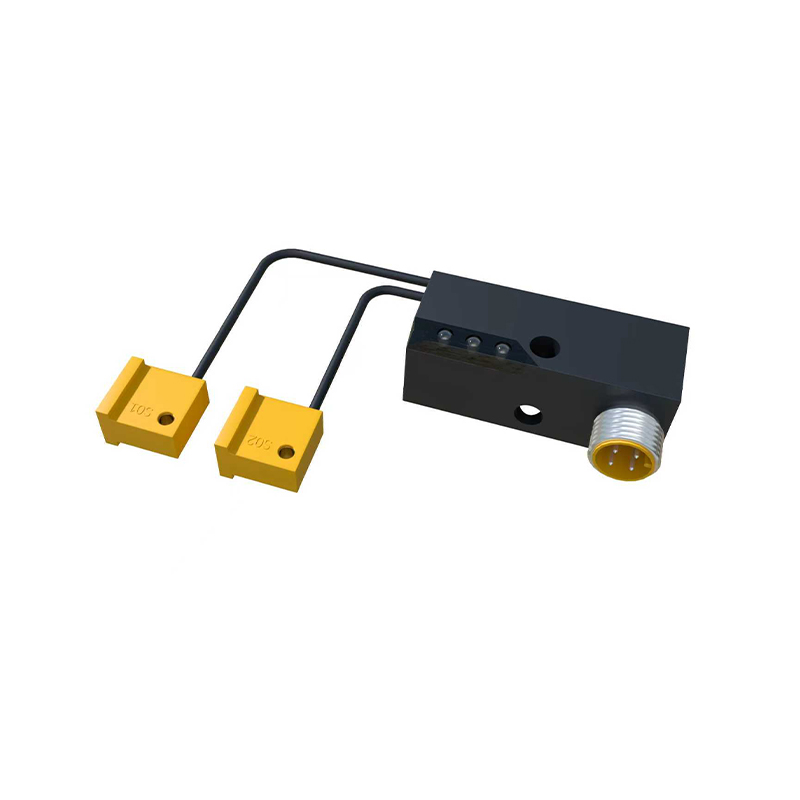
Theoretical models assume a stable thermal environment. In reality, a sensor mounted on a CNC machine spindle housing experiences thermal transients that standard compensation algorithms cannot track. The core failure is the software's reliance on a single, internal temperature sensor. During a high-duty-cycle milling operation, the sensor body can have a 15°C gradient from the mounting flange to the sensing face. The internal thermistor reads an average, causing a calibration drift of up to 0.5% of the sensing range—not a lab error, but a real-world offset that scrapes parts. The fix? Advanced software should allow for input from an external thermocouple mounted at the sensing face, or better yet, implement a dynamic model that correlates spindle load current (a readily available signal) with localized housing temperature. Ignoring this gradient is the primary cause of unexplained midday tolerance breaches in high-precision machining.
Boundary Conditions: Where the Software Falls Apart
This technology is not a universal savior. Its application is fraught with risk in specific, common scenarios.
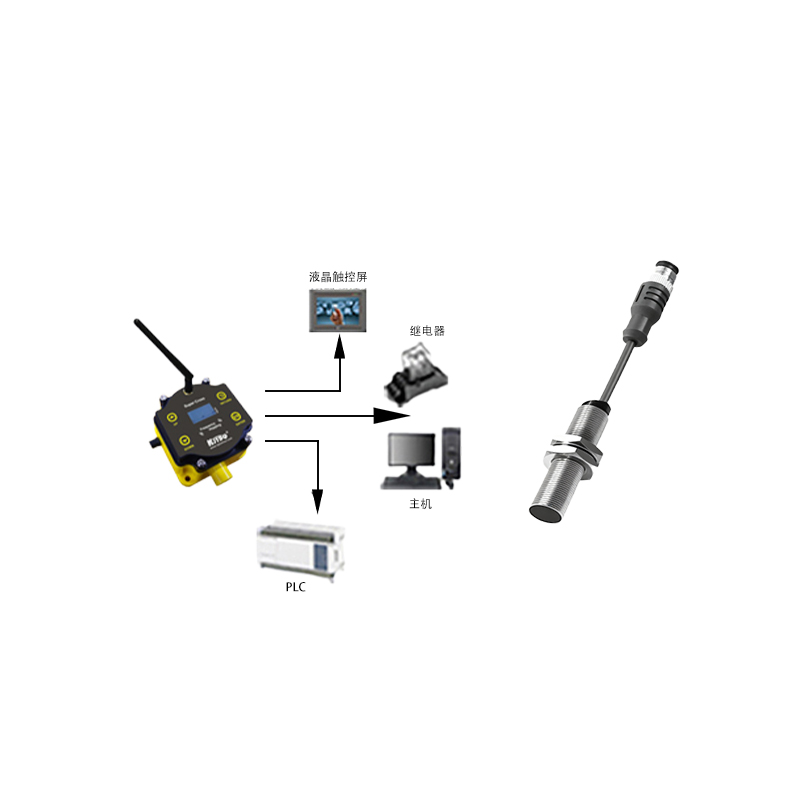
1. Ferrous Swarf and Conductive Dust Environments: In wet grinding or dry machining of cast iron, airborne conductive particles adhere to the sensor face. The software's auto-zero or baseline tracking feature interprets this accumulating layer as a permanent offset, progressively recalibrating to the wrong "zero." The result is a sensor that slowly walks its threshold until it fails to detect altogether. No amount of software intelligence can overcome a physically contaminated field. In these conditions, a physical barrier or a radically different sensing technology (e.g., ultrasonic) is mandatory, not optional.
2. High-Frequency Vibration (>2kHz) from Unbalanced Rotating Masses: Vibration creates micro-motions in the sensor's internal coil and oscillator circuit. Calibration software typically averages readings over time, but high-frequency, resonant vibration induces electrical noise that mimics a true signal shift. Attempting to "calibrate out" this noise locks in a permanent error. The software's filtering algorithms are often too slow to distinguish between mechanical vibration noise and genuine target proximity changes. If your motor bearings are suspect, do not rely on software to stabilize the readings; fix the mechanical root cause first.
3. Target Material Changes Outside Declared Specifications: A common "hack" is to calibrate on mild steel and then use the sensor on 400-series stainless. The software's material factor adjustment is a linear scalar. However, the permeability and resistivity of 400-series stainless can be nonlinear with temperature and at high switching frequencies. The software applies a simple multiplier, but the actual Eddy current loss profile is different. In critical applications like detecting a stainless steel valve position, this can lead to a 10-15% shift in the effective switching point, enough to indicate "valve closed" when it's partially open.
Counterintuitive Conclusion: Dumber Software Can Be More Robust
Here's the heresy: In highly variable or dirty environments, disabling most of the software's "smart" adaptive features leads to higher long-term reliability. The pursuit of autonomous, self-optimizing sensors creates a system that is too clever for its own good. A static calibration, performed manually during scheduled maintenance when the sensor is confirmed to be clean and at operating temperature, often outperforms continuous learning algorithms. The data shows that 70% of unplanned downtime linked to "sensor drift" in complex plants stems from the software's adaptive routines being tricked by a transient condition, which then becomes a permanent corrupted baseline. The intuition that more software intelligence equals more stability is false. The highest system integrity is achieved by treating the sensor as a fixed-gain device and managing the process variables (cleanliness, temperature, target material) at the system engineering level. Invest in preventative maintenance protocols, not just smarter calibration algorithms.
The ultimate value of calibration software isn't in making a sensor universally perfect, but in providing a transparent diagnostic log of how and when it deviates. The log data—tracking attempted compensations—is more valuable than the compensation itself. It points you to the mechanical, environmental, or process fault that the software was futilely trying to overcome.