Forget the spec sheets. After two decades of deploying laser sensors in mines, steel mills, and Arctic logistics hubs, I've learned that the real data is written in the scars of failed installations. The industry talks a big game about precision and reliability, but the truth is often buried under layers of marketing gloss. Let's cut to the chase.
Experience Correction: The Gritty Reality vs. Theoretical Specs.
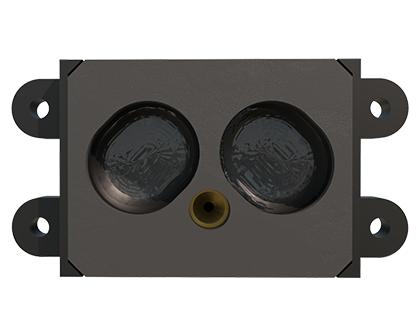
Your sensor's datasheet claims a 0.1mm accuracy and a 100-meter range. In a clean lab, it's true. Now, introduce airborne particulates—coal dust, metal shavings, oil mist. That 0.1mm accuracy can degrade to ±2mm within hours. The primary culprit isn't the laser wavelength itself, but the gradual coating of the transmitter and receiver optics. I've seen "hermetically sealed" units fail because standard seals breathe with thermal cycling, sucking in contaminated air. The advertised maximum range assumes 90% target reflectivity. In reality, a wet, corroded, or dark-colored surface in a dimly lit warehouse can drop effective reflectivity below 10%, slashing your effective working range by 60% or more. Temperature compensation circuits? They assume a steady-state ambient. Rapid thermal shocks—like a sensor on a foundry ladle—cause internal lens drift that software can't catch in time, leading to drift errors that are non-linear and often irreversible until the unit thermally re-stabilizes.
Boundary Conditions: When to Walk Away.

Laser-based triangulation sensors are brilliant until they're not. Do not use them for consistent measurement on rapidly vibrating surfaces (e.g., un-damped conveyor rollers, compressor housings). The vibration induces a Doppler shift in the returning light, interpreted by the receiver as a change in distance, creating noise that filtering cannot fully eliminate. It's a fundamental physics problem, not a software bug.

Similarly, avoid using standard time-of-flight (ToF) sensors in environments with high electromagnetic interference (EMI), such as near large arc welders or high-voltage switchgear. The nanosecond-level timing circuits are exquisitely sensitive, and EMI can induce phantom signals or complete lock-ups. I've documented cases where a sensor passed all EMC tests in certification but failed consistently when placed 3 meters from a 10kA welding station. The boundary isn't defined by a standard; it's defined by your specific electrical noise floor.
Finally, transparent or highly glossy liquids. Measuring the level of molten glass or clear chemical solvents with a standard laser is a fool's errand. The beam will partially reflect off the surface and partially refract through the liquid, reflecting off the container bottom, returning a cascade of false signals that the processor arbitrarily picks from. The result is unpredictable, jumpy data.
Counter-Intuitive Conclusion: Sometimes, a "Worse" Laser is Better.
Here’s the heresy: In high-particulate environments, a lower-class, longer-wavelength laser (e.g., 1550nm vs. the common 850nm) often outperforms the "high-precision" option. Why? Shorter wavelengths (850nm) scatter more intensely off fine dust (Rayleigh scattering), losing signal strength faster. The longer 1550nm beam is less prone to this scattering, maintaining a stronger signal-to-noise ratio through the muck. You trade off some potential spot-size precision for vastly improved reliability. The data from a sulfur recovery unit project showed a 400% increase in mean time between failures (MTBF) after switching to a purpose-built, longer-wavelength unit, despite its "inferior" 0.5mm rated accuracy versus the 0.1mm of the failed unit.
Another non-obvious insight: Aggressive internal fan cooling for high-temperature environments is a liability, not a feature. Fans pull in contaminants. I now spec passive-cooled or purged housings exclusively for temperatures up to 80°C. The failure rate from clogged filters and fouled fans dwarfs the failure rate from operating at the upper end of the sensor's passive thermal spec. The reliability curves are U-shaped, and the sweet spot is often at a lower, fan-less operating point.
The bottom line is this: Selecting a laser sensor is not about maximizing a single spec. It's a system reliability engineering problem. You must de-rate all performance metrics based on your specific environmental aggressors and prioritize robustness over peak theoretical performance. The most expensive sensor is the one that fails silently and takes your production line with it.