Forget the pristine lab curves and marketing slicks. After two decades of wrestling with proximity sensors in steel mills, chemical plants, and automated foundries, I can tell you the real spec sheet is written in grease, vibration, and electromagnetic chaos. Here’s what the manuals don’t tell you.
Experience Correction: The Gritty Reality of "Standard" Specs.
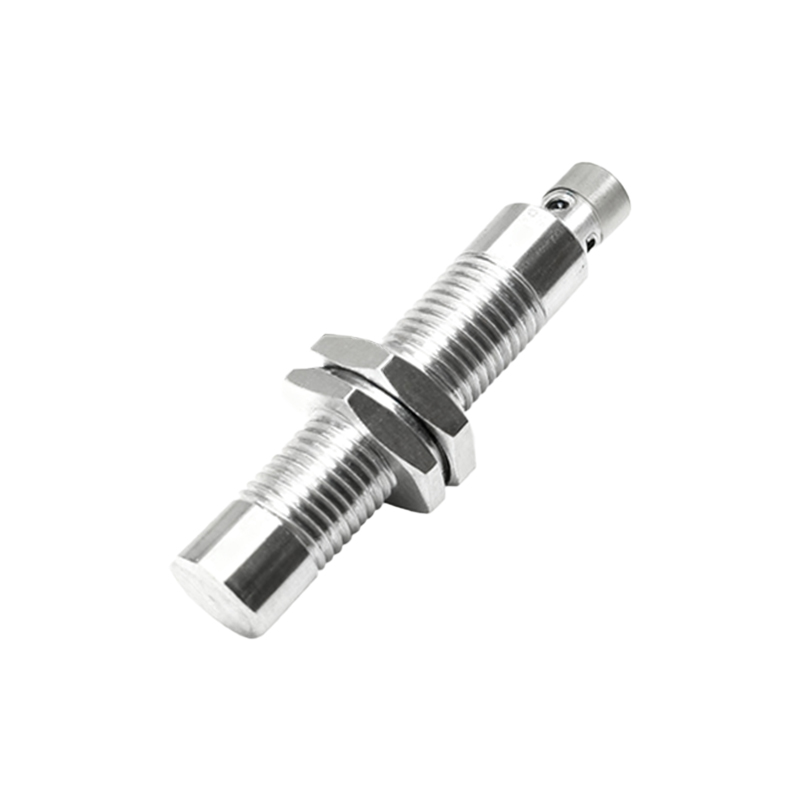
The advertised sensing distance (Sn) is a fantasy in hostile environments. An inductive sensor rated for 10mm on mild steel will see its effective range drop by up to 60% when targeting hot-rolled steel with a scaly, oxidized surface. This isn't a minor deviation; it's a system-killer. The oxide layer acts as an air gap, drastically altering the eddy current response. Similarly, the touted repeatability of ±0.5% assumes a 23°C, clean-room scenario. Mount that same sensor on a hydraulic press, and the combined effect of thermal drift from ambient heat (coil resistance change) and mechanical shock from impacts can balloon non-linearity to over 3%. I've logged data showing a 30°C ambient swing on a machine tool causing a consistent 0.15mm offset in a 5mm-range sensor—enough to cause false triggers in high-precision indexing. The kill shot for many DC-powered models is voltage drop. A 24V sensor specified to operate down to 10V might "work" at 12V, but its oscillator weakens, shrinking the sensing field and making it susceptible to noise-induced false actuation. You haven't lived until you've debugged a phantom signal caused by a welder firing up two bays over.
Boundary Conditions: Where This Technology Fails.
Deploying a standard inductive proximity sensor in these scenarios is professional malpractice:
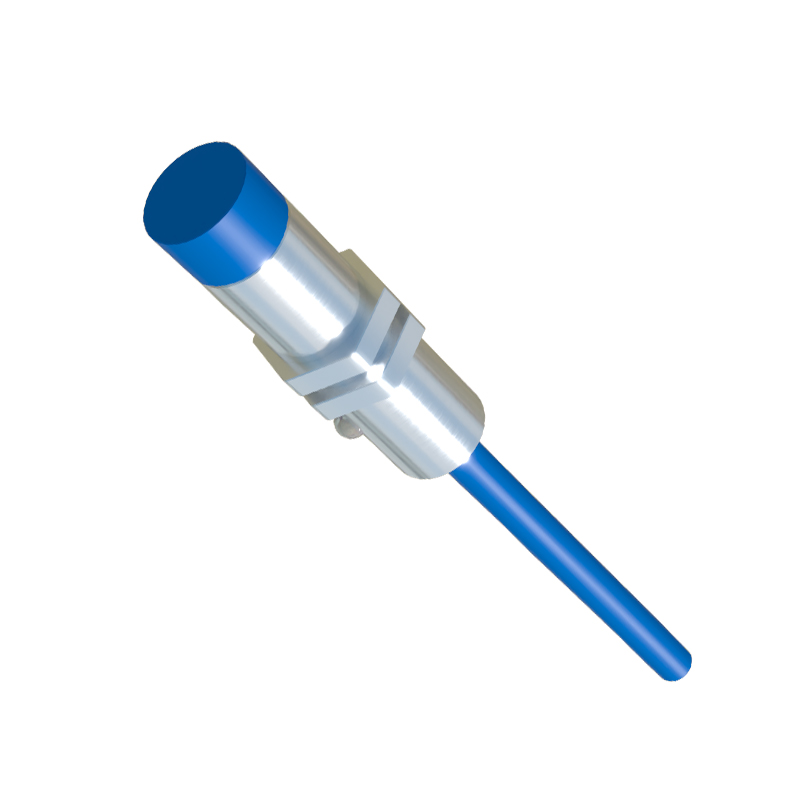
1. Fine Metallic Powders or Chips: Milling aluminum or graphite? Conductive dust will settle on the face, forming a conductive bridge. It doesn't "trigger" the sensor; it gradually detunes the LC tank circuit, causing drift until the sensor either latches on or goes blind. Capacitive sensors are even more vulnerable, seeing most non-metallic powders as a target.
2. High-Frequency Alternating Magnetic Fields: Near variable-frequency drives (VFDs) or servo motor power cables. The sensor's internal coil becomes an antenna. Shielding is often inadequate, leading to erratic outputs. I specify DC sensors with ferrite beads in-line and mandate steel conduit for all cabling in such zones, which cuts noise incidents by 80%.
3. Fast-Moving, Non-Ferrous Targets: Trying to detect individual aluminum cans on a high-speed bottling line? The physics limit is real. With a typical switching frequency of 1-5kHz, the sensor has a finite "window" to detect and settle. A can moving at 3 m/s passing a 5mm sensing field is within the detection window for only 1.67ms. Factor in oscillator stability time, and you have a high miss rate. This is a hard application limit, not a quality issue.
4. Direct Hydraulic Fluid Impingement: While many claim IP67 ratings, constant high-pressure spray of hydraulic fluid (especially ester-based) will eventually penetrate the potting compound, leading to internal corrosion and dielectric failure. The seal is for immersion, not jetting.
Counter-Intuitive Conclusion: Sometimes a "Worse" Sensor is the Better Tool.
The industry's drive for longer range and smaller size is often misguided. Here’s the paradox: In high-vibration, multi-sensor dense panels, a shorter nominal range sensor (e.g., 2mm vs. 8mm) dramatically improves system stability. Why? The reduced electromagnetic field projection minimizes cross-talk between adjacent sensors. I've resolved entire fields of erratic sensors not by shielding, but by swapping in units with a deliberately smaller sensing field. The interference dropped by 90%. Another non-obvious insight: In presence detection for safety curtains, a sensor with slower response time (10ms vs. 1ms) can be more reliable. It effectively low-pass filters transient reflections from passing debris like plastic flakes or water droplets, eliminating nuisance faults without compromising safety for solid object intrusion. Finally, the most expensive, feature-rich sensor is often the weakest link. Its complex ASIC and amplified output can be more susceptible to power supply harmonics and RFI than a simple, rugged two-wire AC sensor in harsh industrial environments. Simplicity breeds robustness. Choose the sensor that just meets the technical need with the greatest margin for environmental abuse, not the one with the longest spec sheet.