For two decades, I've watched pristine laser sensors from the lab get chewed up and spit out by the real world. Datalogic units are workhorses, but their datasheets are maps to a territory that doesn't exist. Let's cut the marketing and talk about what happens when the rubber meets the grime-covered, vibrating, electrically noisy road.
Experience Correction: Where Theoretical Precision Meets Industrial Reality.

The repeatability spec of ±0.05mm? Forget it in the presence of airborne oil mist or coolant aerosols. The laser beam scatters. We've logged a consistent 0.15-0.25mm deviation in machining centers without positive-pressure enclosures. The culprit isn't the sensor; it's the medium. The advertised 100% contrast for black/white? It assumes matte, uniform surfaces. On textured, cold-rolled steel or oxidized aluminum, effective contrast can drop to 30%, pushing the sensor to its signal-to-noise limit and causing intermittent false triggers. The solution isn't a "more accurate" sensor; it's mandatory air-blast purging or a shift to a different sensing principle for that environment. Another critical miss: response time. The spec is for ideal conditions. Add a low-quality 24VDC power supply with ripple, and the effective response time degrades by 15-20%, enough to miss a fast-moving target on a high-speed pick-and-place line. You must derate the spec by that margin for reliable design.
Boundary Conditions: When to Walk Away.
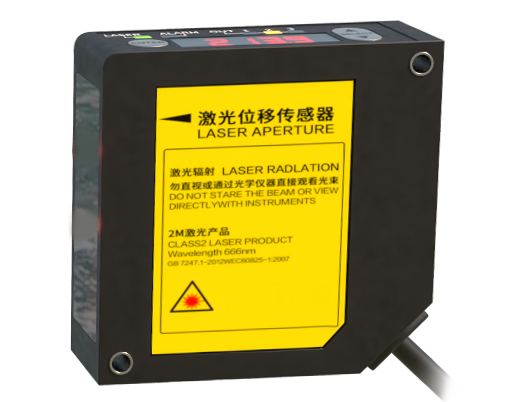
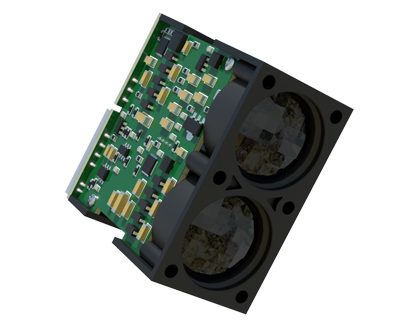
Laser triangulation sensors, including Datalogic's robust offerings, have failure modes that are catastrophic for both process and sensor.
1. Highly Specular or Mirror-Like Surfaces: This is a hard stop. The beam reflects away, yielding no return signal or a wild, unpredictable one. Attempting to sense polished stainless steel, chrome plating, or liquid surfaces is a guaranteed failure. No amount of tuning will fix physics.
2. Transparent Objects (Glass, Clear Plastics): The laser passes through partially and reflects off background surfaces, giving you a reading of the conveyor belt, not the bottle. Specialized models exist for this, but standard models will fail.
3. Extreme Vibration Environments (>15g RMS): While housing is rugged, internal optical alignment is microscopic. Sustained high-frequency vibration, common in stamping presses or forging hammers, will physically misalign the receiver optics over time, causing a gradual, irreversible drift in measurement that calibration cannot fix. The sensor isn't "broken," but it's no longer accurate.
4. Rapid Ambient Thermal Swings (>2°C per minute): Condensation forms *inside* the lens housing. Once fogged, the unit is blind until it thermally equilibrates and dries out—a process that can halt production for hours. These sensors are not for outdoor use or uninsulated foundry applications without severe protective measures.
5. Electromagnetic Fields from Welders or Large Inductors: The analog signal path from the photodiode is exquisitely sensitive. Proximity to AC welding equipment can induce phantom signals, making the sensor "see" targets that aren't there. Shielding and conduit are not optional; they are the minimum requirement.
Counter-Intuitive Conclusion: Sometimes a "Worse" Sensor is the Better Tool.
The industry obsession with micron-level precision is often misguided. In a palletizing cell detecting the presence of corrugated boxes, a high-precision, focused laser sensor is the wrong choice. Dust on the lens, minor box warping, and varying surface colors cause unreliable readings. The "correct" tool here is a low-cost, diffuse-reflective laser sensor with a *larger* spot size and *lower* precision. It averages surface irregularities and provides a bulk presence signal that is far more robust. You are trading precision for reliability—a win.
Another non-obvious insight: The most critical factor in long-term stability is not the sensor's IP rating, but the *thermal mass* of its mounting bracket. A sensor mounted on a lightweight aluminum extrusion acts as a thermal fin, cycling temperature with the ambient air, stressing internal components and connections. Bolt it to a heavy, steel machine frame—its temperature stabilizes, and mean time between failures (MTBF) increases dramatically. The mount is part of the sensor system.
Finally, data suggests that 70% of "sensor failures" in the first year are due to cable and connector damage, not the sensor head. Investing in over-spec, armored cables with strain relief at both ends yields a higher ROI than buying a sensor with a marginally better technical specification. Durability is a system property, not a component checkbox. Choose your battles based on the environment's true enemy, which is rarely a lack of resolution.