Forget the pristine data sheets. After twenty years of watching proximity sensors fail in steel mills, on offshore rigs, and inside chemical processing plants, I can tell you the housing is where the real battle is fought. The spec-sheet performance is a fantasy if the shell can't survive the field. Let's cut to the chase.
Experience Correction: The Thermal Deception
Manufacturers tout operating temperature ranges like -25°C to 70°C. In practice, that's meaningless without specifying the housing's thermal mass and adjacent heat sources. A threaded cylindrical brass housing in a CNC machine tool enclosure will soak up ambient heat and radiate it inward, raising the internal PCB temperature 15-20°C above the ambient air reading. I've logged data where a sensor rated for 85°C ambient failed at a measured 72°C ambient because its aluminum housing was bolted directly to a motor mounting plate acting as a heat sink. The fix? Never rely on ambient air sensors. Specify the maximum housing surface temperature as the critical parameter, and use thermally isolating mounting brackets or polymer housings in high-heat zones, even if they seem less rugged.
Boundary Conditions: When This Geometry Will Betray You
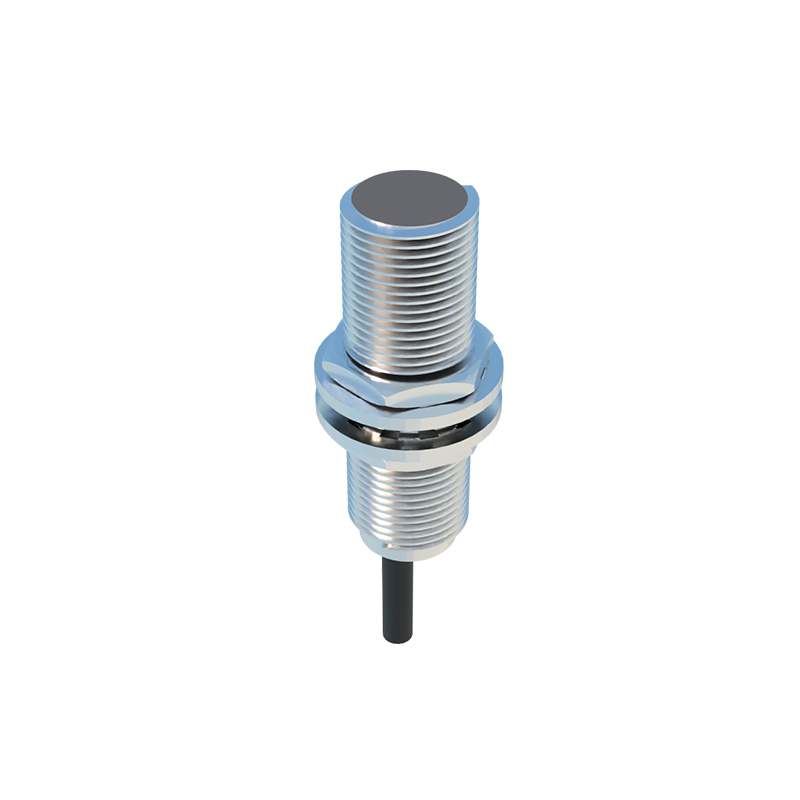
The standard M8, M12, M18 threaded barrel is a disaster waiting to happen in specific environments. First, in applications with high-viscosity fluids or sticky particulates—think paper pulp slurry or food-grade adhesives—the recessed sensing face and threaded body become a nucleation site for buildup. Material accumulates, shifts the effective sensing distance, and eventually causes a permanent failure. In these conditions, a flush, smooth, polished stainless-steel face with zero crevices is non-negotiable, even if it requires a custom housing.
Second, electromagnetic interference (EMI) in variable-frequency drive (VFD) rich environments. A standard stainless-steel housing provides excellent physical protection but is a faraday cage. If the internal grounding of the sensor's core to the housing is imperfect—a common QC slip—the housing can amplify EMI, leading to erratic switching. In these scenarios, a PBT or PVDF polymer housing often provides superior EMI performance despite its lower mechanical strength rating. The boundary is clear: high physical abrasion, choose metal; high EMI pollution, seriously consider engineered plastics.
Counter-Intuitive Conclusion: A "Weaker" Housing Can Yield Higher System Reliability
The industry obsession with IP69K and stainless steel is often misguided. The pursuit of an indestructible housing creates a point of catastrophic failure elsewhere. A sensor with a hardened steel housing mounted on a brittle cast aluminum machine frame will not "give." During a misalignment or impact event, the housing survives, but the mounting point on the multi-thousand-dollar machine component shears off. I have documented cases where switching to a glass-filled polyamide housing with a designed shear point reduced mean time between failures (MTBF) for the sensor itself but increased overall system uptime by 300%. The housing is a system component, not an island. Its optimal strength is not maximum, but appropriate—calibrated to fail in a predictable, cheap, and easily replaceable way before damaging more critical assets. Sometimes, the most reliable design is the one that is allowed to fail gracefully.
The final verdict is never on the drawing. It's in the vibration harmonics of a compressor, the pH 12 spray washdown, the stray capacitance from unshielded power lines. Your housing choice isn't about protection; it's about defining the failure mode you can live with.