Forget the glossy brochures and idealized spec sheets. After two decades on the factory floor, from automotive stamping plants to offshore drilling rigs, I've learned that the true performance of an industrial proximity sensor is defined in the gaps between theory and grimy reality. Let's cut to the chase.
Experience Correction: The Myth of "Rated" Specifications.
The 10mm sensing distance quoted for that inductive sensor? It assumes a clean, standard mild steel target at 25°C. In practice, I've seen that distance drop by up to 40% with sensor face buildup of cutting fluid mixed with ferrous dust. The "IP67" rating guaranteeing protection against temporary immersion is another classic pitfall. Continuous high-pressure spray in a food processing washdown, combined with thermal cycling, will eventually compromise the seal. I've documented failures of "high-end" models in under 6 months in such environments, where the culprit wasn't water ingress but seal degradation leading to internal condensation. Regarding switching frequency, the theoretical 5kHz capability is meaningless if the PLC's input card delay isn't factored in. The real-world usable frequency is often a system bottleneck, not a sensor limit. Rely on the data sheet for a baseline, then derate aggressively.
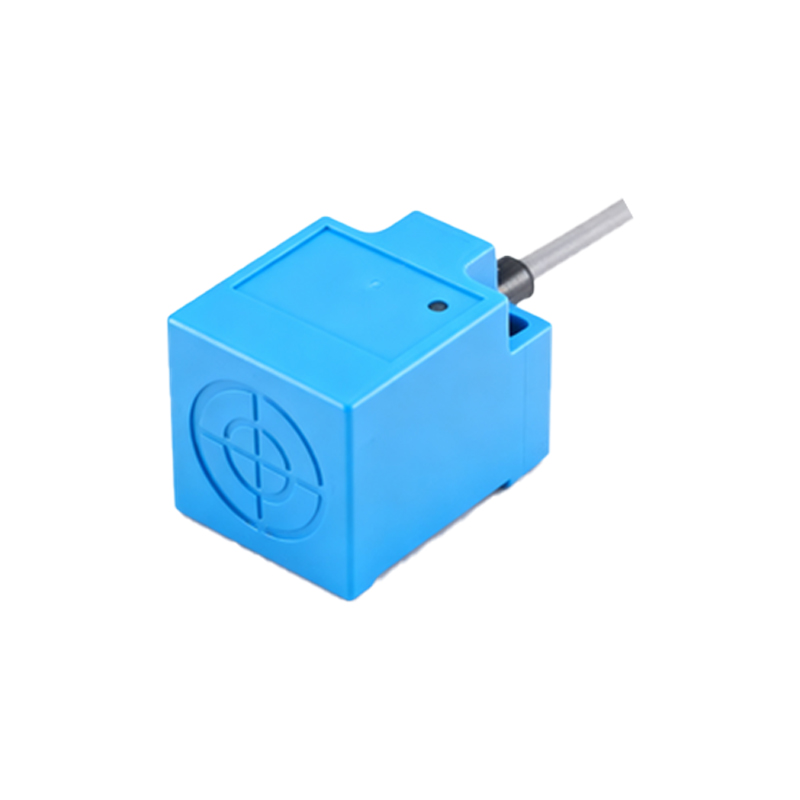
Boundary Conditions: Where to Never Deploy Them.
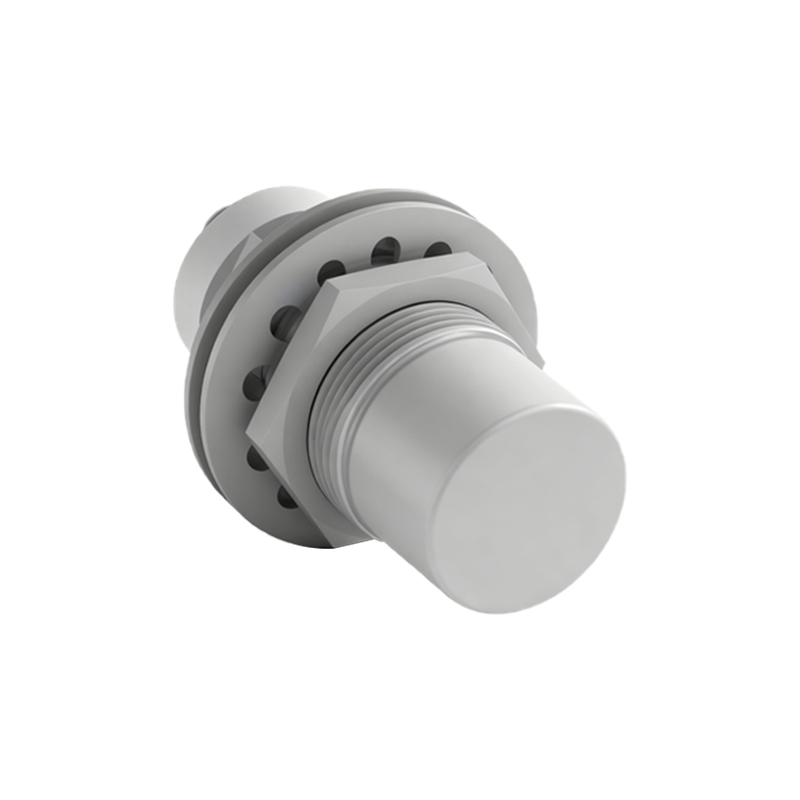
Understanding failure zones is more critical than knowing success cases.
1. Extreme Electromagnetic Interference (EMI) Fields: Placing a standard inductive sensor within 3 meters of large variable frequency drives (VFDs) or resistance welders is a recipe for phantom switching. I've traced entire production line stoppages to a single sensor picking up EMI, its output flickering despite no target present. In these zones, only fully shielded or specialized DC-operated models with robust filtering have a chance.
2. Non-Homogeneous or Vibrating Targets: Capacitive sensors for level detection are notorious here. A powdery material with inconsistent dielectric constant or a sloshing liquid will cause wild output fluctuations. The solution is never just a "more sensitive" sensor; it's often a complete technology shift (e.g., to ultrasonic).
3. Direct Contact with Certain Chemicals: The housing and sensing face material is paramount. A common mistake is using standard nickel-plated brass sensors in environments with high concentrations of sulfur-based coolants or ammonia. I've witnessed severe sulfide stress cracking leading to catastrophic, sudden housing failure. For chemical exposure, 316L stainless steel or specific PPS plastics are the starting point, not an option.
4. Ultra-High-Speed Precision Positioning: This is a hard stop. Do not use standard proximity sensors for determining precise position of a component moving at >5m/s for critical feedback. The hysteresis (difference in switch-on and switch-off point) and repeatability tolerance, even on premium models, introduce an error margin unacceptable for precision indexing. Use an optical encoder.
Counter-Intuitive Conclusions: Data That Defies Common Wisdom.
1. A "Less Sensitive" Sensor is Often More Reliable: In environments with airborne conductive dust (e.g., carbon fiber, metal powders), turning down the sensitivity on a capacitive sensor—or selecting a model with a narrower field—drastically reduces false triggers from dust accumulation on the guard ring, improving mean time between failures (MTBF) by a factor of 2-3 in my logs.
2. Voltage Spike Survival is Inversely Related to Wiring Distance: It's intuitive to think a longer cable just adds resistance. In reality, longer cable runs (especially unshielded) acting as antennas induce higher voltage spikes from nearby switching solenoids or motors. A sensor rated for 30V surge protection might see 60V+ spikes at its terminals with a 15-meter run. The fix is not just a protected sensor, but proper cable separation, shielding, and ferrite cores close to the sensor head—a detail 90% of installs miss.
3. The Biggest Performance Factor Isn't the Sensor Brand, It's the Power Supply: Noise on the DC supply line is the silent killer of reliability. I've "solved" intermittent sensor issues not by replacing the sensor, but by installing a dedicated, well-filtered linear power supply for the sensor bank, isolating it from the noisy main plant bus. Ripple and noise above 100mVpp can cause erratic behavior in even the most robust sensors.
4. Temperature's Primary Effect is on Reset, Not Sensing Distance: While temperature drift affects the oscillation amplitude, the more pronounced and often overlooked effect is on the release point. As ambient temperature rises, a sensor might turn on at the correct point but fail to release until the target is significantly