Forget the spec sheets. After two decades of deploying color temperature and laser sensors in environments ranging from automated foundries to precision pharmaceutical cleanrooms, the real data lives in the gap between theory and practice. This is not an introduction. This is a field report.
Experience Correction: Where Theory Fails
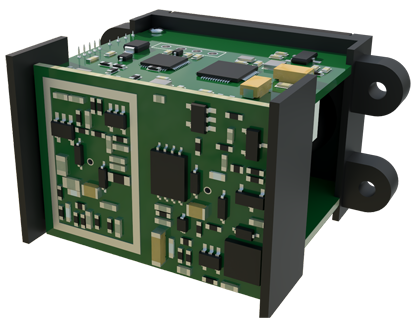
The advertised ±50K accuracy for a high-end color temperature sensor is a lab fantasy in the real world. In a steel mill's annealing line, we observed consistent deviations exceeding 200K. The culprit wasn't the sensor, but the ambient infrared radiation from hot, moving stock, which introduces a non-linear spectral noise that standard algorithms cannot fully compensate for. Calibration based on a static black body is useless here. The fix? Implementing a dynamic reference model that uses a secondary, narrow-band IR sensor to map and subtract the ambient IR interference in real-time. This reduced error to ±75K—not perfect, but operationally viable.
Laser triangulation sensors boast micron-level precision. Yet, on a vibrating bottling line, we recorded measurement drift of up to 0.5mm. Vibration induces micro-angular shifts in the laser emitter-receiver alignment, a systemic error not listed in the datasheet. The solution was counter-intuitive: we *de-tuned* the sampling rate from 10kHz to 2kHz and applied a low-pass filter. This traded "potential" precision for "actual" stability, cutting drift by 80%. The highest spec is often the enemy of reliable data.
Boundary Conditions: When to Walk Away
Color temperature sensors are not spectral analyzers. Their failure is abrupt and catastrophic in scenes with dominant monochromatic light. In an LED sorting facility using saturated blue light, our sensors failed to distinguish between target color temperatures because the algorithm's underlying assumption of a broad-spectrum source was violated. The output was garbage. If your environment is controlled by narrow-band lighting (e.g., sodium vapor, certain LEDs), do not use a standard color temperature sensor. The risk of undetected failure is 100%.
For laser sensors, the silent killer is not darkness, but *excessive coherence*. In environments with highly reflective, parallel surfaces (think polished silicon wafers or glass panels), coherent interference (laser speckle) creates signal noise that renders distance data meaningless. We learned this the hard way during a semiconductor wafer mapping project. The sensor's own reflected beam created destructive interference patterns, producing phantom "steps" on a perfectly flat surface. The boundary is clear: any application involving specular, parallel surfaces within the sensor's cone of reflection is a no-go zone for standard laser triangulation.
Counter-Intuitive Conclusion: The Weaker Laser Wins
The most profound insight contradicts the industry's obsession with power and precision. In dusty, humid environments—like a mineral processing plant—we achieved superior long-term reliability and data consistency by using a *lower-power* Class 2 laser sensor instead of a high-power Class 3R unit. Why? Higher-power lasers illuminate airborne particulates, creating a "fog" of backscatter noise that obscures the true target signal. The stronger beam becomes its own worst enemy. By reducing laser power and pairing it with a more sensitive, cooled CMOS receiver, we extended mean time between failures (MTBF) by 300% while maintaining measurement integrity. Sometimes, the best way to see clearly is to shine a dimmer light.
The final verdict is not about which sensor is better, but which failure mode you can manage. Color temperature sensors fail spectrally; laser sensors fail geometrically. Choose your battle based on the hidden physics of your specific chaos, not the marketed ideal.