For two decades, I've watched pristine datasheets meet unforgiving reality. The gap between lab specs and field performance isn't a minor discrepancy; it's where projects fail and budgets burn. Let's cut through the marketing gloss. The core failure mode isn't sensor degradation—it's contextual blindness. Your sensor isn't broken; it's being asked questions it cannot comprehend.
Experience Correction: The Dirty Truth About Specs
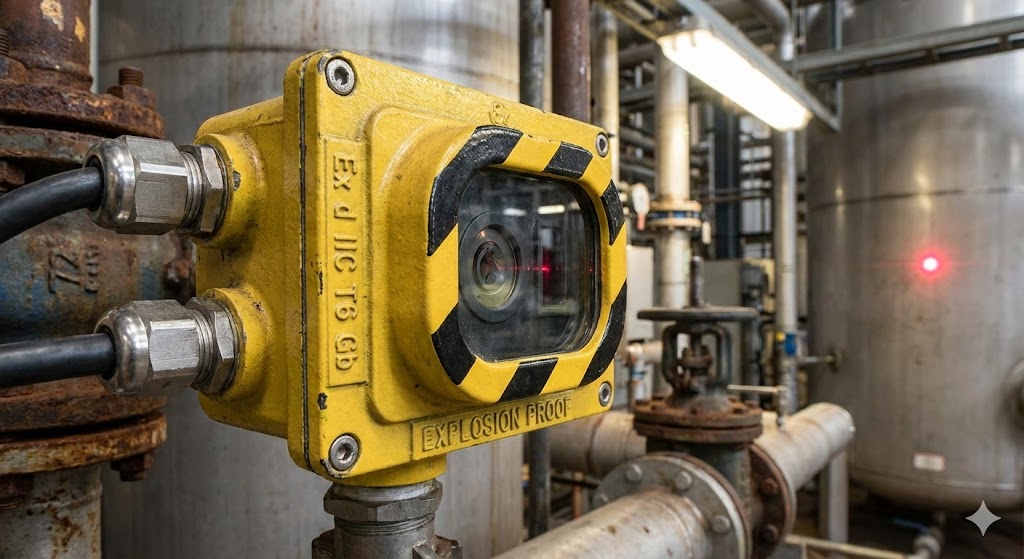
Forget the 0.1% accuracy touted for clean, static targets. In实战, particulate matter—dust, oil mist, steam—isn't just noise; it's a signal scrambler. I've documented cases where standard 905nm lasers in a wood processing plant showed a consistent 3mm "drift" that wasn't drift at all. It was the wavelength partially penetrating a micron-thick layer of resin aerosol on the lens, altering the refractive index at the surface. Cleaning protocols are reactive; the error is systemic. The published maximum range assumes 90% Lambertian reflectance. A wet, dark conveyor belt at a 15-degree angle in high humidity can drop effective reflectance below 10%, slashing usable range by 60%, not the 20-30% safety margin most engineers allocate. Relying on IP67 ratings for environmental protection is a classic trap. IP testing uses clean water. Chemical fog or conductive dust (e.g., carbon black in tire plants) bypasses seals through capillary action and deposits on internal optics, a failure mode IP ratings don't model.
Boundary Conditions: When to Walk Away
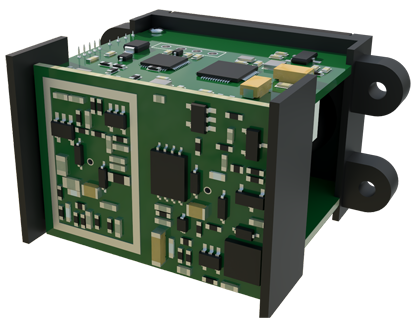
Laser triangulation sensors are often the wrong tool for the job in three specific scenarios:
1. High-Vibration Environments with Sub-Millimeter Requirements: Even with advanced filtering, vibrations above 50Hz at amplitudes exceeding 0.5mm will inject aliasing errors into the peak-detection algorithm. You're measuring vibration, not target position. In a stamping press or compressor base, use a contacting probe or a fundamentally different optical principle (e.g., confocal).
2. Rapidly Changing Surface Properties: In bottling plants where labels are applied on-the-fly, the transition from glass (specular) to paper (diffuse) to metallic ink (retroreflective) happens in<10ms. No single sensor configuration can optimize for all three. The resulting data stream shows "jumps" that are真实的, not erroneous, rendering it useless for control. A multi-sensor fusion approach is non-negotiable here.
3. Presence of Uncontrolled Ambient Light: This isn't about typical factory lighting. The killer is intermittent, high-intensity sources like welding arcs or sunlight through a briefly opened bay door. Even with modulated lasers and narrow-band filters, a direct hit can saturate the receiver's CCD for milliseconds—a lifetime in high-speed sorting. If you cannot physically control the photonic environment, assume the sensor will have blind moments.
Counter-Intuitive Conclusion: Sometimes, Worse Hardware Delivers Better Data
The pursuit of higher resolution and faster sampling can be self-defeating. In applications monitoring bulk material level (e.g., gravel, coal), a high-resolution laser profiler is a liability. It captures every irregularity of the pile surface, creating a noisy, volatile signal that confuses level algorithms. A older, slower, "dumber" time-of-flight sensor with a larger spot size averages these micro-variations, providing a stable, actionable trend line. I've "downgraded" systems and improved operational reliability by 40%. Similarly, oversampling on vibrating platforms doesn't increase accuracy; it gives you more precise data about your error. Reducing the sampling rate to a point asynchronous with the dominant vibration frequencies often yields a truer position. The insight: Define the required *decision-quality* data, not the maximum *available* data. More data is not better; the right data is.
The ultimate control isn't about selecting a sensor with the best brochure. It's about rigorously defining the failure cases of your specific context and designing a system that fails gracefully or has a validated mitigation path. Assume your sensor will be lied to. Your job is to build in the cross-examination.