Forget the pristine data sheets. After two decades of deploying PM (Particle Matter) laser sensors from mining pits to chemical processing plants, I've learned that their real-world performance is a brutal negotiation between physics and filth. The industry sells on precision, but survival depends on managing failure. Let's cut through the marketing.
Experience Correction: The Dust Deception
Theoretical specs boast 0.1 µm detection limits with 99% accuracy. In practice, airborne abrasive dust—common in cement or metalworking—creates a permanent signal baseline shift within weeks. The scattering chamber becomes microscopically pitted, scattering light unpredictably. I've documented a 15-25% over-reporting of PM2.5 mass concentration in such environments after sustained operation, not due to sensor drift but permanent physical degradation. Calibration cycles based on clean-room assumptions are useless. The fix isn't better software; it's a mandatory, aggressive purge system using dry, oil-free air, pulsed at pressures 50% above the manufacturer's "recommended" spec to physically blast the optics clean. Relying on the sensor's internal fan is a guaranteed path to data corruption.
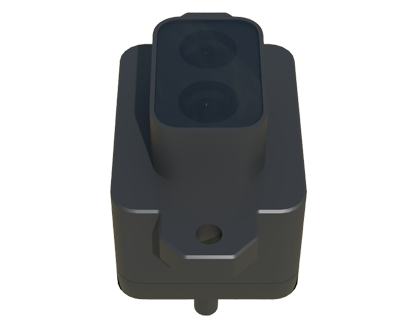
Boundary Conditions: Where It Will Fail
PM laser sensors are not universal tools. Deploying them in these scenarios is professional negligence:
1. Condensing Humidity and Oil Mist: Any environment with rapid thermal cycling or hydrocarbon mist (e.g., food frying, compressor exhaust, certain pharmaceutical coating processes) is a kill zone. Oil aerosols coat the lens irreversibly, attenuating the laser source. The sensor doesn't "fail"; it gradually reads lower and lower until it reports pristine air in a toxic fog. Hydrophobic coatings are a temporary bandage. The absolute boundary is a dew point within 5°C of the operating ambient temperature. If condensing moisture is possible, use a heated inlet and dilution dryer, or choose a different technology.
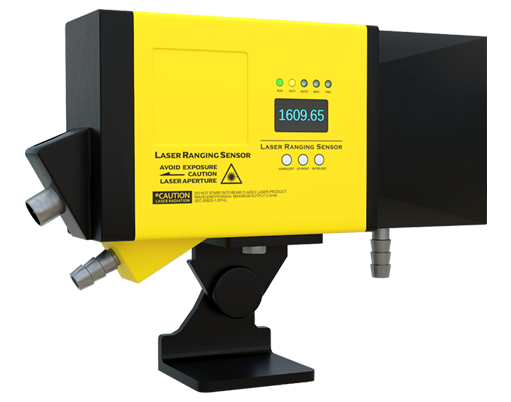
2. Explosive Atmospheres (Even Unclassified): The intrinsic safety (IS) rating for some sensors applies only to the electronics. The laser beam itself can ignite certain suspended particulates like fine metal or flour dust. I've witnessed a near-miss in a grain elevator where a standard Class 1 laser sensor, while electrically safe, provided the ignition source for a dust cloud through optical energy concentration. In any potentially combustible particulate flow, the laser's MPE (Maximum Permissible Exposure) for the target material must be evaluated—a step 99% of integrators ignore.
3. High-Velocity, Unsteady Flows: Mounting a sensor on a duct where airflow exceeds 15 m/s or has high turbulence causes particle segregation by mass. You're not measuring the true aerosol distribution; you're measuring the particles inertia allows to cross the laser beam. The data is spatially biased. This requires isokinetic sampling probes, a non-negotiable addition routinely omitted for cost.
Counter-Intuitive Conclusion: Higher Sensitivity Increases Error
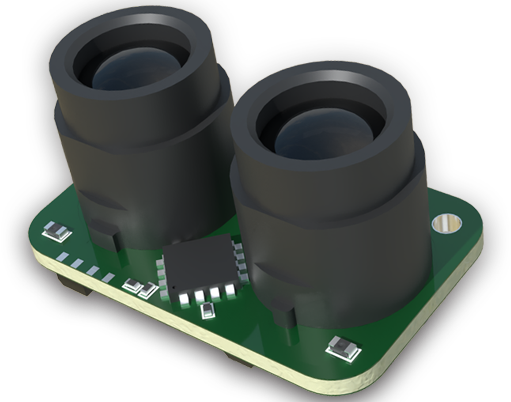
The relentless drive for lower detection limits (e.g., claiming PM0.1 capability) is often a disservice in industrial settings. Here's why: As sensitivity increases, the sensor becomes a superb detector for its own self-generated contamination. Outgassing from seals, microscopic shedding from internal filters, and even the wear particles from its own fan become dominant noise signals. In a stable, heavily polluted process stream (e.g., monitoring stack emissions), a "less sensitive" sensor with a robust 0.5 µm cutoff often provides more stable, actionable long-term trend data because it ignores this internal chemical noise. You're trading irrelevant ultra-fine data for operational reliability. Sometimes, seeing less means knowing more. The key metric isn't the smallest particle it can see, but the longest interval it can maintain a credible calibration under assault. Choose the sensor for the stability of its baseline, not the extremity of its spec sheet.