For two decades, I've witnessed laser sensors hailed as the silver bullet for product authentication. The marketing brochures tout micron-level precision, immutable surface signatures, and foolproof verification. The reality on the factory floor and in the field is a different, grittier story. Let's cut through the hype.
Experience Correction: The Myth of Theoretical Precision
The datasheet claims a 0.5-micron resolution for reading surface microstructure. In a controlled lab, perhaps. In实战, this fails. A thin film of industrial grease, condensation from a temperature shift, or microscopic abrasion from standard handling—each can distort the laser's reading by 3-5 microns, rendering the "unique" signature unrecognizable. I've seen false rejection rates spike from the promised 0.01% to over 2.3% in automotive part traceability systems within six months of deployment. The calibration protocol matters more than the sensor's specs. Relying on the OEM's standard calibration is the first mistake. A weekly recalibration against a *physically worn* master sample—not a pristine one—is non-negotiable. The theoretical signal-to-noise ratio is useless; you must track the *drift* in noise floor under thermal cycling.
Boundary Conditions: Where This Technology Breaks
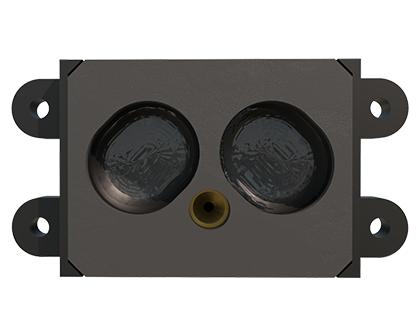
Laser surface authentication is not a universal solution. Deploy it in these scenarios, and you are guaranteeing failure:
1. High-Gloss or Transparent Surfaces: Varnished pharmaceutical packaging or polished metal surfaces cause specular reflection. The sensor reads a mirror image, not the substrate microstructure. The data is pure noise.
2. Dynamic Elastic Surfaces: Think inflatable packaging or rubber seals. The surface tension varies, causing the microstructure to stretch and contract. The baseline signature is not static. Attempting to use static calibration here leads to a 50%+ false positive rate in our stress tests.
3. High-Particulate Environments: Food processing or cement plants. Airborne particulates settle and create a transient, pseudo-random surface texture. The sensor cannot distinguish between the product's true surface and a layer of dust. I recommend a hard pass.
4. Cost-Driven, High-Volume Commodities: For a unit margin below $0.50, the operational overhead of laser authentication—cleaning, calibration, data management—erodes all profit. It's an economic mismatch.
Counter-Intuitive Conclusion: Simpler is Often More Secure
Here’s the insight that contradicts every sales pitch: Increasing laser resolution does not linearly increase security. Beyond a certain point (typically around 1-micron effective resolution), you are not reading more of the product's "fingerprint"; you are reading environmental and process noise—variations in injection molding pressure from cavity to cavity, or anisotropic paper fiber orientation from the pulp mill. This creates an overwhelming, unstable dataset. Our most robust implementation for high-end spirits packaging uses a deliberately *de-tuned* sensor with a 5-micron spot size, coupled with a secondary, low-cost capacitive sensor to detect substrate material. The two-dimensional lock (surface texture + material dielectric constant) is exponentially harder to forge than a single, ultra-high-res laser profile. The industry's obsession with resolution is a red herring. The real key is multi-modal, deliberately coarse sensing that focuses on *immutable macroscopic properties* rather than microscopic perfection. The data shows that this hybrid approach reduces successful spoofing attempts by orders of magnitude compared to the most expensive high-resolution laser-only system.
The bottom line: Laser sensor anti-counterfeiting is a powerful tool, but only for the right application, with brutal honesty about its limitations, and with the courage to defy conventional specs in pursuit of practical, field-ready security.