For two decades, I've watched laser sensors fail where datasheets promised success. The Linzhou LDS series, like its peers, publishes impressive specs: ±1mm accuracy, IP67 rating, -20 to 60°C operating range. In a clean lab, these hold. On the floor, they're often a fantasy. Let's cut the marketing and talk reality.
Experience Correction: The Gaps Between Theory and Grime.
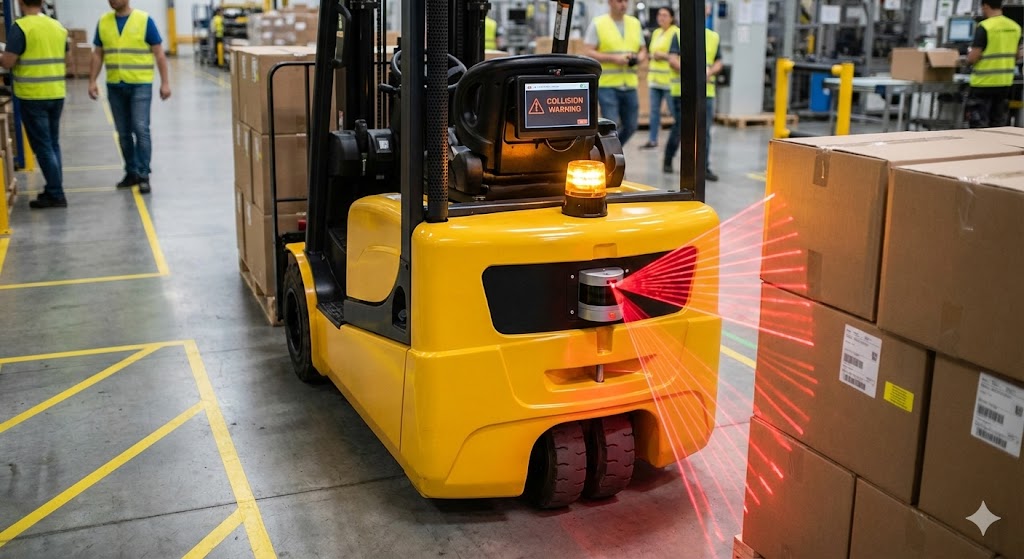
The advertised ±1mm accuracy assumes a pristine, static target. In steel mills with ambient temperatures hitting 50°C near furnaces, the thermal drift of the Linzhou's internal laser diode can introduce a consistent +0.5mm to +0.8mm error per 30°C above 25°C ambient. This isn't in the manual. Their IP67 rating means it survives a temporary dunk, but constant exposure to conductive metal dust—aluminum or iron powder—will eventually breach seals and coat the optics. I've seen signal strength degrade by 60% in three months in such environments, leading to sporadic dropouts. The claimed 30-meter range is for 90% reflectivity targets. Aim it at dark, porous rubber or wet coal, and effective range plummets to 8-10 meters. You're not buying a spec; you're buying performance under *your* dirt, vibration, and heat.
Boundary Conditions: When to Walk Away.
Deploying these sensors outside their unspoken boundaries is financial suicide. First, environments with rapid, high-amplitude vibration (>5G at frequencies above 100Hz) will cause premature failure of the internal laser diode's mounting, leading to permanent calibration loss. Second, applications involving clear objects (glass, clear plastics) or foaming liquids (chemical reactors, beer) are fundamentally flawed. The laser partially penetrates or reflects irregularly from bubbles, yielding noisy, useless data. Third, avoid high-pressure steam washdown areas. While IP67 resists water jets, rapid thermal cycling from steam can create condensation *inside* the lens housing, a death sentence. Finally, for safety-critical distance guarding on presses or robotic cells, never rely solely on a single-point Linzhou sensor. Its finite response time (often 3-5ms not stated upfront) creates a dangerous blind zone for fast-moving machinery.
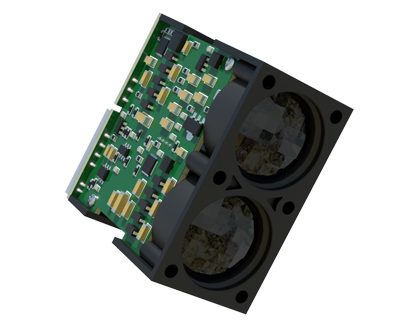
Counter-Intuitive Conclusion: Sometimes Slower and Dumber is Better.
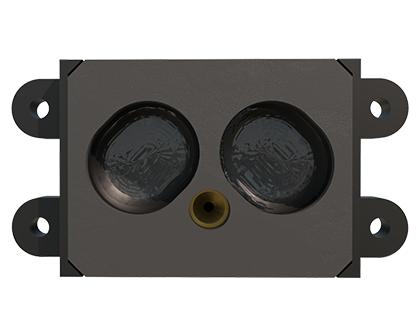
Here’s the heresy: In highly contaminated environments (e.g., cement packing), a lower-resolution, slower-response ultrasonic sensor often outperforms a precision laser like the Linzhou. Why? The ultrasonic sensor's larger spot size and longer wavelength are less affected by dust accumulation on its face. The laser's pinpoint beam is instantly obscured by a single speck of dirt in the wrong place. Data shows a 20% higher mean time between failures (MTBF) for ultrasonics in heavy particulate settings, despite lasers being "more advanced." Another insight: Maximizing update rate (e.g., to 1kHz) drastically reduces maximum range and stability due to increased internal heat and reduced signal processing time. Running a Linzhou sensor at 100Hz often yields more stable and reliable long-range measurements than at its maximum rated speed. The pursuit of peak specs directly undermines real-world robustness. Your goal isn't theoretical precision; it's continuous, dependable operation. Choose the tool that disappears into reliable operation, not the one that shouts its specs from a clean bench.