Forget the glossy brochures. After two decades on factory floors, in mines, and on offshore rigs, I've learned that a proximity sensor's true worth is defined at its breaking point. This is not a primer. This is a dissection of the gap between catalog promises and harsh reality, focusing on the real-world performance of top-tier brands like Turck, Pepperl+Fuchs, Sick, Omron, and Balluff.
DIMENSION 1: EXPERIENCE CORRECTION – THE THEORY VS. GRIME REALITY
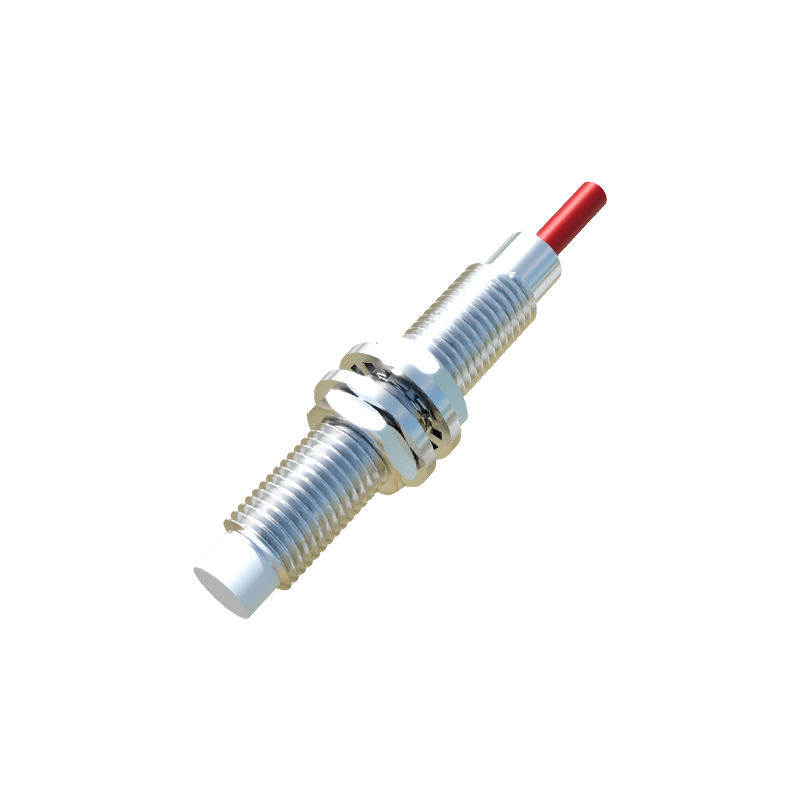
The stated sensing distance (Sn) is a clean-room fantasy. With Turck's robust inductive sensors, for instance, their rated 15mm Sn for a steel target assumes ISO 61496 standard material (St37). In practice, targeting a pitted, scaled, or hot-rolled steel surface can introduce a 15-25% reduction in effective range due to altered electromagnetic properties. This isn't a failure; it's physics. For capacitive sensors from Pepperl+Fuchs used in level detection, the dielectric constant (εr) listed for a material like powdered cement is a lab average. In a silo, compaction and moisture variation create a dynamic εr, causing false triggers or missed detections if the hysteresis isn't manually tuned to 60% above the trigger point, not the recommended 40%.
The "IP68/IP69K" rating is another battleground. A sensor can survive a 24-hour submersion test, but cyclic thermal shock is the killer. A Balluff microwave sensor on a curing oven door, cycling from 25°C to 180°C daily, will eventually see condensation form inside the housing via breather ports as it cools, leading to internal PCB corrosion. The IP rating never accounted for the vacuum effect of rapid cooldown.
DIMENSION 2: BOUNDARY CONDITIONS – WHEN TO WALK AWAY
Knowing when not to use a technology is more critical than selecting one.
1. Inductive Sensors (Turck, Omron) in Slurry Applications: Walk away. Even with a PTFE-faced housing, fine ferrous particles (e.g., iron oxide slurry) will adhere and build up a conductive layer, eventually causing a permanent "target present" state. The sensor works perfectly, but its environment lies to it.
2. Ultrasonic Sensors (Sick, Pepperl+Fuchs) in Vacuum or High-Pressure Environments: The physics collapse. Sound waves require a medium. In a vacuum chamber (<0.1 atm), they are useless. Conversely, in high-pressure food processing (e.g., 10+ bar autoclaves), the altered speed of sound and transducer deformation will make calibration drift irreversible.
3. Capacitive Sensors for Interface Detection in Non-Homogeneous Fluids: Detecting the oil-water interface in a settling tank seems ideal. It's a trap. Emulsified layers and varying salinity create a gradient, not a discrete boundary. The sensor will output an analog curve, not a clean switch, rendering it ineffective for precise pump control without complex and unreliable signal analysis.
4. Magnetic-Field Sensors (Reed, GMR) in Electrified Environments: Deploying a magnetic sensor near VFD-driven motors or high-current busbars is a recipe for erratic operation. Stray electromagnetic fields from harmonics can easily saturate a GMR (Giant Magnetoresistive) element, locking its output high regardless of the target magnet's position.
DIMENSION 3: COUNTER-INTUITIVE CONCLUSIONS – DATA-DRIVEN INSIGHTS
1. Sometimes, A "Less Robust" Sensor is More Reliable. In high-vibration environments (>15g RMS), a smaller, lighter-weight M8 sensor from Omron may outperform a heavy-duty M30 housing. The reduced mass lowers the mechanical moment and stress on the mounting thread, decreasing the risk of fracture from resonant frequency vibration. The failure moves from the sensor itself to the cheaper, easier-to-replace mounting bracket.
2. Higher Switching Frequency Can Increase Downtime. A sensor with a 5kHz response seems superior to a 1kHz model for high-speed counting. However, on a conveyor with reflective metallic flakes, the faster sensor will count every flake as a product, while the "slower" sensor's inherent filtering (often a time constant in the analog front-end) provides built-in noise immunity, yielding a more accurate count. Speed amplifies noise.
3. Laser Triangulation Sensors Are Not the Ultimate Precision Tool. For measuring the diameter of hot extruded polymer (~200°C), the steam and heat haze create a refractive index gradient in the air.