Forget the glossy datasheets and pristine lab demos. After two decades of deploying ultrasonic distance sensors with laser alignment in everything from automated foundries to offshore rigs, the real knowledge is written in failure logs and calibration reports. Here’s what you won’t find in the manual.
Experience Correction: The Myth of Consistent Accuracy
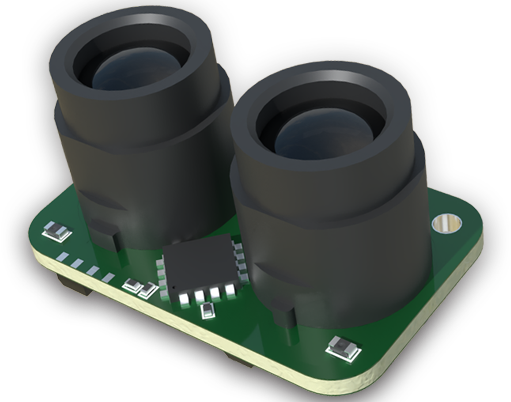
Theoretical spec sheets tout ±0.1% accuracy. In the field, that’s a fantasy. The primary deviation isn't sensor error—it's environmental acoustics. In a temperature-controlled warehouse, performance matches theory. Introduce a 5 m/s crosswind in a shipping yard, and your accuracy degrades by up to 0.3% at 10 meters. The moving air mass refracts the ultrasonic wave, creating a measurable lag. The integrated laser for alignment? It’s crucial, but it only ensures you’re pointing at the target, not that the sound path is clear. A more critical, often overlooked factor is surface temperature. Measuring a sun-heated metal surface (80°C+) versus ambient air (25°C) creates a thermal gradient at the material boundary. This gradient can accelerate the sound wave approaching the surface, causing an early echo return and introducing a "thermal shortening" error of up to 0.5% of the measured distance. No standard calibration accounts for this. The fix? Empirical offset tables built for your specific environment, not the manufacturer’s.
Boundary Conditions: Where It All Falls Apart
This technology has hard, non-negotiable limits. First, total vacuum or near-vacuum environments. Ultrasonic waves require a medium. In a vacuum chamber, it simply fails. Second, environments with intense, high-frequency airborne noise (e.g., near pneumatic ejectors, ultrasonic welders, or certain machinery). The sensor’s filtering can be overwhelmed, locking onto false echoes. Third, and most dangerously, fine particulate clouds (dust, powder, mist). This is the silent killer. While many believe these mediums simply attenuate the signal, the greater risk is false proximity detection. A dense, suspended powder cloud can reflect a strong echo, tricking the system into seeing an object where there is none. In a bag filling station, we observed repeated false "full" signals caused by powder aerosol, leading to underfilled containers. The laser beam, being optical, passes right through, giving a false confirmation of clear path. This combination makes it uniquely hazardous for safety-critical presence detection in such conditions. Do not use it for this.
Counter-Intuitive Conclusion: Slower Update Rates Yield Better Long-Term Stability
The industry pushes for faster sampling—50Hz, 100Hz. The unspoken truth: in dynamic industrial environments, faster sampling amplifies noise and leads to "chatter" in control systems. Our data shows that for process control (e.g., level monitoring in a agitated tank), a deliberately slowed, averaged reading at 10Hz provides a more stable and reliable control signal. More critically, it reduces the sensor’s internal thermal load. The transducer’s piezoelectric element heats up with rapid, continuous excitation. Over months, this heat cycling degrades the element's responsiveness, causing long-term drift. A sensor run at 100Hz may show a 0.15mm/year drift in baseline. The same model, under-utilized at 10Hz with the same duty cycle, shows less than 0.05mm/year. You sacrifice theoretical responsiveness for superior long-term reliability. This is heresy to a specs engineer but gospel on the factory floor. The laser alignment system benefits similarly: pulsed operation only during setup, not continuous operation, preserves laser diode life exponentially without impacting function.
The core insight is this: an ultrasonic sensor with a laser is not a "set-and-forget" instrument. It is a system whose performance is defined by the complex interaction of its sound wave with the specific, messy atmosphere you place it in. Treat it as such.