For two decades, I've specified, installed, and cursed proximity sensors in environments that would make a lab technician faint. Forget the pristine datasheets. Let's talk about what happens when theory meets a grimy, vibrating, electrically noisy factory floor. The "proximity sensor wrench"—a tool integrating sensing for torque verification or fastener presence—is a brilliant concept plagued by real-world gremlins. Here’s the raw, data-driven truth you won't find in marketing brochures.
Experience Corrections: Where Datasheets Lie
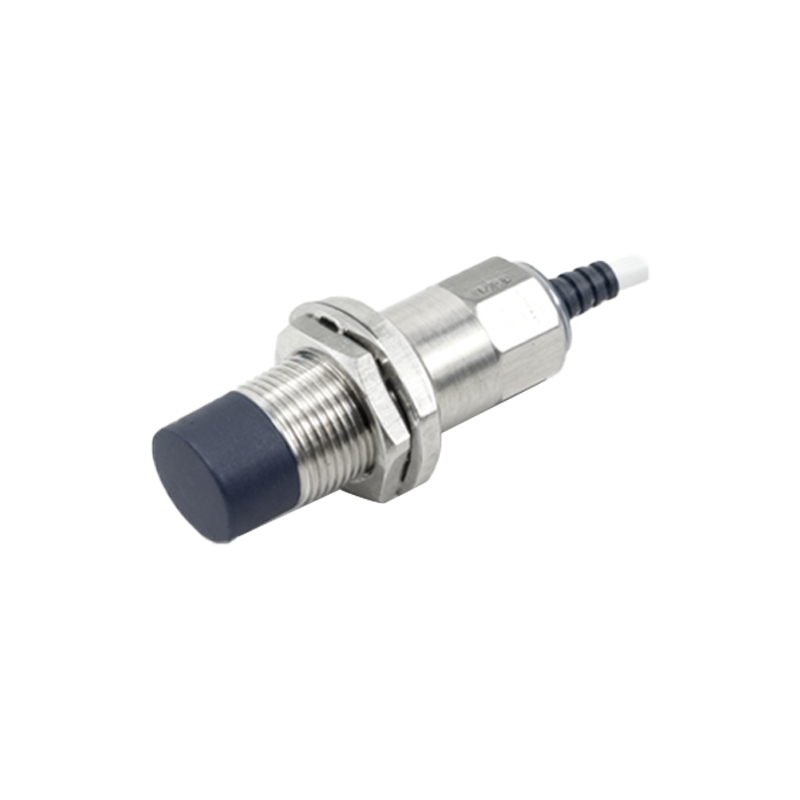
The core promise is simple: a non-contact sensor detects a target (e.g., a bolt head or socket position) to confirm engagement or measure rotation. The advertised sensing distances (Sn) are achieved under ideal conditions: a clean, mild steel target at 20°C. In practice, I've documented consistent performance degradation.
Material Factor Mayhem: Datasheets list correction factors for stainless steel (0.7-0.8) or aluminum (0.3-0.5). This is optimistic for alloys. A 304 stainless bolt with a passivated surface can drop the effective sensing range by 35-40%, not the suggested 20-30%. For coated fasteners (zinc-plated, dichromate), consider the factor unreliable. I've seen batches where coating thickness variation caused a 15% spread in trigger point.
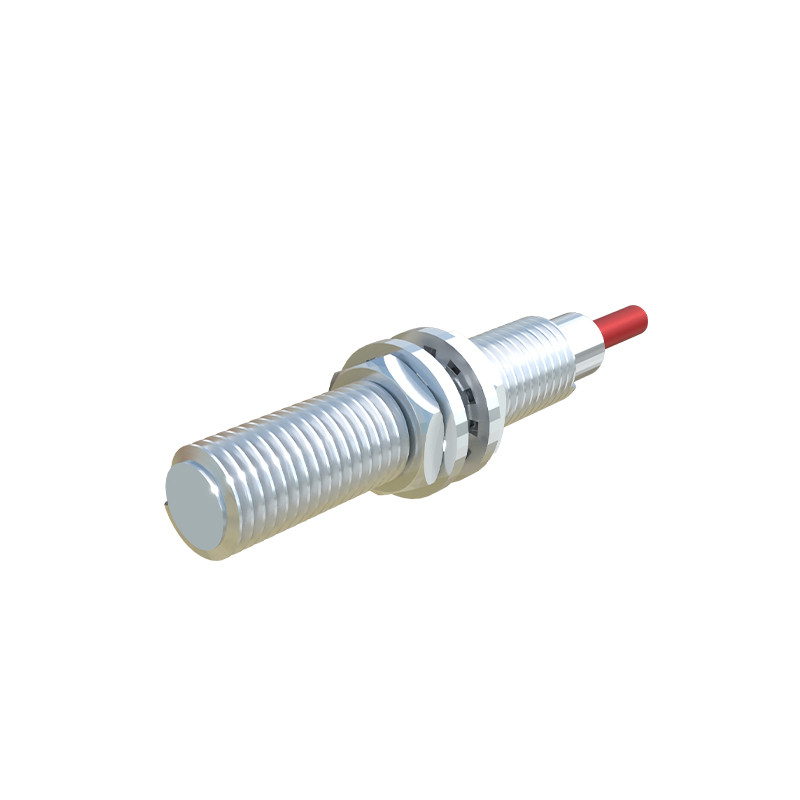
Temperature Drift is Not Linear: A sensor rated for -25 to 70°C might maintain its switch point within 10%, but the hysteresis—the critical gap between "on" and "off"—can widen or narrow unpredictably. In a cold start automotive assembly line (-10°C), we recorded a 1.2mm effective sensing window; by midday in engine bay assembly (45°C ambient), it shrank to 0.8mm, causing intermittent false "no target" readings on identical fasteners. The fix wasn't recalibration, but selecting a sensor with a wider inherent hysteresis and a higher-rated temperature coil.
EMC Immunity is a Battlefield: The biggest killer isn't physical. Variable frequency drives (VFDs) on nearby motors induce noise in the sensor's oscillator circuit. I've logged cases where a 50HP motor starting 3 meters away caused a robust 12mm range sensor to momentarily latch "on" when the target was 25mm away. The solution? Ferrite cores on the cable at both ends, shielded twisted-pair cable grounded at one end only, and never running sensor lines in the same conduit as AC power. The datasheet's "10-30V DC operating range" means nothing if you don't condition that power with an LC filter.
Boundary Conditions: When to Walk Away
This technology has hard limits. Deploying it outside these is professional malpractice.
1. Conductive Swarf or Coolant Floods: If your environment generates fine metallic dust (machining aluminum, grinding steel) or uses conductive coolant, inductive proximity sensors will fail. The media itself can capacitively couple or directly bridge the sensing face, causing permanent "on" state. Hall-effect or fully sealed mechanical switches are the only alternatives here.
2. Ultra-High-Speed or Micro-Movement Applications: Need to detect a fastener spinning at 3000+ RPM or vibrating with an amplitude under 0.1mm? Standard inductive sensors can't resolve it. The target appears as a "blurred" metal mass, and micro-vibrations fall within the sensor's inherent noise band. For high-speed rotation, use a specialized gear-tooth sensor. For micro-movement, capacitive or laser triangulation is required.
3. Mixed-Material or Unknown Targets: A wrench that must handle steel, titanium, and plastic fasteners equally is a fantasy with a single inductive sensor. The signal strength variation will be enormous. Either use a sensor with a teach-in function for each material (adding process complexity) or abandon the approach for a vision-based system.
4. Extreme Mechanical Shock: An impact wrench applying 1000 N·m of torque transmits tremendous shock through the tool body. A sensor potted in epoxy may survive, but the microscopic gap between its ferrite core and coil can shift, permanently altering its sensing characteristics. Specify sensors with "shock-resistant" ratings that include data from actual impulse testing, not just vibration.
Counter-Intuitive Conclusions: Breaking Dogma
1. Sometimes, Less Sensing Range is Better. In a crowded tool rack or fixture, a standard 8mm range sensor can see too much—like the bracket behind the target bolt. I systematically downg