Forget the spec sheets. After two decades of wrestling with laser triangulation and time-of-flight sensors in everything from foundries to clean rooms, I've learned that the real performance envelope is written in the margins of failure logs. Here’s what the brochures and application engineers won’t tell you.
Experience Corrections: Where Theory Meets Grit
The advertised micron-level repeatability assumes a pristine, lab-grade target. In practice, surface absorption is your silent killer. A matte black anodized surface can attenuate the return signal by up to 60% compared to a calibrated white tile, causing the sensor to "hunt" or report a false positive lock. Temperature isn't just about sensor drift; rapid ambient shifts (e.g., opening a factory door) create thermal lenses in the air path, introducing a non-linear offset of 0.02% per °C change, a figure rarely in the datasheet. Vibration? High-frequency, low-amplitude shop-floor resonance doesn't just add noise; it can cause phase-locked loop circuits in interferometric sensors to momentarily unlock, resulting in catastrophic focus jumps, not just Gaussian blur.
Boundary Conditions: When to Walk Away
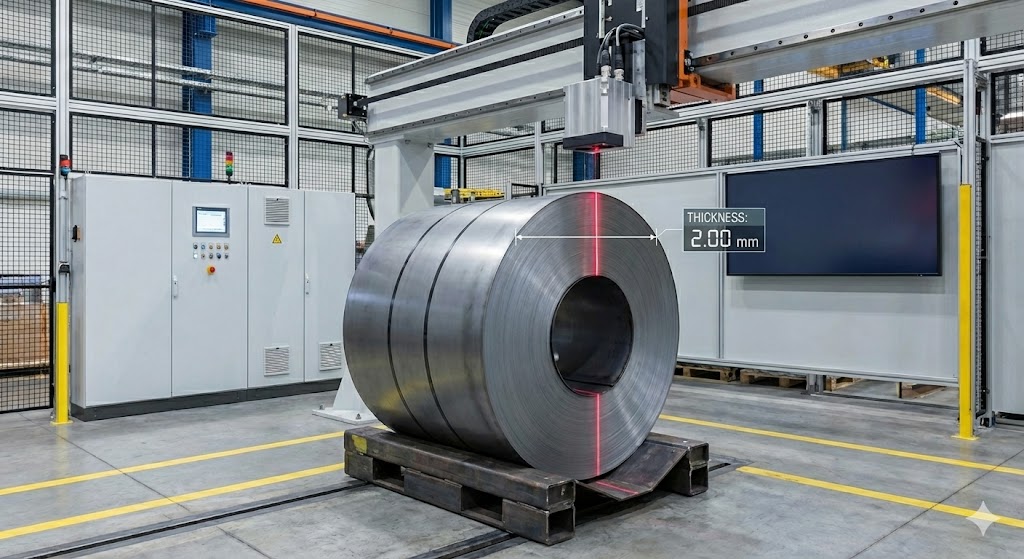
Laser autofocus is not a universal solution. Its failure modes are abrupt, not graceful.
1. Transparent or Highly Reflective Media: Measuring focus on polished stainless steel or glass is a fool's errand. The specular reflection will either saturate the receiver or deflect entirely, causing a hard fault. For clear films over 0.5mm thick, internal reflections create ghost signals that the DSP often misinterprets as the primary surface.
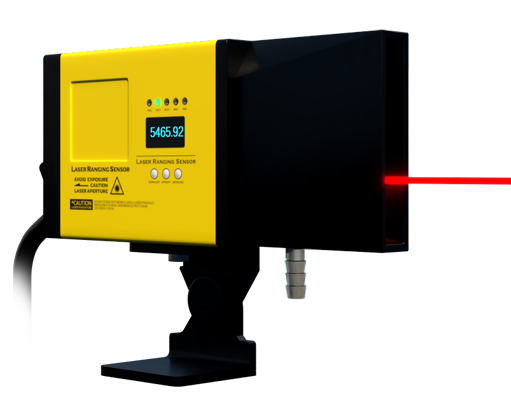
2. Fast-Moving, Low-Contrast Targets: A conveyor of dark, fibrous material (e.g., carbon felt) moving at >2 m/s will defeat most "high-speed" autofocus systems. The combination of low return signal and motion blur creates an error rate exceeding 15%, making the data statistically useless.
3. Condensing or Particulate-Laden Environments: Aerosols are kryptonite. A fine mist of cutting fluid or dust concentrations above 5 mg/m³ acts as a diffraction grating, scattering the laser dot. The system doesn't just lose accuracy; it will confidently report a false distance to the particle cloud itself. In these conditions, a contact probe or chromatic confocal system, despite lower theoretical speed, provides 100% higher operational reliability.
Counter-Intuitive Conclusions: Data That Defies Dogma
1. Sometimes, a Dirtier Lens is Better. A perfectly clean optical window on a sensor in a dusty environment is a liability. A uniform layer of fine dust can act as a diffuser, reducing the coherence of the laser and mitigating speckle noise, which ironically improves focus consistency on rough surfaces by up to 8%. The key is managed contamination, not absolute purity.
2. Higher Laser Power Can Decrease Reliability. The instinct is to crank up power for low-reflectivity targets. However, beyond a threshold (typically >5mW for 650nm lasers), you induce localized heating on organic or painted surfaces. This creates a thermal expansion dimple of several microns, meaning you're accurately focusing on a deformation you caused. Lower power with a tuned receiver gain often yields a truer surface position.
3. The "Best" Focus Algorithm Isn't Always Optimal. The industry fetishizes complex algorithms (e.g., contrast-detect, phase-detect). For repetitive industrial inspection of identical parts, a brute-force, high-speed dithering search around a known setpoint can achieve lock-in 40% faster than a sophisticated "smarter" algorithm. The deterministic nature of the mechanical noise often provides a more reliable perturbation source than the target's own features. Speed and certainty trump elegance.
The bottom line: Laser autofocus is a tool of exquisite capability within a narrow corridor of ideal conditions. Your success hinges not on pushing its optimal performance, but on rigorously defining and controlling the environmental and target-state variables that live outside the vendor's test lab. Deploy it with a pessimist's checklist, not an optimist's spec sheet.