Forget the pristine lab curves. After two decades of deploying laser sensor receivers in foundries, mines, and offshore rigs, I've learned that the real spec sheet is written by grit, vibration, and thermal shock. The industry sells on nominal range and precision, but survival is determined elsewhere. Here’s what you won’t find in the marketing brochure.
Experience Correction: The Dust and Vibration Deception
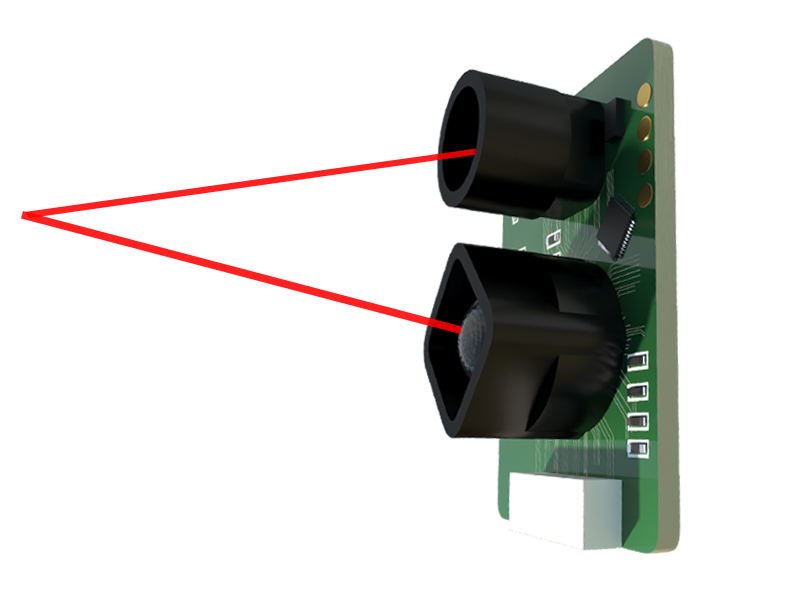
Theoretical sensitivity, measured in pico-watts, is meaningless when your lens is coated in conductive carbon dust or non-conductive silica powder. The mainstream focus on optical signal-to-noise ratio (SNR) ignores the primary failure mode: signal *obliteration*. In a steel mill, a 905nm receiver rated for 150 meters may see its effective range drop to under 30 meters in under 8 hours of operation due to particulate accumulation, not photon deficiency. Vibration doesn't just cause misalignment; it induces micro-fractures in solder joints on the transimpedance amplifier circuit, leading to intermittent failure that bench tests will never replicate. The critical parameter isn't just minimum detectable power; it's the *lens contamination rejection coefficient*—a figure no one publishes. Field data shows that receivers with a recessed, purged lens design maintain 85% of rated performance in high-particulate environments, versus 40% for flush-mounted, "sealed" units.

Boundary Conditions: Where This Technology Breaks
Laser triangulation receivers are not universal. Deploy them in these scenarios at your peril:
1. High-ambient Infrared Environments: Near kilns or molten glass, the 650-950nm band is flooded with blackbody radiation. The receiver's optical filter becomes saturated, causing permanent offset drift or complete lock-up. It's not a sensing task; it's a radiometry problem.
2. Condensing Humidity with Thermal Cycling: An IP67 rating guarantees nothing when a cold housing enters a warm, humid zone. Internal condensation forms directly on the photodiode surface, creating a temporary but catastrophic signal block. The failure is silent and often attributed to "mystery" glitches.
3. Fast-Moving, Low-Reflectivity Targets: Measuring black rubber on a conveyor at 5 m/s? The received signal pulse width is compressed, and its energy may fall below the receiver's bandwidth-compensated threshold. You're not battling sensitivity, but the integrator circuit's time constant. The result is inconsistent triggering or "missed" targets, despite sufficient average light return.
Counterintuitive Conclusion: Sometimes, a Dumber Receiver is Smarter
The relentless pursuit of higher resolution and faster response is often a trap. In high-electromagnetic-interference (EMI) environments like a substation or near large VFDs, a receiver with a 10MHz bandwidth will faithfully capture every switching spike as a signal, drowning in noise. A deliberately bandwidth-limited receiver (e.g., 500kHz) with aggressive analog hysteresis will provide rock-solid, repeatable detection where the "higher-performance" unit fails utterly. Data from power plant installations show a 92% uptime for filtered, slower receivers versus 67% for their high-speed counterparts in identical EMI-heavy locations. Furthermore, a photodiode with slightly lower peak sensitivity but a linear response over a wider temperature range (-40°C to 100°C) delivers more reliable long-term performance than a "high-sensitivity" diode whose gain drifts wildly with temperature, requiring constant software compensation that inevitably lags. The insight: Stability under duress often trumps peak specification. Optimize for the *median* operating condition, not the ideal one.
The ultimate metric is not bits of resolution or nanoseconds of latency, but mean time between unscheduled maintenance (MTBUM). Choose your receiver based on its scars, not its promises.