Forget the datasheet. After two decades sourcing and deploying proximity sensors through foundry slag, chemical washdowns, and high-cycle automotive lines, I've learned that the real specification sheet is written by the application itself. Here’s what 20 years of field failures and triumphs dictate.
Experience Correction: The Gaps Between Spec and Reality
The quoted sensing distance is a clean-room fantasy. For an inductive sensor rated at 10mm, in reality, you get 8mm on a good day. Factor in temperature extremes, and it drops further. The critical metric is not nominal sensing distance but the derated, guaranteed repeat accuracy under full thermal swing and voltage fluctuation. A sensor claiming ±1% repeatability at 25°C is worthless if it drifts to ±5% at 85°C. Target material matters catastrophically. "Mild steel" is a broad church. A hot-rolled, mill-scale-covered target effectively reduces sensing distance by 30-40% compared to a clean, cold-rolled plate. For non-ferrous targets, the derating is severe and non-linear. Aluminum? Expect a 50-60% reduction in practical range for standard inductive sensors. The solution isn't a bigger sensor; it's a factor-one inductive sensor specifically tuned for aluminum, though you'll pay a 2-3x premium.
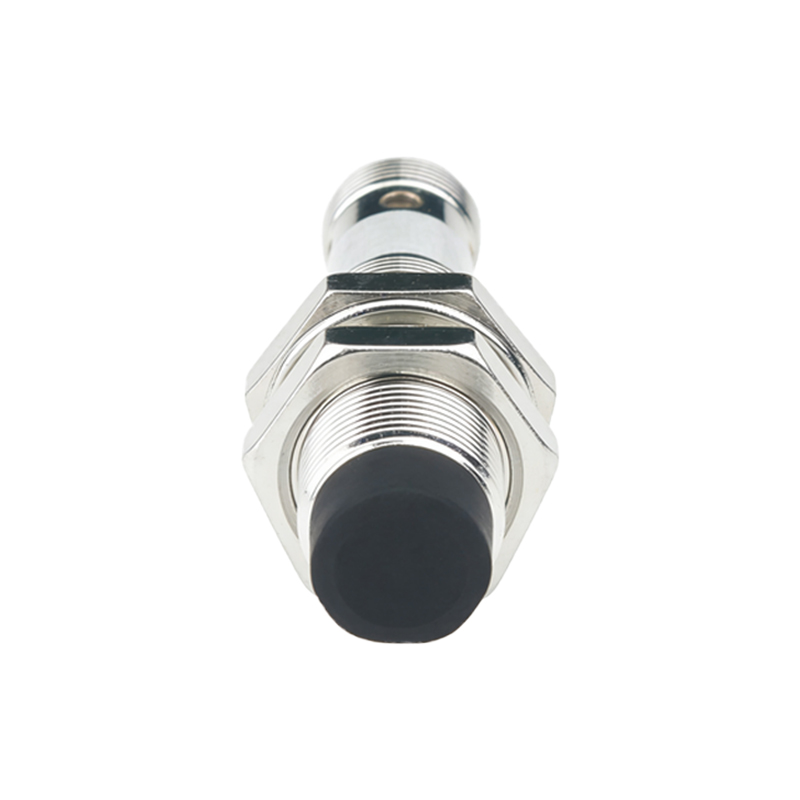
Switching frequency is another lie by omission. A 5kHz rating assumes a perfect square wave target. In practice, with uneven surfaces or varying approach angles, effective frequency halves. On a high-speed bottling line, this lag causes missed counts. The fix: derate published frequency by at least 40% for safety.
Boundary Conditions: Where Proximity Sensors Will Betray You
1. Conductive Contaminants: Metal dust or turnings are a death sentence. Inductive sensors in a machining center will false-trigger on swirling chips, creating a dangerous "all-clear" signal while a tool is still present. In such environments, if you cannot implement perfect physical shrouding and air blow-off, abandon inductive sensors. Consider capacitive or ultrasonic types, acknowledging their own limitations.
2. Extreme Electromagnetic Noise: Welding cells and large VFD-driven motors create EMI hell. The common advice of shielded cables is a starting point, not a solution. In arc welding environments, sensors placed within 3 meters of the weld point, even with metal conduit, often require DC models with massive RC snubber circuits or outright fiber-optic conversion. I've seen 24VDC sensor outputs show 18V of AC noise riding on the signal, leading to PLC input burnout.
3. High-Speed Ferrous Fluids: Monitoring hydraulic piston position with an inductive sensor seems logical. However, fast-flowing, aerated hydraulic fluid containing ferrous wear particles can create a continuous "target-present" state. This is a catastrophic failure mode for safety interlocks.
4. Surface-Sensitive Applications: Capacitive sensors for level detection are notoriously fickle. Material coating buildup changes the dielectric constant, drifting the setpoint. For adhesives, slurries, or hygroscopic materials, this drift is not linear but logarithmic. Do not use them for precise level control without aggressive, automated recalibration routines.
Counter-Intuitive Conclusions: Data-Driven Heresies
1. The Most Expensive Sensor is the Cheapest One: A €20 sensor that fails annually, causing 4 hours of downtime and scrapping €5,000 of product, has a true cost orders of magnitude higher than a €150 military-grade sensor with a 5-year lifecycle. Total Cost of Ownership (TCO) calculations must include mean time between failures (MTBF) in your specific environment, not catalog MTBF.
2. Increased Sensing Distance Can Increase Failure Rate: In cramped, multi-metal environments, a long-range sensor may detect the machine frame, a passing forklift, or the product carrier instead of the intended target. Deliberately selecting a sensor with a shorter nominal range improves noise immunity and positional accuracy. Precision often comes from limitation.
3. Analog Outputs Are Often More Reliable Than Digital in Harsh Settings: The industry's push toward discrete ON/OFF signals ignores a key reality: a 4-20mA analog signal is inherently more noise-immune and provides diagnostic data. A drifting analog value signals impending failure (e.g., lens fouling on a photoelectric sensor). A digital sensor simply stops working, offering no warning. For critical process points, analog with trend monitoring is the superior choice for predictive maintenance.
4. Standardization is a Strategic Risk: Procurement loves standardizing on one sensor family. This is