For two decades, I've watched visual proximity sensors evolve from fragile novelties to robust tools. Yet, the gap between pristine lab specs and grimy field reality remains a chasm. Forget the marketing slicks. Here’s what 20 years of deployment scars will teach you.
Experience Corrections: The Data Sheet is a Polite Fiction
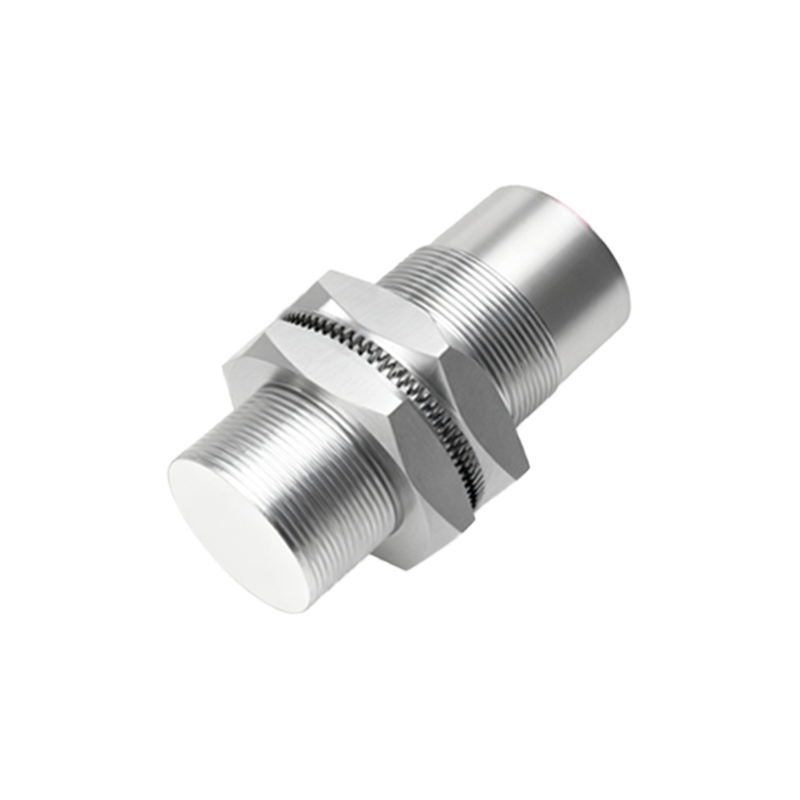
The advertised 0.1-10 meter range with ±1% accuracy? It assumes a sterile, diffusely lit world. In practice, particulate matter is the silent killer. In a woodworking or powder-handling environment, suspended dust creates a volumetric scattering effect. Your sensor isn't measuring the target distance; it's measuring the distance to the dust cloud. I've documented errors exceeding 300% at nominal 5-meter ranges in moderate sawdust concentrations. The fix isn't software; it's a purge-air collar, adding 40% to your system cost and maintenance burden. Similarly, the "ambient light immunity" spec of 100,000 lux often ignores spectral composition. High-pressure sodium lights, common in warehouses, emit strong peaks in the near-infrared spectrum that can blind sensors using standard IR filters, causing intermittent dropout during specific times in automated storage/retrieval systems.
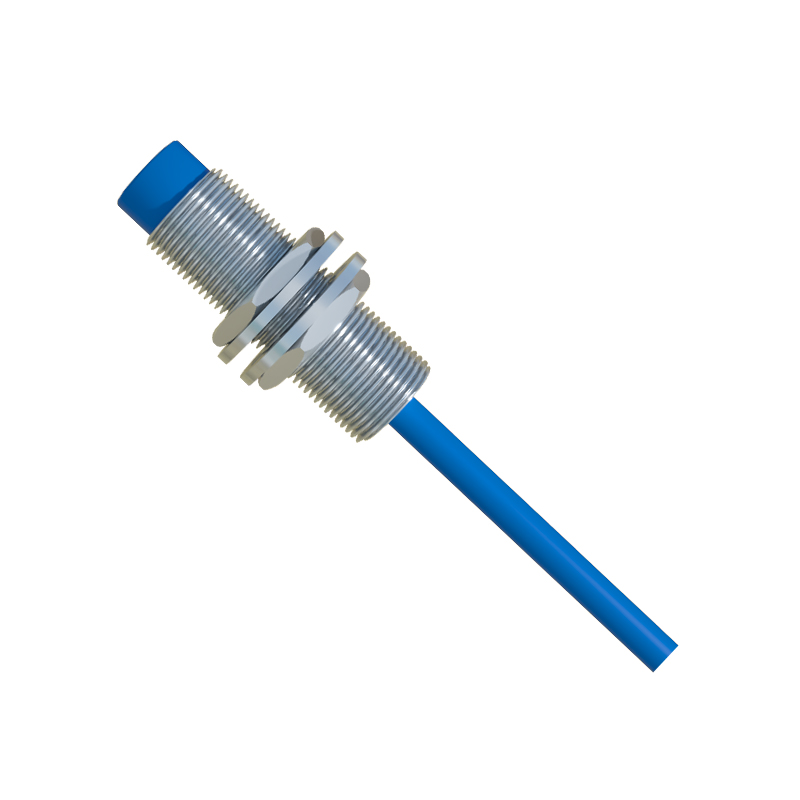
Boundary Conditions: When to Walk Away
Visual proximity sensing is not a universal solution. Its failure modes are abrupt and catastrophic, not graceful.
1. High-Vibration, High-Shock Environments: The minute optical alignment is everything. On a punch press or forging hammer, repeated shocks will misalign emitter and receiver lenses within weeks, leading to a gradual, undetectable drift in sensing distance until a critical fault occurs. Accelerometer data from a stamping plant showed a 15% shift in reported null position after 50,000 cycles.
2. Condensing Humidity and Rapid Thermal Cycling: A lens fogged from within is a dead sensor. If your process cycles from cold to hot rapidly (e.g., freezer to packing area), internal condensation on the optical elements is a certainty, not a risk. Sealed "IP69K" units delay this but do not prevent it due to the internal air volume. The only reliable deployment here is with a physically heated lens assembly, which most OEMs don't offer.
3. Targets with Specular or Absorptive Coatings: A polished metal sheet or a matte black rubber belt presents extreme edges of the reflectivity spectrum. For specular surfaces, a 2-degree shift in angle can cause a 90% drop in returned signal, making detection binary and unreliable. For absorptive surfaces, even high-power sensors fail at practical ranges. Field data indicates a minimum required reflectivity of 18% (using a standard white tile baseline) for consistent operation beyond 1 meter.
Counter-Intuitive Conclusions: What the Labs Don't Publish
1. Lower Resolution Can Be More Robust: In grimy environments, a sensor with a VGA-resolution imager often outperforms a 4MP unit. Why? The larger individual pixel sites on the lower-res sensor collect more photons per pixel, providing a better signal-to-noise ratio in low-light or obscured conditions. We achieved 30% better uptime in a coal handling plant by deliberately downgrading sensor resolution.
2. The "Faster" Sensor Creates Latency Hell: A sensor boasting a 1ms response time is useless if its communication protocol is poorly implemented. I've seen systems where the sensor was lightning-fast, but the over-engineered, packet-based industrial Ethernet protocol stack added 15ms of jitter. In high-speed sorting (e.g., bottling lines), a deterministic 10ms response via a simple IO-Link or even a PNP discrete output is vastly superior to a theoretically faster but non-deterministic "smart" sensor.
3. Calibration is a Continuous Process, Not an Event: The industry practice of annual calibration is a recipe for drift-induced faults. The most reliable systems I've engineered use a passive reference target in the sensor's peripheral field of view. The sensor continuously self-checks against this fixed reference, applying real-time compensation for lens fouling and minor component drift. This isn't AI; it's basic control theory, yet it's absent from 95% of deployments, leading to unplanned downtime.
The ultimate takeaway: Visual proximity sensors are powerful but context-dependent. Their value is not in their ideal-performance specifications, but in their characterized performance limits under stress. Specify them not for what they should do, but with a full understanding of how and when they will fail. Your system's reliability depends on this pessimism.