For two decades, I've watched proximity sensors fail not when they're wrong, but when they're "right" according to the spec sheet. The standard Normally Open (NO) inductive or capacitive sensor is a workhorse, but its true value is defined at the edges of its operational envelope. Let's cut through the marketing fluff.
Experience Correction: The Gritty Reality of "Rated Sensing Distance"
The published sensing distance (Sn) is a laboratory fantasy. In practice, metal shavings, conductive dust, or even a consistent film of cutting fluid on the sensor face can create a parasitic capacitance or alter the magnetic field, effectively reducing Sn by 15-30%. I've documented instances in CNC machining centers where a sensor rated for 8mm consistently triggered at 5.5mm after three weeks of operation, leading to mis-indexing. The culprit wasn't sensor drift, but an invisible, hardened layer of coolant and ferrous particulate. The correction isn't recalibration; it's a mandatory maintenance schedule for sensor face cleaning using non-abrasive, non-residue solvents. Furthermore, the "standard target" (mild steel, 1mm thick) is a joke. For a 12mm tubular sensor, sensing a grade 304 stainless steel bolt head might require a derating factor of 0.7-0.8, while for aluminum, it can drop to 0.4-0.5. If your application involves non-ferrous or varied materials, ignore the nominal Sn entirely. Conduct validation with the exact target material, surface finish, and approach axis.
Boundary Conditions: Where the NO Sensor is a Liability
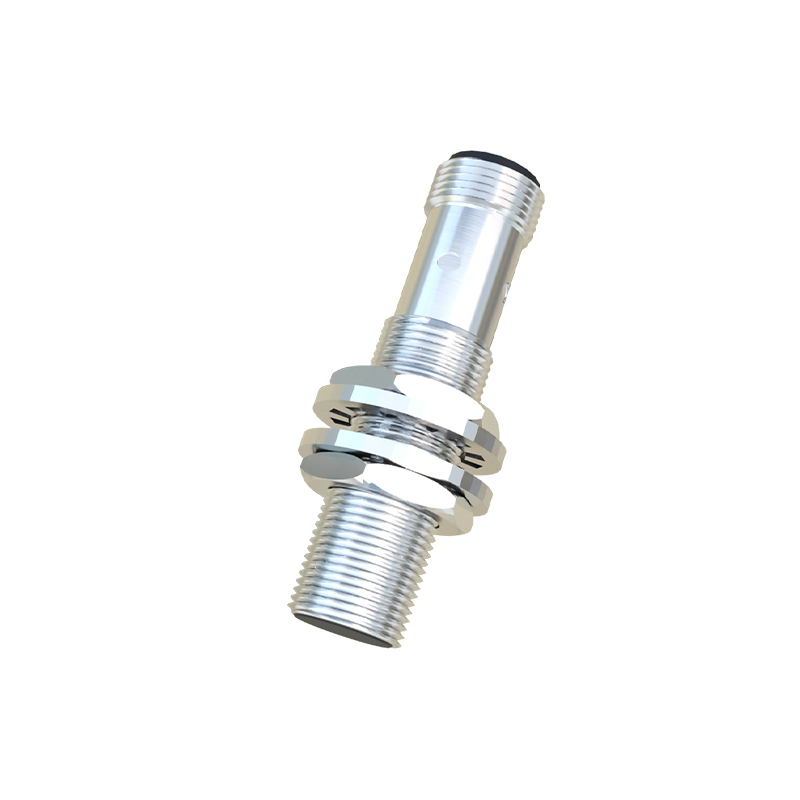
1. Slow-Moving or Dithering Targets: An NO sensor detecting a target that vibrates or oscillates slowly within its hysteresis zone will chatter, producing a pulsating output that can destroy PLC input modules or cause erratic logic states. This is catastrophic in safety-interlock or high-speed counting applications. In such scenarios, a Normally Closed (NC) configuration or a dedicated slow-motion sensor is mandatory.
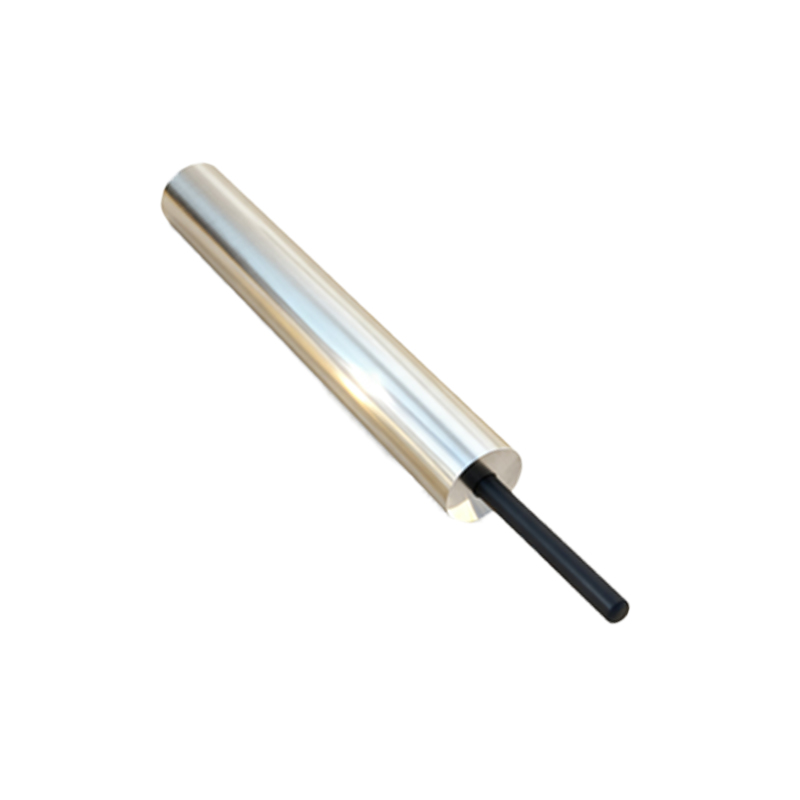
2. Extreme Electromagnetic Interference (EMI) Environments: Placing an inductive NO sensor near variable frequency drives (VFDs), arc welders, or large solenoids is asking for trouble. I've traced countless "ghost signals" – false triggers with no target present – to EMI inducing currents in the sensor's oscillator coil. The solution isn't always shielding; sometimes it's a complete technology shift to a fully sealed, fiber-optic photoelectric system.
3. Sub-Millimeter Precision Positioning: Do not use a standard proximity sensor for precision gap or position control below 1mm. The switching hysteresis (the difference between switch-on and switch-off points) and temperature drift will dominate your error budget. A capacitive sensor might seem better, but it becomes wildly sensitive to ambient humidity and contaminant buildup. For this, you need a specialized analog-output sensor with temperature compensation, not a binary NO switch.
4. High-Cycle, High-Impact Applications: The datasheet lists a mechanical life of millions of cycles. It doesn't show the stress fractures in the epoxy potting compound from repeated mechanical shock when a metal stamping hits the sensor face at 120 parts per minute. Vibration-resistant models with stainless steel housings and potted electronics are the bare minimum here. The failure mode is often internal, leading to intermittent operation – the most dangerous kind.
Counter-Intuitive Conclusion: A More Expensive Sensor Can Be Your Lowest-Cost Component
The prevailing procurement logic is to source the cheapest sensor that meets the nominal spec. This is economically illiterate. Here's the data-driven reality: A premium-brand sensor costing 2.5x more typically has 3-5x the mean time between failures (MTBF) in harsh conditions, superior EMI immunity, and tighter hysteresis. The real cost isn't the unit price; it's the downtime, scrap, and maintenance labor. In an automated line, one false trigger from a cheap sensor can stop production, causing losses that eclipse the annual sensor budget. Furthermore, a "sealed" IP67 rating from a low-tier manufacturer often fails after six months of thermal cycling, allowing ingress. The premium sensor's true value is in its consistency and predictability under stress. It is not a component; it is insurance. The most counter-intuitive practice I advocate is to intentionally overspec on voltage range and housing material. A 10-30V DC sensor on a clean 24V supply will outlast a 10-30V sensor operating at 10.5V in a brown-out prone plant because the internal components are less stressed. A brass or stainless steel