Forget the glossy datasheets. After two decades of deploying laser sensors in environments ranging from automated foundries to Arctic logistics hubs, I’ve learned that the numbers that matter are rarely the ones printed in bold. The real engineering begins where the spec sheet ends. Let’s cut through the noise.
Experience Correction: The Gaps Between Lab and Reality
Take the ubiquitous "accuracy" and "repeatability" figures. A sensor boasting ±0.1mm accuracy in a controlled, 23°C lab is a fantasy in a steel mill. The primary corruptor isn't noise, but thermal lensing. The housing and lens assembly expand differentially. That 0.1mm spec can drift to 0.5mm or more over an 80°C swing, and it's non-linear. Calibration cycles based on time are useless; they must be triggered by internal temperature thresholds, a feature most OEMs don't expose. Similarly, "maximum range" assumes a 90% reflective, Lambertian target. In practice, a wet, dark asphalt surface or a brushed stainless-steel drum can reduce effective range by 40-50%. The real spec you need is *minimum detectable signal* and beam profile data, which are often buried.
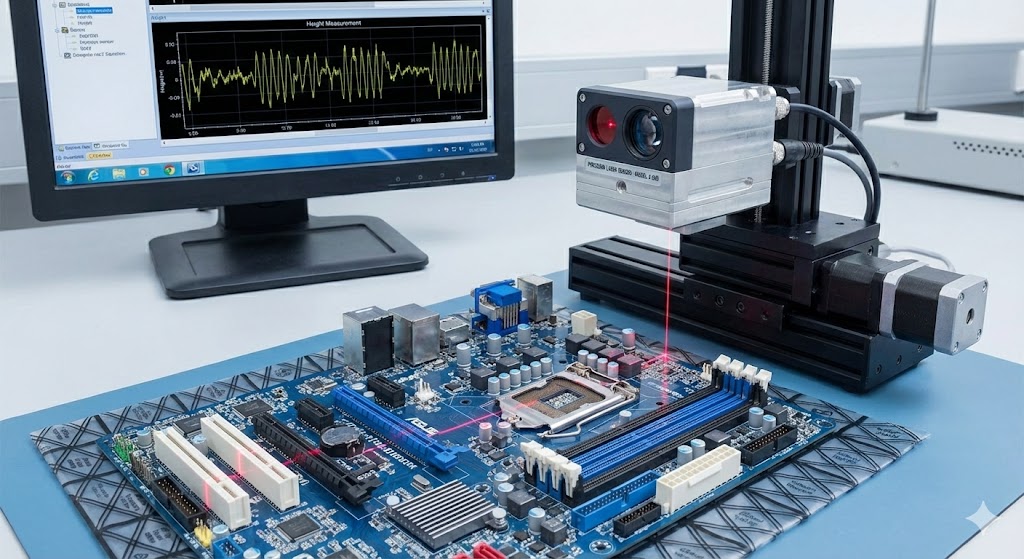
Boundary Conditions: When to Walk Away
Laser sensors fail catastrophically, not gracefully, under specific conditions. Here are the hard stops:
1. Condensing Vapors & Heavy Particulate: In food processing (steam cleaning) or chemical plants, a laser beam will scatter and attenuate in microscopic droplets or mist. An optical window with air purge is not a suggestion; it's a requirement. However, if the particulate is oily, even a purge fails—the film buildup is a death sentence. In these cases, switch to a contact or capacitive method immediately.
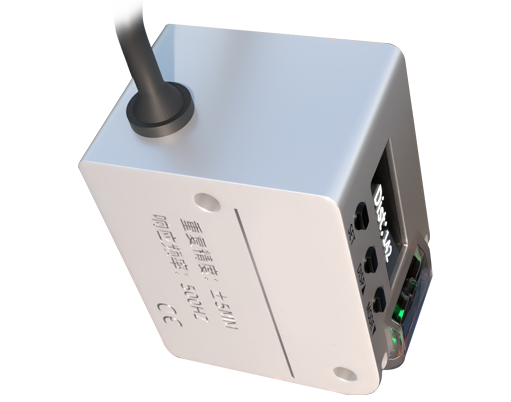
2. High-Gloss, Specular Surfaces: Attempting to measure a mirror-finish metal surface at a near-perpendicular angle is futile. The retro-reflective beam will miss the receiver entirely. The workaround is a steep, fixed angle-of-incidence setup. If your process cannot accommodate a 15-20 degree tilt, this technology is invalid for that measurement.
3. Ultra-High Speed on Heterogeneous Materials. A 10kHz response time seems sufficient for a conveyor of boxes. But if you're measuring the fill level of mixed plastic flakes (varying color, reflectivity), the sensor's automatic exposure/gain adjustment will lag, creating outliers. For >50Hz inspection of variable surfaces, you need a sensor with a fixed, manually tuned gain based on the *worst-case* material, not the average.
Counter-Intuitive Conclusions: Data-Driven Heresies
1. A Slower Update Rate Can Yield Better Data. In high-vibration environments (e.g., mobile hydraulics), the 1kHz data stream is just noise. Applying a hardware-averaging output filter (e.g., 50Hz) often provides a *more accurate* representation of the true position. The "faster is better" mantra ignores signal integrity.
2. The Cheapest Sensor May Be the Most Reliable for a Simple Task. For a basic presence/absence detection of a white object on a black background in a clean environment, the premium, feature-laden "all-rounder" sensor is overkill. Its complex internal algorithms for edge detection and compensation become failure points. A simple, analog-output photoelectric sensor with a fixed threshold often has a higher MTBF.
3. Wavelength is Less Critical Than Beam Profile for Precision. Much is made of red vs. blue laser for different materials. While blue (e.g., 405nm) does perform better on certain organics, for 95% of industrial positioning tasks, the shape and consistency of the laser spot (Gaussian vs. top-hat) is far more determinative of measurement stability. A perfect 650nm red dot outperforms a messy 450nm blue blob every time. Demand a beam profile scan from your supplier; reject the ones who can't provide it.
The bottom line: Treat the sensor not as a black-box provider of truth, but as a component in a physical system governed by heat, light, and motion. Your most powerful tool is not the catalog, but a calibrated thermocouple and a log of ambient conditions during failure. Specs are a starting point for a conversation, not the answer.