After two decades on factory floors, in mining pits, and on offshore rigs, I've learned that proximity sensor reliability is defined in the gaps between the pristine conditions of a data sheet and the chaotic reality of industrial application. The real expertise lies not in reciting specs, but in predicting and mitigating failure. Let's cut to the chase.
Experience Corrections: Where Theory Meets Grit
The advertised sensing distance is the first casualty of real-world conditions. A standard inductive sensor rated for 8mm will reliably detect a mild steel target at that range in a lab. Introduce common mill scale, rust, or a different alloy like 304 stainless steel, and your effective sensing distance can drop by 40-50%. The correction factor isn't a minor footnote; it's the primary variable. For capacitive sensors targeting non-metallics, the stated sensitivity is virtually meaningless without accounting for material density and ambient humidity shifts. A sensor tuned for dry polyethylene pellets will fail catastrophically when material moisture content rises by 5%, leading to false triggers or missed detections. The key metric isn't nominal range, but consistent range under variable surface conditions and material properties.
Vibration immunity is another grossly misrepresented parameter. A sensor may boast a 50g shock rating, but high-frequency, low-amplitude vibration—the kind found on packaging machinery or compressor stations—will fatigue internal solder joints long before any catastrophic shock occurs. The failure mode isn't sudden death but a gradual drift in switching hysteresis, causing erratic machine behavior that is notoriously difficult to diagnose. Relying on IP ratings for environmental sealing is equally perilous. IP67 guarantees immersion, but not resistance to high-pressure steam cleaning or cyclic thermal expansion. I've seen more sensors fail from condensation inside the housing due to rapid temperature cycles than from direct water ingress. The seal isn't static; it degrades with thermal fatigue and chemical exposure.
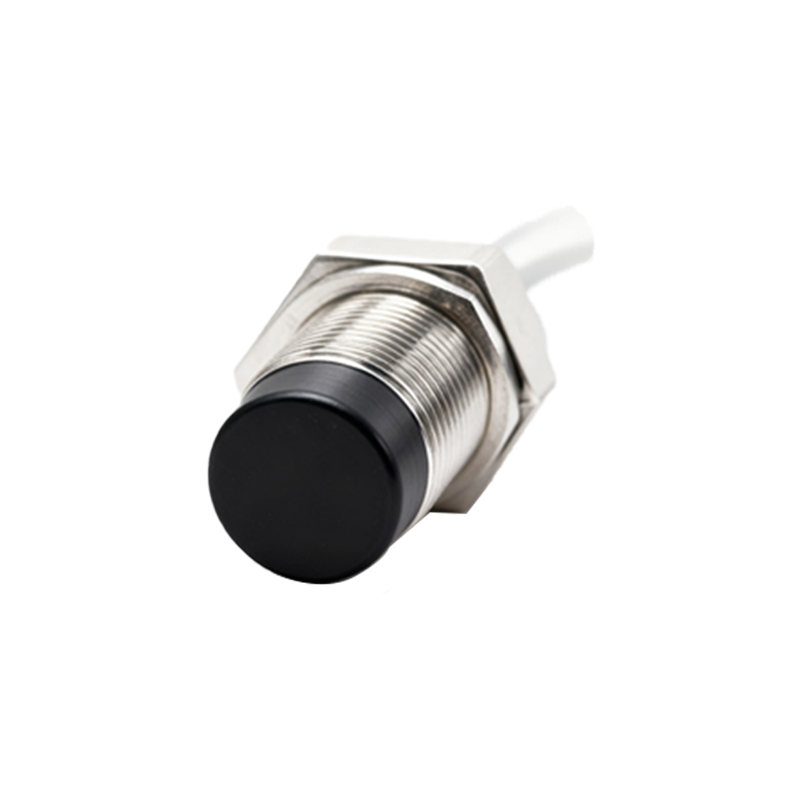
Boundary Conditions: When to Walk Away
Understanding where a technology fails is more critical than knowing where it succeeds. Ultrasonic proximity sensors are lauded for their versatility with various materials. However, deploy them in environments with airborne dust, foam, or heavy vapor (e.g., paper mills, food processing with powder), and the acoustic signal attenuates or reflects unpredictably, causing complete loss of function. They are also poor candidates for high-speed applications (>50Hz) due to their relatively slow speed of sound-based measurement cycle.
Inductive sensors, the workhorses of metal detection, have a critical and often ignored boundary: eddy current inhibition. When tasked with detecting thin, non-ferrous metals like aluminum or copper foil (under 0.5mm) at rated distances, they can fail entirely. The eddy currents generated are too weak for a reliable signal. Similarly, placing multiple inductive sensors side-by-side for parallel detection creates mutual interference (cross-talk), effectively blinding each other unless spaced at 2-3 times the rated diameter—a spatial constraint often incompatible with compact machine designs.
Capacitive sensors are notoriously risky in applications with variable dielectrics. Trying to sense the level of a powdered chemical in a hopper is a fool's errand if the material's dielectric constant changes with compaction or batch composition. The resulting level inaccuracy can be ±30%, rendering the system useless. Furthermore, never use a standard capacitive sensor to detect conductive fluids (like salty water) without a non-conductive barrier; it will trigger permanently and potentially corrode.
Counter-Intuitive Conclusions: Data-Driven Heresies
1. A More Expensive Sensor Can Increase System Failure Rate. Logic suggests higher cost equals higher reliability. Yet, integrating a "premium" 2-wire DC sensor into a legacy system designed for 3-wire sensors, without meticulously checking the residual current and load compatibility, can lead to phantom switching or premature PLC input card failure. The incompatibility cost dwarfs the sensor premium.
2. Sometimes, a Worse Technical Specification is the Optimal Choice. In high-vibration environments, a sensor with a shorter rated sensing distance and a physically larger, more robust housing (e.g., M30 vs. M18) will outperform a "high-performance" miniaturized sensor. The shorter coil in the larger housing is less susceptible to microphonic effects from vibration, and the robust body better dissipates thermal and mechanical stress. The spec sheet loss in range is a net gain in mean time between failures (MTBF).
3. The Most Critical Performance Factor Isn't on the Data Sheet: Thermal Mass. In outdoor or foundry applications with large temperature swings, the sensor's thermal mass and housing material are paramount. A sensor with a small stainless-steel face will track ambient temperature rapidly, causing internal condensation. A sensor with a larger PBT