Forget the pristine lab data and glossy brochures. After two decades of deploying laser triangulation sensors in environments that would give a reliability engineer nightmares, I've learned that the real performance envelope is written in grease, vibration, and thermal drift. Let's cut to the chase.
Experience Correction: Where Theory Meets the Grime.
The advertised ±0.05% F.S. linearity? It assumes a perfect, optically cooperative surface. In reality, surface finish is your primary adversary. On hot-rolled steel with mill scale, expect a signal dropout or noise spike that can introduce a 0.2-0.5mm error, not accounted for in the spec. The sensor's internal algorithm for "surface compensation" often fails here, as it's tuned for common paints or machined finishes, not for a porous, inconsistent oxide layer. Furthermore, the much-touted 50kHz response speed is a processor benchmark, not a system one. In high-speed web inspection, the limiting factor is rarely the sensor's sampling rate but the latency introduced by your filtering algorithms needed to combat ambient light noise from arc welders or furnace openings. Real-world usable bandwidth often drops to 10-15kHz once you apply robust filtering.
Boundary Conditions: When to Walk Away.
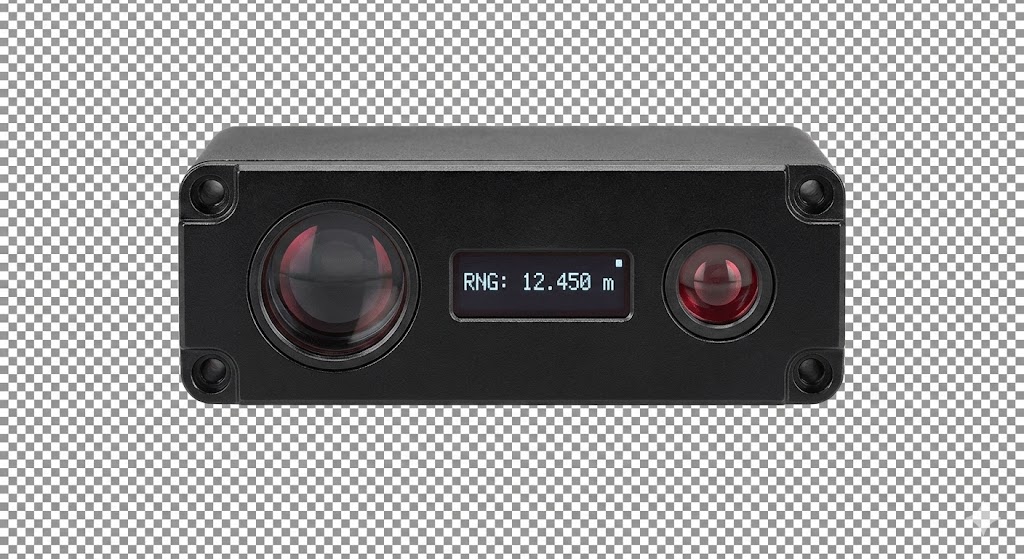
Laser displacement sensors are not universal tools. Deploying them in these scenarios is professional malpractice:

1. Submerged or Condensing Environments: Even IP67-rated housings are defeated not by liquid ingress, but by condensation forming on the protective window. This scatters the laser beam, causing a gradual, undetected drift to zero signal. I've seen "stable" measurements shift by 2mm over an hour in a cool-down phase of a casting line.
2. Plasma-Rich Atmospheres: Near high-frequency induction heaters or plasma cutters. The ionized air creates a refractive index gradient that bends the laser beam path unpredictably. The error is non-linear and unrepeatable, rendering data useless.
3. Vibrating Targets with Low Reflectivity: Measuring black rubber on a shaking conveyor. The combination of low signal-to-noise ratio and high relative motion causes aliasing, where the sensor locks onto noise peaks instead of the true surface. No amount of averaging will fix this. Switch to a confocal chromatic or contact probe.
4. Transparent or Multi-Layer Materials: Attempting to measure the thickness of glass or the surface of a clear film over a backing. You'll get a signal, but it's a weighted average of reflections from multiple layers, dependent on material clarity and laser wavelength. The reading is a phantom.
Counter-Intuitive Conclusion: Sometimes a Dumber Sensor is Smarter.
Here’s the heresy: In highly dynamic, dirty environments, chasing higher resolution and faster specs can degrade system performance. A sensor with a 10µm resolution and a 1mm laser spot will be devastated by a passing speck of dust, causing a wild outlier. A "lower-performance" sensor with a 5mm spot size and 50µm resolution will average over that dust particle, providing a far more stable and *useful* reading of the target's macro-position. The data sheet loses; the application wins. Another insight: Temperature compensation circuits are designed for ambient changes, not for internal heat generated by the sensor's own laser diode and electronics during continuous operation. Mounting a sensor in a still-air enclosure can cause a 30-40°C internal heat soak over 8 hours, leading to a thermal zero drift exceeding the annual stability spec. The fix? Often, a simple cooling fan providing minimal airflow does more for long-term accuracy than paying for a "high-stability" model. The most reliable installations I've designed often use mid-tier sensors with brutally simple mechanical and thermal stabilization, outperforming flagship models in raw, gritty, uptime.