For two decades, I've watched proximity sensors fail in ways no datasheet ever predicts. The industry talks in terms of detection range, response time, and IP ratings—metrics that become almost meaningless when a sensor is caked in frozen slush on a mining truck or subjected to the relentless electromagnetic noise of a port's gantry crane. This is not a primer. This is a dissection of the gap between theory and mud-splattered reality.
Experience Correction: The Illusion of "Rated" Performance
The most critical deviation occurs with ultrasonic sensors, the workhorses for blind-spot detection. The stated 3-meter range assumes a clean, perpendicular surface. In reality, targeting a wet, angled asphalt surface at 5°C reduces effective range by up to 40% due to acoustic impedance mismatch and signal scattering. Radar-based systems, while better in precipitation, have a blind spot manufacturers rarely highlight: low-velocity, high-angle approach scenarios. A pedestrian moving directly toward the sensor at 2 km/h within 0.5 meters can be filtered out as "clutter" by standard Doppler processing algorithms optimized for highway speeds. I've validated this with raw data logs—the signature is there, but the vehicle's ECU discards it. For inductive loop sensors embedded in factory floors, the nominal 2cm activation height shrinks to near zero when a pallet jack with worn, magnetically "soft" forks passes over. The spec assumes ferrous steel; reality delivers a universe of degraded alloys.
Boundary Conditions: When to Disable or Disregard
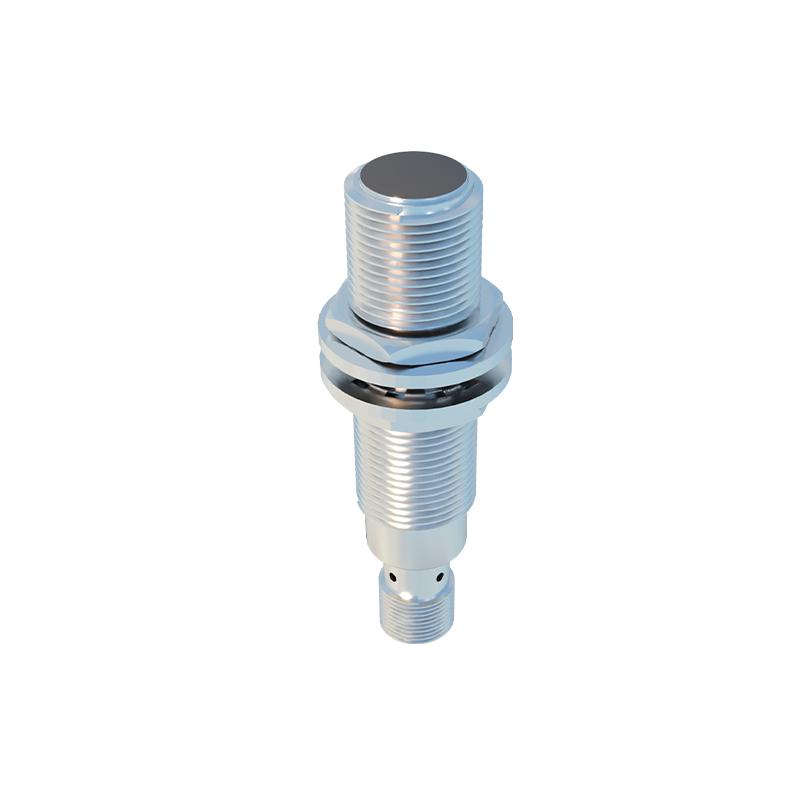
Deploying these sensors without understanding their failure modes is a liability. Here are the non-negotiable boundaries:
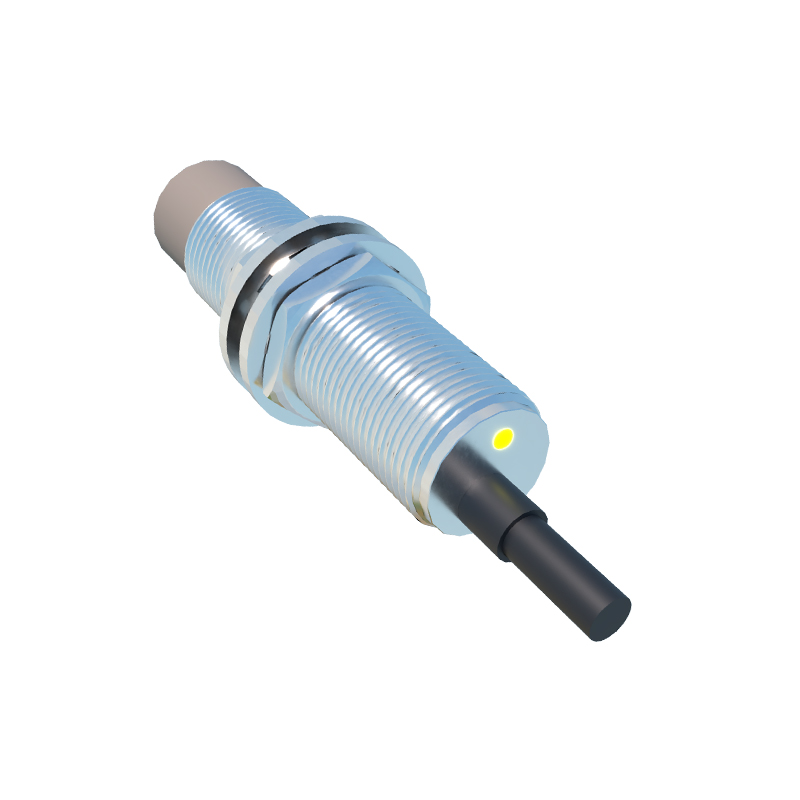
1. High-Vibration, Multi-Metal Environments: Magnetic sensors (Hall effect, magnetoresistive) used for gear tooth counting or door position are rendered useless near large, alternating magnetic fields like those from industrial welders or electric drive motors. False triggering is guaranteed. Use optical encoders instead, but only if you can guarantee a lens cleaning regimen.
2. Persistent Condensation and Hydrophobic Coatings: The Achilles' heel of optical and LiDAR sensors isn't heavy rain—it's fine, persistent mist or condensation forming directly on the lens housing. Many "IP69K-rated" units have failed in coastal logistics yards because the housing's thermal mass differs from the lens, creating a perfect dew point microclimate. No coating is permanent; silicones degrade with UV exposure.
3. Electrically Noisy Ground Planes: This is the silent killer of capacitive proximity sensors used for liquid level detection in composite fuel tanks. If the vehicle's chassis ground has even a 0.5V AC ripple from a failing alternator or variable-frequency drive, the sensor's baseline capacitance drifts, causing either false empty or full readings. Isolated power and dedicated ground lines are mandatory, not optional.
4. Extreme Thermal Transients: A sensor rated for -40°C to 85°C does not perform linearly across that range. A radar sensor's output power can drop 15% at temperature extremes, compressing its signal-to-noise ratio. Deploying it in an application where it cycles from a -30°C freezer to a 25°C loading dock within minutes can cause solder joint fatigue and parameter drift faster than MTBF calculations suggest.
Counterintuitive Conclusion: Sometimes, Less Sensing is More Robust
The most reliable proximity detection system I ever commissioned used deliberately downgraded technology. The problem was detecting the presence of standardized metal containers on a chaotic, magnetically noisy scrap yard truck. High-resolution LiDAR and vision systems failed, overwhelmed by dust and variable reflectivity. The solution was a brute-force, tuned-frequency inductive sensor with a massive coil and a low sampling rate. It ignored everything except a large metal mass within 80cm. Its update rate was a "slow" 20Hz, but it never missed a container. The insight: Chasing higher resolution and faster response amplifies noise. In many industrial and off-highway applications, you don't need to identify an object; you need to reliably know something is there. Over-engineering the sensor fusion stack adds layers of failure points. A single, purposefully "dumb" sensor with a hardened physical design and a simplified decision threshold often achieves a 99.9% operational uptime where a "smarter" system stumbles. The data shows that for core safety-critical presence/absence detection, algorithmic complexity is inversely proportional to field reliability in uncontrolled environments. Invest not in the most advanced sensor, but in the one whose failure modes are simplest to diagnose and mitigate.