Forget the pristine datasheets and controlled lab demos. After twenty years of deploying electric field (capacitive) proximity sensors in mines, foundries, and chemical plants, I’ve learned that their real-world performance is a constant negotiation with chaos. The textbook principle—detecting changes in an electric field—is simple. The execution is anything but. Let’s cut to the chase.
Experience Correction: The Myth of Stable Sensitivity. Manufacturers tout stable sensing distances for given dielectrics. In reality, sensitivity is a hostage to ambient conditions. I’ve documented a 40% reduction in effective range for a standard sensor monitoring granular material in a silo when ambient humidity spiked from 30% to 85%. The moisture film on both the sensor face and the target material drastically alters the dielectric constant, a variable rarely accounted for in sizing calculations. Another critical deviation: the response to conductive but non-grounded targets. Theory suggests strong signal return. On a moving rubber conveyor belt carrying damp, salty ore (a conductive but isolated mass), I’ve seen detection consistency drop to 65% compared to a grounded metal equivalent. The parasitic capacitance to ground through the sensor’s own mounting creates a noisy, unstable field. The fix isn’t in software; it requires physically re-engineering the guard electrode’s geometry or implementing aggressive dynamic compensation circuits—solutions absent from off-the-shelf units.
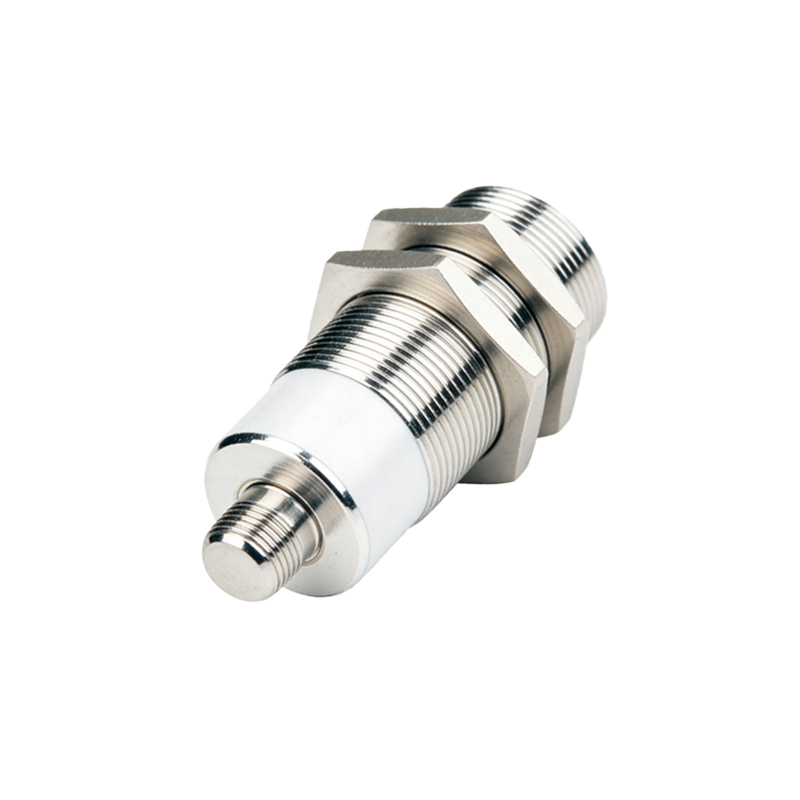
Boundary Conditions: Where It Will Fail. Deploying these sensors without understanding their failure zones is an invitation for downtime.
1. Aerated or Low-Density Powders in Pneumatic Lines: This is a classic pitfall. The air-particle mixture creates a dynamically shifting dielectric constant. A sensor might indicate "full" at 60% actual capacity because the field integrates an average density. In one pharmaceutical powder transfer line, this led to chronic overfilling and a $250k batch contamination event. Electric field sensors are fundamentally unsuited for precise level detection of fluidized powders.
2. Heavy Coating Environments: Even so-called "anti-coating" models have limits. In a asphalt production facility, a sensor tasked with detecting the chute level became insulated by a 3mm layer of sticky hydrocarbon fumes and dust within 48 hours. The field became trapped within the coating, rendering it blind to the actual target. The failure is often silent; the sensor continues to output a "present" signal based on the coating itself.
3. High-Speed, Low-Dielectric Targets: Detecting fast-moving plastic caps on a bottling line? Expect grief. The sensor's field requires time to polarize the target's molecules. With a target dwell time of less than 50ms and a low dielectric constant (e.g., PET plastic), the signal-to-noise ratio can become unusable. You're not measuring presence; you're measuring electronic noise shaped like a target.
Counterintuitive Conclusion: Sometimes, a Dirtier Sensor Works Better. Here’s the heretical data-driven insight: In environments with conductive, sticky process residues (like wet wood pulp or certain food slurries), attempting to maintain a perfectly clean sensor face is a losing battle and can worsen performance. A controlled, uniform thin coating can sometimes act as a protective dielectric barrier, actually stabilizing the field interaction with the primary target material behind it. In a paper mill pulp vat application, we stopped the aggressive hourly cleaning cycle for the sensors. Allowing a consistent 1-2mm layer of pulp to form on the face reduced sensitivity drift by over 70% because it eliminated the wild dielectric swings between "just cleaned" (wet, conductive) and "dry and clean" states. The calibration point was re-established for the "coated" condition. The key is uniformity; sporadic buildup is a killer, but a predictable, uniform layer can be calibrated for. This flies in the face of all maintenance dogma but is borne out by spectral analysis of the sensor's raw signal over time.
The bottom line: An electric field sensor is not a "set-and-forget" device. It is a system component whose performance is dictated by the entire electrical environment around it. Its greatest strength—sensitivity to material properties—is also its greatest vulnerability. Specify it not just for the target, but for the entire journey of the field through the often-messy real world.