Forget the pristine datasheets. After twenty years of integrating, testing, and cursing at proximity sensors in everything from flagship smartphones to ruggedized industrial devices, I'm here to deliver the raw, unvarnished truth. This isn't about how they work; it's about how they fail, deceive, and where the industry's quiet compromises live.
Experience Correction: The Myth of Consistent Performance
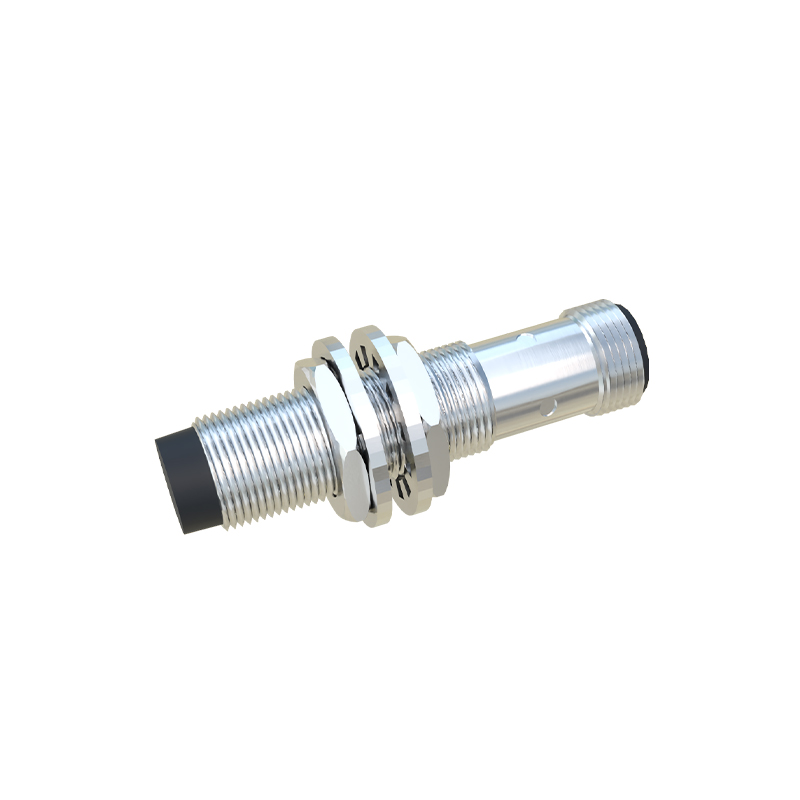
The spec sheet promises a detection range of 0-5cm with ±1mm accuracy. Reality is a brutal teacher. In实战, three factors demolish these figures. First, cover glass thickness and coating variance. A 0.1mm deviation in glass thickness, common in high-volume production, can shift the infrared (IR) light path, causing a 10-15% error in reported distance. The anti-smudge oleophobic coating? It's an IR attenuator, absorbing up to 8% of the signal depending on wear and chemical composition. Second, ambient IR noise. Datasheet tests are done in controlled "dark" conditions. A sunny day (≈1200 W/m² IR irradiance) doesn't just add noise; it can saturate the receiver photodiode, causing the sensor to report "far" when an object is actually near. We've logged failures in automotive dash mounts where direct sunlight through the windshield triggered unwanted screen wake-ups. Third, sensor aging. The IR LED output degrades. After 18 months of typical use, output can drop by 20-25%, silently shrinking the effective detection range. You're not calibrating for that.
Boundary Conditions: When to Abandon Ship
This technology has hard limits. If your project falls into these categories, reconsider immediately.
1. Liquid and Condensation Environments: Proximity sensors are optical. Any water film, mist, or condensation on the cover glass scatters IR light catastrophically. False "near" triggers are guaranteed. Do not use in bathrooms, kitchens, or outdoor applications without a hermetically sealed, optically coupled front window—a cost-prohibitive solution.
2. Non-Planar or Textured Surfaces: The assumption is a flat, parallel surface approaching the sensor. Angled approaches (e.g., a phone slipping in a bag) yield wildly inconsistent results. Fur, dense fabric, and certain dark, IR-absorbent materials (like matte black plastics) can be invisible. We once debugged a tablet that wouldn't sleep in a neoprene case—the material absorbed 99% of the IR signal.
3. High-Speed Proximity Detection: The typical response time is 80-150ms. For detecting fast-moving objects (e.g., in automated machinery), it's functionally blind. By the time it registers "near," the object has already made contact.
4. Ultra-Precision Positioning (<1mm): It's not a micrometer. Hysteresis, temperature drift (±0.02mm/°C is common), and component tolerance stack-up make sub-millimeter claims marketing fiction. For true precision, use a dedicated time-of-flight sensor or a mechanical switch.
Counter-Intuitive Conclusion: More Sensitivity is Often Worse
The intuitive fix for poor performance is to crank up the IR LED drive current for more signal. This is often a fatal error. Higher current increases junction temperature, accelerating the aging mentioned earlier. More critically, it exacerbates internal optical crosstalk—stray IR light leaking within the module from the LED directly to the receiver. This creates a "baseline near" signal that the firmware must subtract. As temperature changes, this crosstalk changes non-linearly. Our tests showed that a 15% increase in drive current could lead to a 50% increase in crosstalk temperature drift, resulting in more, not fewer, false triggers. The professional solution is often to derate the drive current and invest in superior optical baffling and receiver lens design—choices made at the module level, invisible to the end spec sheet. Furthermore, the "best" sensor isn't the one with the longest range; it's the one with the most stable and predictable crosstalk characteristic over temperature, allowing for more robust calibration in firmware. You're not buying a sensor; you're buying its calibrated instability profile.
The final insight: reliability is won in the calibration routine, not the hardware. A sophisticated runtime calibration that accounts for ambient IR, temperature, and gradual aging is what separates a pro-grade implementation from a consumer-grade headache. Most OEMs skip 80% of it to save battery and processing cycles. That's why your phone screen turns on in your pocket.