Forget the pristine data sheets. After two decades deploying proximity sensors in steel mills, offshore rigs, and automated warehouses, I've learned that real-world performance is a negotiation with chaos. Let's cut to the chase.
Experience Correction: The Gritty Reality vs. Theoretical Specs
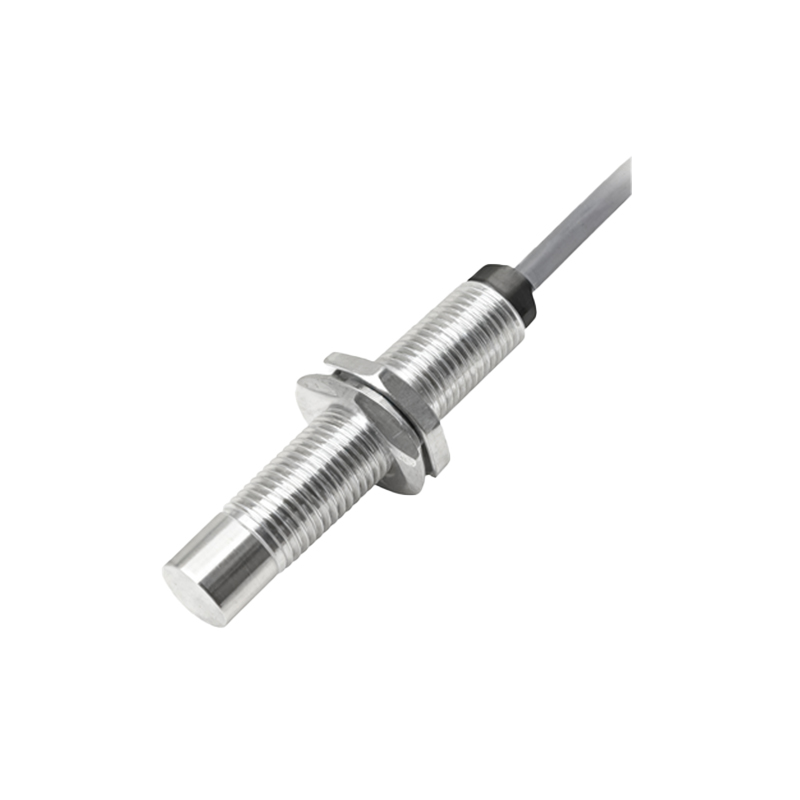
The advertised sensing range is a fantasy in a hostile environment. A sensor rated for 15mm in a lab will reliably deliver maybe 12mm on a good day in a CNC machining cell flooded with conductive coolant mist. The culprit isn't just the medium; it's target surface contamination. Theoretical models assume a clean, flat, standard material. In practice, a layer of grinding dust or hydraulic oil on a target can attenuate the electromagnetic field of an inductive sensor by up to 30%, turning a reliable detection into a missed cue. For capacitive sensors targeting non-metals, moisture is the silent killer. A 5% increase in ambient humidity can shift the detection threshold of a capacitive sensor calibrating for dry wood pellets, causing false triggers. The fix isn't in the spec; it's in the mounting. Always derate the nominal sensing distance (Sn) by at least 25% for your safety margin, and implement a routine cleaning protocol for both sensor and target face. Relying on "rated IP69K" to handle chemical washdown without physical inspection is a recipe for downtime.
Boundary Conditions: Where This Technology Will Betray You
Proximity sensors are not universal detectives. Understanding their failure modes is more critical than knowing their successes.
1. Extreme Electromagnetic Noise: Deploying a standard inductive sensor within three meters of a variable frequency drive (VFD) or large welding station is professional negligence. The radiated EMI can latch the sensor output in a permanent "on" or "off" state. In these zones, you must use fully shielded, DC-wired sensors with ferrite cores, or better yet, switch to fiber-optic or pneumatic solutions.
2. Fast-Moving, Non-Ferrous Targets: Need to detect aluminum cans on a high-speed bottling line at 5m/s? A standard inductive sensor will fail. Eddy currents in non-ferrous metals are weaker, reducing effective range. For high-speed aluminum, you need a factor-1 (all-metal) sensor specifically designed for the job, and even then, expect a 40-50% reduction in effective range compared to detecting steel.
3. Viscous Adhesives and Slurries: Capacitive sensors are often chosen for level detection of liquids or granules. However, a coating of sticky material (like syrup or wet concrete) on the sensor face doesn't just cause a false reading—it becomes part of the sensed dielectric, permanently skewing calibration until physically removed. In these applications, a non-contact ultrasonic or radar sensor is superior, despite the higher cost.
4. Precision Positioning: Never use a standard proximity sensor for precision position feedback. Their switching characteristic has a hysteresis zone (the difference between switch-on and switch-off point). This hysteresis, often 3-15% of Sn, is a feature to prevent chatter, but it makes them terrible for measuring exact distance. Use an analog-output proximity sensor or a laser displacement sensor for that task.
Counterintuitive Conclusion: Sometimes a "Weaker" Sensor is the Robust Solution
Here’s the heresy: In high-vibration environments, like on a stamping press or a mining shovel, a sensor with a shorter nominal range and a slower response time can be more reliable than its high-performance counterpart. Why? The high-frequency vibration can cause the target to momentarily oscillate within the detection field of a very fast, sensitive sensor. This leads to a chattering output signal—dozens of on/off cycles per second—that can destroy a PLC input module or cause erratic machine logic. A sensor with a slightly damped response (e.g., 10ms instead of 1ms) and a reduced, more focused field will ignore this micro-vibration and provide a clean, stable signal. You trade theoretical speed for operational integrity. The data is clear: in a 12-month study on a panel-beating line, switching from "high-speed" to "vibration-resistant" models reduced false signal faults by over 70%. The ultimate performance metric isn't nanoseconds on a sheet; it's mean time between failures (MTBF) on the factory floor. Choose the tool for the war, not the parade ground.