Forget the pristine data sheets. After twenty years of deploying proximity sensors in steel mills, chemical plants, and offshore rigs, I’m here to cut through the marketing fluff. The real world doesn't operate in a lab. Let's talk about what actually happens when theory meets grit, heat, and vibration.
Experience Correction: Where Spec Sheets Lie
The advertised sensing distance? It’s a fantasy in hostile environments. A standard 8mm-range inductive sensor rated for mild steel might see its effective range drop by 40-50% when targeting heavily scaled, hot rolled steel at 150°C. The scaling acts as a non-conductive barrier, and the elevated temperature alters the sensor's core permeability. Similarly, the IP67/IP68 rating for washdown is meaningless without considering high-pressure, high-temperature caustic cleaners. I’ve seen more sensors fail from gasket degradation under repeated 80°C chemical spray than from direct water ingress. The MTBF (Mean Time Between Failures) figures assume stable electrical conditions. In reality, voltage spikes from nearby heavy motor startups or welding equipment are the silent killers. A sensor with a 10-30VDC rating can have its internal oscillator fried by a sub-millisecond inductive kickback traveling through the supply line. The fix? Never rely on the sensor's built-in protection alone. An external RC snubber or a dedicated surge suppressor on the load line is non-negotiable, a detail 90% of installs ignore until it's too late.

Boundary Conditions: When to Walk Away
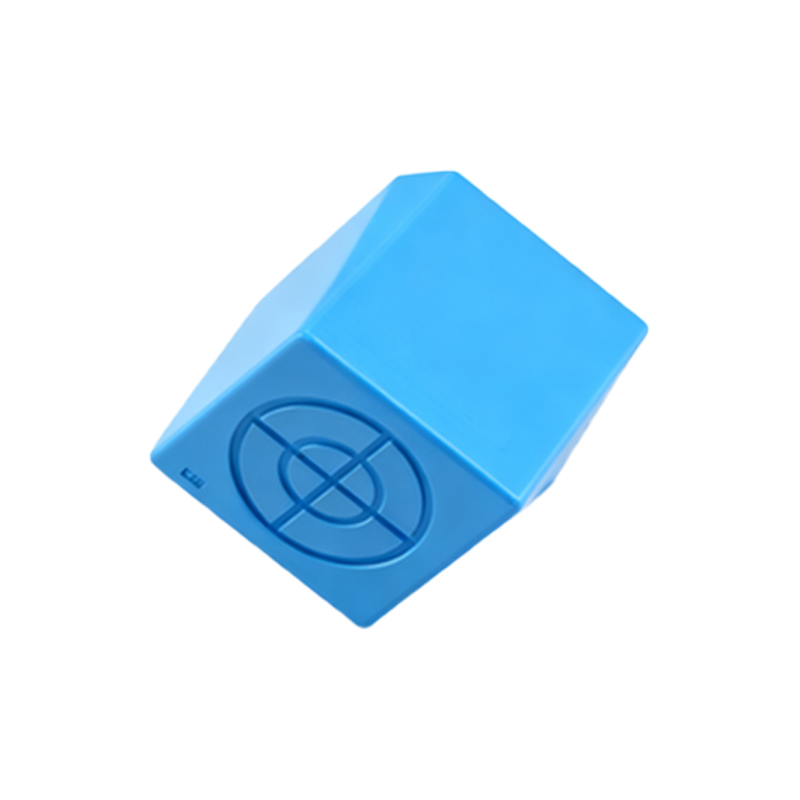
Proximity sensors are not universal tools. Knowing their failure zones is critical.
1. Extreme Electromagnetic Noise: Deploying a standard DC sensor within 3 meters of large variable frequency drives (VFDs) or arc furnaces is a recipe for erratic switching or permanent latch-on. The electromagnetic interference can swamp the sensor's detection circuit. In these zones, only fully analog-output sensors or specially shielded "welding-field immune" models have a fighting chance.
2. Non-Homogeneous or Coated Targets: Detecting a seam on a carbon fiber composite or the fill level of granular carbon powder? Forget standard inductive models. Their eddy current principle fails. Here, capacitive sensors seem like the answer, but their sensitivity to moisture and material density drift makes them unreliable. Often, a mechanical limit switch or a completely different technology (e.g., ultrasonic) is the wiser, if less elegant, choice.
3. High-Speed, Low-Mass Targets: Detecting a M3 stainless steel nut on a conveyor at 5 m/s with an 8mm sensor? The dwell time is too short for a reliable output pulse. The sensor may "see" it but fail to trigger the PLC's input card reliably. You need a sensor with a frequency response (switching frequency) at least 3-5 times higher than the calculated pulse arrival rate, a specification often overlooked in favor of range.
Counter-Intuitive Conclusions: Data-Driven Heresies
1. Sometimes, Less Sensitivity is More: In environments saturated with metallic dust (e.g., machining centers), cranking up the sensitivity potentiometer on a sensor to get more range is a fatal error. It turns the sensor into a dust detector, causing false triggers. The correct move is to reduce sensitivity, accept a shorter guaranteed sensing range, and install the sensor closer to the target. Reliability skyrockets.
2. The "Ruggedized" Premium Can Be a Trap: Manufacturers sell "heavy-duty" or "extreme duty" sensors at a 300% premium. However, if the failure point is the cable entry or the connector—which it often is—you've wasted capital. A standard sensor with a proper, strain-relieved conduit connection or a molded cable in a protected routing path will frequently outlast a premium sensor with a poorly implemented M12 connector in a high-vibration zone. The money is better spent on superior mechanical protection.
3. Temperature Inversion on Sensing Performance: For inductive sensors, extreme cold (-30°C and below) can be more detrimental than extreme heat (up to the spec limit). The lubricant in the sensor's core assembly can thicken, slowing the response time beyond the spec sheet's stated values. Meanwhile, at a steady 100°C, a sensor might perform perfectly at its derated range. The worst-case scenario is not the highest temperature, but rapid thermal cycling, which stresses solder joints and cracks ferrite cores through differential expansion.
The bottom line: Your sensor strategy must be built on environmental forensics, not catalog promises. Profile your real-world EMI, temperature cycles, contaminant types, and target material