For two decades, I've specified, installed, and cursed laser Doppler anemometers (LDAs) and their variants in environments ranging from pristine labs to offshore platforms caked in salt and grime. Forget the glossy datasheets. Here’s what you won't find in the marketing brochures.
Experience Correction: The Gritty Reality vs. Theoretical Specs
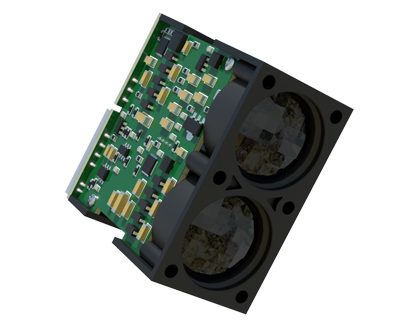
The advertised ±0.1% accuracy and sub-m/s resolution are lab fantasies. In the real world, the dominant error source isn't the sensor's optics or signal processing; it's *particulate seeding failure*. The core assumption of LDA is the presence of sufficient, correctly sized scattering particles. In "clean" industrial gas flows, HVAC ducts, or high-altitude test stands, the flow can be virtually particle-free. The sensor will output a beautifully stable, precise, and utterly *wrong* zero velocity. I've seen control systems fail because they trusted a "zero" reading from an unseeded flow. The fix? Mandatory, controlled seeding injection for validation, not as an afterthought. Furthermore, window fouling isn't a gradual signal衰减; it's a binary cliff. A micron-thick film of oil mist or amine carryover on the probe window doesn't just reduce signal strength—it introduces phase distortion, scrambling the Doppler burst signal and causing catastrophic, silent data corruption long before the "low signal" alarm triggers.
Boundary Conditions: When This Technology Breaks
Deploying a laser anemometer here is professional malpractice. First, high-density particulate flows, like pneumatic conveying or raw flue gas post-scrubber. It's not just signal attenuation; it's multiple scattering, where photons bounce off several particles before detection, generating phantom velocity vectors that bear no relation to the actual flow. The data is garbage. Second, condensing or two-phase (liquid/gas) environments. A droplet passing through the measurement volume creates a refractive index mismatch, bending the laser beams and shifting the control volume's position unpredictably. Your measurement point is now somewhere else. Third, high-vibration environments on rotating machinery or near compressors. While the sensor head can be isolated, the optical path—especially for fiber-optic probes—experiences micro-bending, inducing noise that mimics low-frequency turbulence, rendering spectral analysis useless. Finally, combustion zones with significant refractive index gradients. The shimmering you see over a hot grill? That's beam steering. Your laser beams are bent, defocused, and miss their intended intersection point entirely. The measurement volume vanishes.
Counter-Intuitive Conclusion: Higher Power Isn't Always Better
The intuitive solution to weak signals in dirty environments is to crank up the laser power. This is often a fatal mistake. Beyond a certain threshold, increased laser power on contaminated particles or surfaces induces photophoresis—a radiation pressure effect that literally pushes particles away, altering the very flow you're trying to measure. In hydrocarbon streams, high-power laser heating of soot or droplets can create localized thermal plumes, generating convective artifacts. My data shows that in many industrial smokestack applications, a medium-power, high-efficiency photon-counting system paired with aggressive purge protection yields more accurate and stable data than a brute-force high-wattage system. The sensor's intelligence in rejecting spurious bursts matters more than its raw optical muscle. Another non-intuitive insight: the most critical calibration isn't for velocity, but for beam intersection geometry. A 0.01-degree misalignment from thermal drift or mechanical shock introduces a velocity bias error orders of magnitude greater than the electronics' inherent error. Trusting the factory alignment after field installation is a recipe for systematic error. The first tool in your kit should be a high-precision interferometric beam alignment fixture, not a flow calibrator.