For two decades on the factory floor and in harsh field deployments, I've watched engineers and procurement teams make the same costly mistake: treating "proximity sensor" as a mere synonym for "sensor." This linguistic laziness breeds technical blindness. Let's cut through the academic fluff. A proximity sensor is a functional subset defined by its non-contact detection of nearby objects. Calling all sensors "proximity sensors" is like calling all vehicles "racing cars"—it's dangerously reductive. The real value isn't in definitions but in knowing where and how these devices break, deceive, and defy textbook expectations.
Experience Correction: The Myth of Rated Specifications
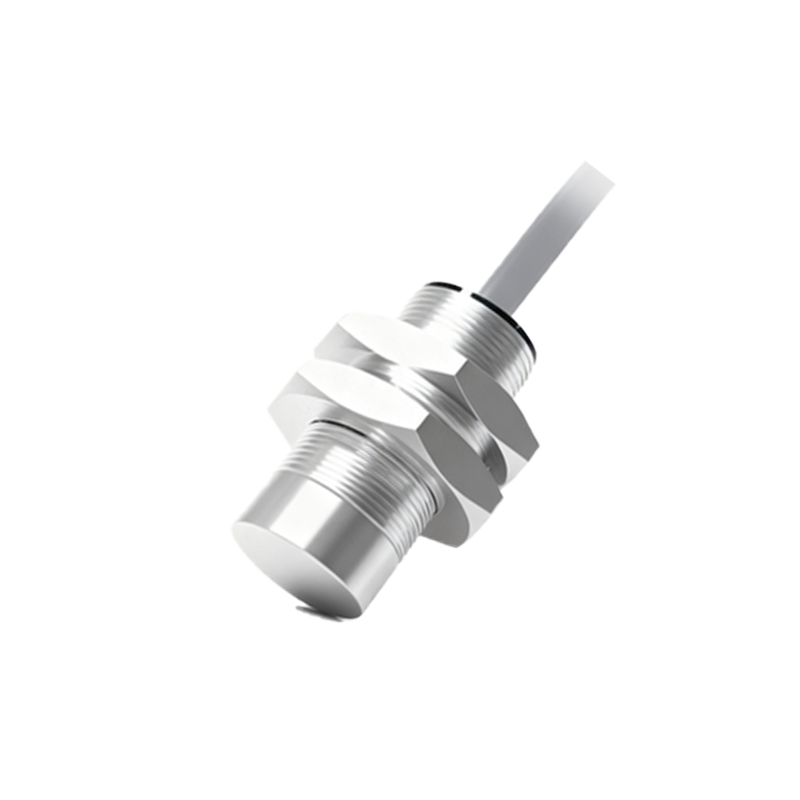
Datasheet parameters are fairy tales written in ideal lab conditions. Take the standard Inductive Proximity Sensor rated for 10mm detection on mild steel. In practice, that range collapses by up to 40% when targeting austenitic stainless steel (304, 316). The correction factor isn't a minor footnote; it's a operational mandate. For capacitive sensors touting liquid level detection, the dielectric constant of the medium is king. A sensor calibrated for water (εr≈80) will utterly fail to reliably detect a hydrocarbon (εr≈2) at the same distance, regardless of the advertised sensing range. The most common failure I've diagnosed isn't hardware malfunction but the "application-spec mismatch." Relying on nominal sensing distance without factoring in target material, temperature drift (often 0.1% of the sensing distance per °C beyond 25°C), and sensor face contamination from oil or metal chips is a direct ticket to unplanned downtime.
Boundary Conditions: When to Abandon Ship
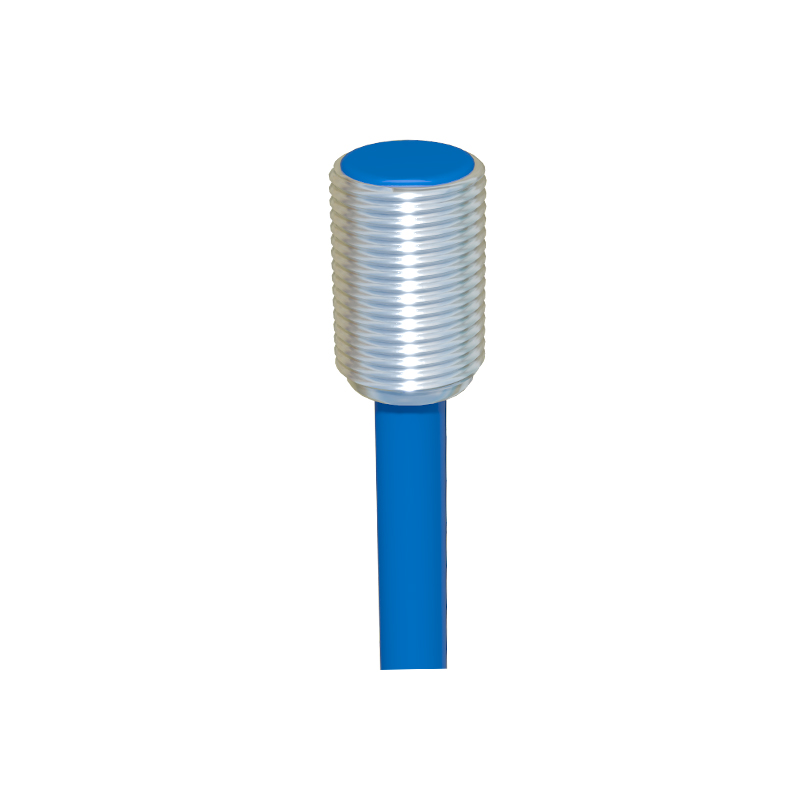
Knowing when not to use a proximity sensor is more critical than selecting one. Here are the high-risk red zones:
1. Extreme Electromagnetic Interference (EMI) Environments: Placing a standard inductive proximity sensor near variable frequency drives (VFDs) or arc welders is a recipe for phantom switching. The sensor may trigger without a target present, creating chaotic and dangerous machine behavior. In these scenarios, even shielded models have limits. The solution often isn't a "better" proximity sensor but a shift to a fundamentally different technology, like fiber-optic or ultrasonic sensing.
2. Targets with Extreme Surface Velocity: A sensor rated for a 100 Hz switching frequency might technically detect a fast-moving object, but the effective sensing window becomes minuscule. For a target moving at 50 m/s, the temporal window for a reliable switch can be less than a millisecond. Vibration and minute alignment errors then cause intermittent failures that are nearly impossible to diagnose. In high-speed bottling or packaging lines, this manifests as random missed counts.
3. Ambient Chemical or Physical Abuse: The IP67/IP69K rating promises protection, but prolonged direct spray of high-pressure, high-temperature caustic cleaners will eventually compromise seals. The failure mode is insidious—internal condensation leading to erratic behavior days or weeks after the cleaning event. In such conditions, a sacrificial physical barrier or a remote sensing head with a hardened face is non-negotiable.
Counter-Intuitive Conclusion: Sometimes, Less Sensing is More
The most counter-intuitive, data-backed insight from the field is this: Increasing sensor sensitivity or switching frequency often decreases system reliability. This flies in the face of the "more is better" engineering instinct. A highly sensitive capacitive sensor adjusted to detect a thin plastic film will also detect condensation, dust buildup, or a passing shadow. The signal-to-noise ratio plummets. In metal detection, an overly sensitive inductive sensor starts reacting to minute vibrations in its own mounting bracket or background EMI, generating false positives.
The data is clear: systems tuned for 90-95% of the sensor's maximum theoretical performance envelope exhibit dramatically higher mean time between failures (MTBF) than those pushed to 99%. That last 5-10% of performance resides in the zone of unstable environmental variables and diminishing returns. The professional move is to de-rate the sensor—select a model with a longer nominal range than strictly necessary and operate it in its mid-range. You trade a marginal theoretical capability for a substantial gain in real-world robustness. This principle alone has solved more "ghost" operational issues than any sensor upgrade program.
Ultimately, the mastery of proximity sensing lies not in catalog specifications, but in a deep, almost cynical understanding of its failure modes. The sensor is not an oracle; it is a component with strict physical boundaries. Your system's reliability is defined by how well you respect those boundaries, not by how cleverly you try to circumvent them.