For two decades, I've watched proximity sensors fail in ways the manuals never mention. The industry is saturated with spec-sheet comparisons and basic operational theory, which is useless when a $500 sensor is tasked with surviving a steel mill or a sub-zero logistics yard. Let's cut to the chase with actionable, field-forged intelligence.
Experience Correction: The Gaps Between Lab Specs and Field Reality
The advertised sensing distance is the first casualty of real-world conditions. A sensor rated for 15mm on mild steel will see its effective range drop by 40-50% when targeting hot-rolled steel with a scaly, oxidized surface. The electromagnetic field is disrupted by the inconsistent surface conductivity, a fact never highlighted in product selection guides. Similarly, the much-touted IP67/IP69K ratings create a false sense of security. While they protect against ingress, they say nothing about performance under rapid thermal cycling. I've documented cases where condensation formed inside a sealed housing in a food packaging plant, triggered by the cycle between CIP (Clean-in-Place) hot wash and chilled room ambient air. The sensor remained "waterproof" but failed due to internal shorting. Another critical deviation is response time. Under ideal conditions, a 1ms response is achievable. However, when sensing a vibrating target—like a misaligned piston rod—the effective response time can double. The sensor locks onto the peak and trough of the vibration cycle, causing a lag in the PLC's ability to detect true position, leading to timing errors in high-speed assembly.
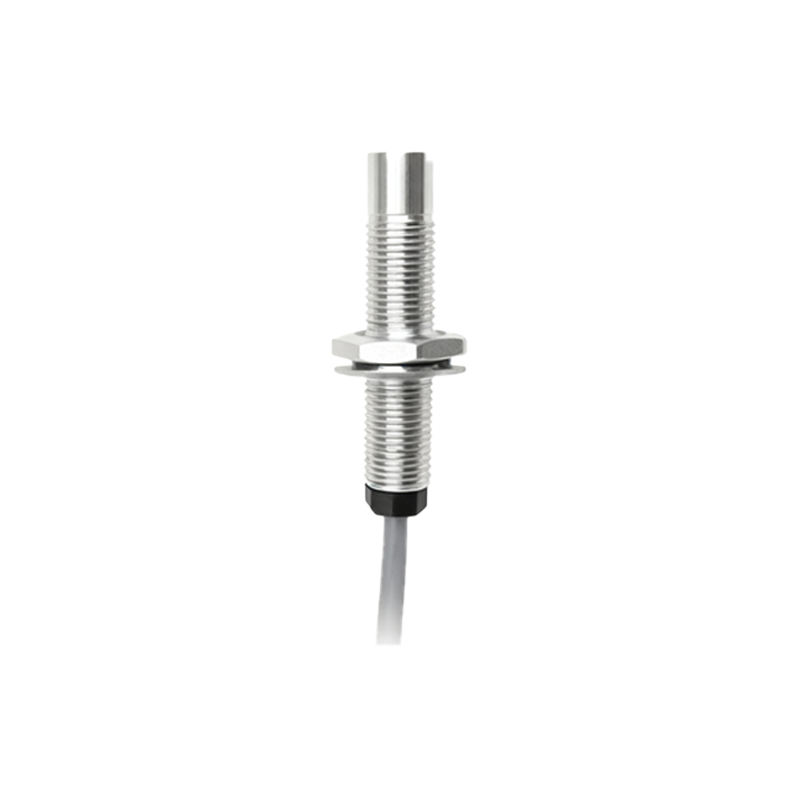
Boundary Conditions: When to Walk Away
Knowing when not to use a technology is more valuable than knowing its features.
1. Ferrous Swarf and Conductive Dust Environments: Inductive sensors are a catastrophic choice in machining centers generating fine ferrous powder. The particles adhere to the active face, gradually shielding the sensing field and causing a permanent degradation of sensing distance until failure. Capacitive or ultrasonic sensors are mandatory here, despite their other trade-offs.
2. Extreme Static or Electromagnetic Interference: In facilities with large DC motors or arc welders, the ambient electromagnetic noise can saturate an inductive sensor's oscillator. The result isn't intermittent failure, but a "stuck-on" state that presents a critical safety hazard. In these zones, fiber-optic or laser-based systems are the only reliable options.
3. Non-Homogeneous or Low-Density Targets: A capacitive sensor tasked with detecting a cardboard box will perform erratically if the box's moisture content varies. The dielectric constant changes, altering the sensing point. This is not a sensor malfunction; it's a fundamental mismatch between technology and application physics.
4. High-Pressure Washdown with Certain Chemicals: While many sensors boast chemical resistance, prolonged exposure to high-pressure sprays of halogen-based sanitizers (common in pharmaceuticals) can permeate cable jackets and connector seals, leading to corrosion of the terminations. The sensor body survives, but the connection point fails.
Counter-Intuitive Conclusions: Data-Driven Insights That Defy Common Wisdom
1. A More Expensive Sensor Can Increase Total System Cost: Specifying a ultra-precision laser sensor for a crude position check on a dirty conveyor is a cost disaster. The real expense emerges from the ancillary needs: cleaner air, vibration isolation mounts, and protective enclosures to maintain that precision in a harsh setting. A robust, lower-accuracy sensor often delivers higher overall equipment effectiveness (OEE) by reducing mean time between failures (MTBF).
2. Redundancy Can Decrease System Reliability: The instinct to install two identical sensors for critical detection often backfires. A common-mode failure—like coating buildup or EMI—will likely disable both simultaneously. True robustness comes from diverse redundancy: pairing an inductive sensor with a mechanical limit switch or a pneumatic back-up. Different failure modes ensure at least one path remains functional.
3. The "Best" Mounting is Often Theoretically Incorrect: Textbooks insist on keeping the sensor face clear. However, in high-impact environments, recessing the sensor 2-3mm behind a hardened steel wear plate, and then recalibrating for the reduced effective range, can increase mechanical lifespan by 300% with only a 15% penalty in sensing performance. You trade a minor spec for monumental durability.
4. Temperature Compensation Can Be the Enemy: Most high-end sensors feature temperature compensation to maintain stability. In a rapidly cycling oven door application, this feature becomes a liability. The sensor is constantly recalibrating itself based on case temperature, while the target temperature is also fluctuating, creating an unpredictable hysteresis loop. Sometimes, a sensor with a known, stable temperature drift is preferable, as the error