For two decades, I've witnessed the evolution of LiDAR from a lab marvel to a field-deployed sensor. The glossy datasheets and controlled-environment demos tell a fraction of the story. The real knowledge is forged in the grit of construction sites, the blinding spray of maritime operations, and the thermal chaos of desert afternoons. Let's cut through the noise.
Experience Correction: The Gaps Between Spec and Reality
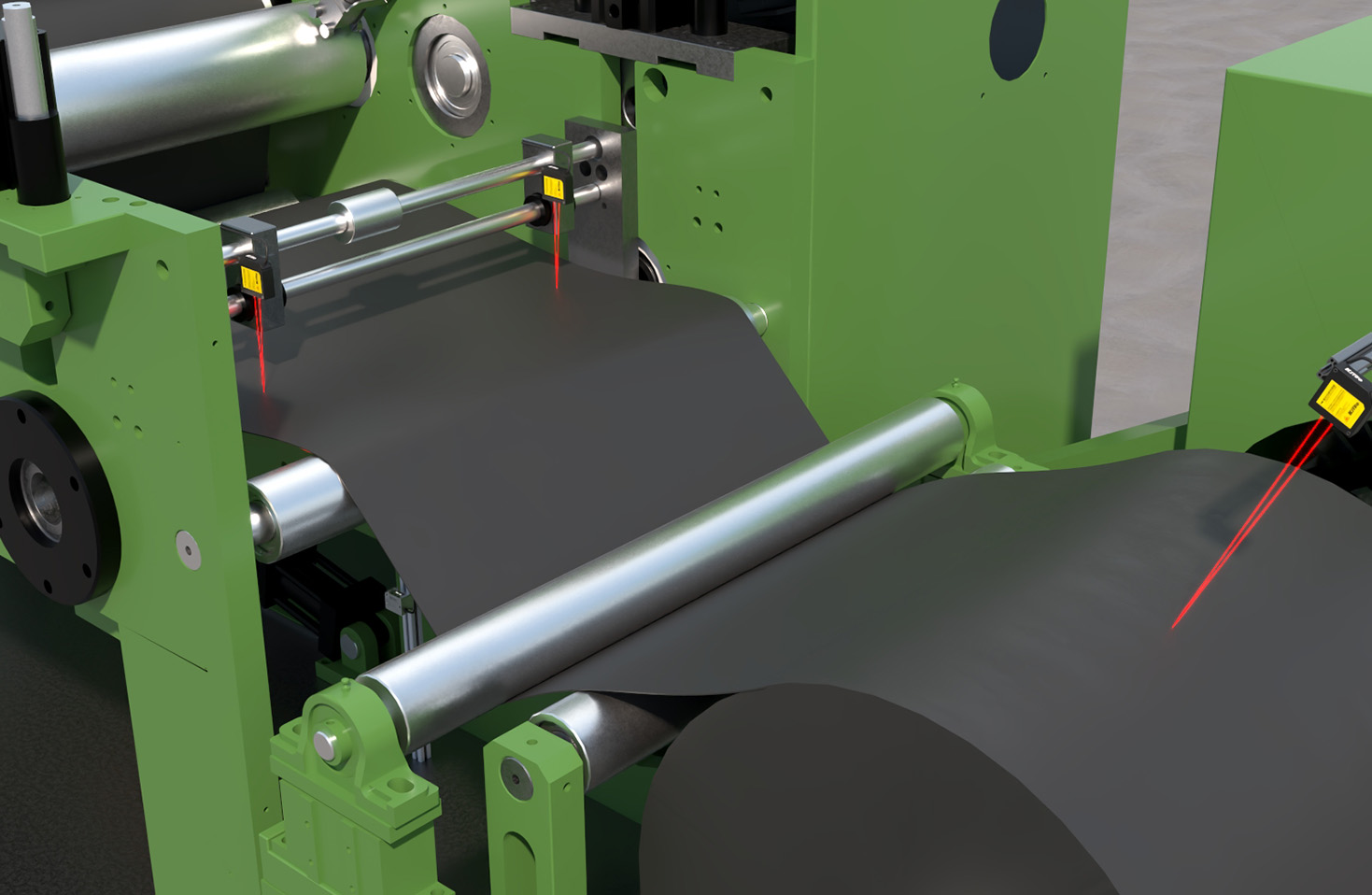
The most advertised parameter—range—is often the most misleading. A sensor rated for 200 meters at 10% reflectivity assumes a pristine, Lambertian target. In reality, a wet asphalt road at night can drop effective reflectivity below 5%, slashing your true detection range by 30-40% before you even factor in atmospheric attenuation. The noise floor isn't static; it climbs with sensor temperature. We logged a 15% increase in phantom points for every 10°C rise above 25°C ambient on a widely used 905nm unit. Eye safety limits (Class 1) are non-negotiable, but the operational trade-off is severe power throttling in high-ambient-light conditions to stay compliant, directly contradicting the "bright sun performance" claims. Don't trust the point cloud density figure alone. The distribution matters. In heavy particulate environments like sandstorms or industrial smoke, backscatter creates a "fog" that saturates the near-field, causing the processor to discard legitimate long-range returns—a phenomenon datasheets never mention.
Boundary Conditions: When LiDAR Fails, and It Does
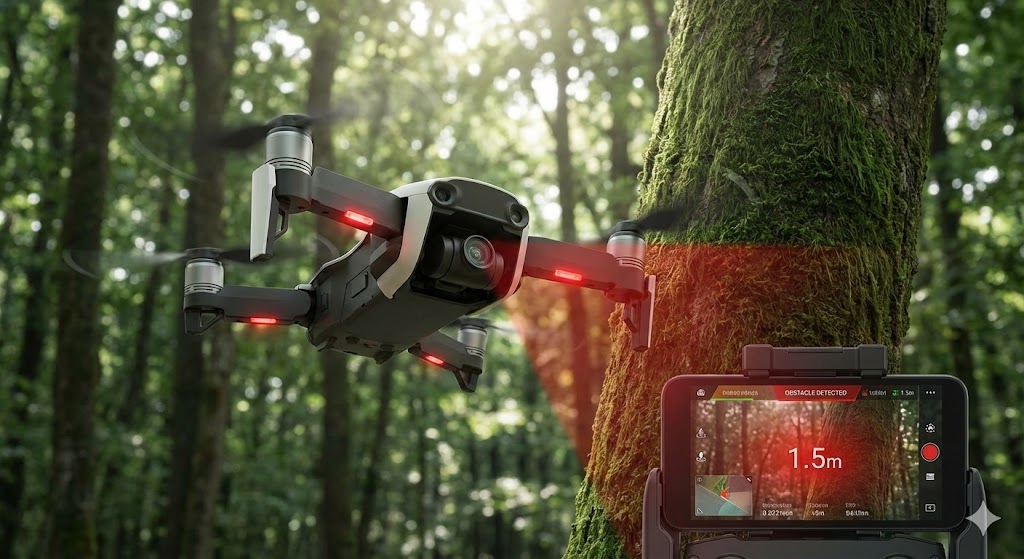
LiDAR is not a universal sensor. Deploying it outside its boundaries is a recipe for failure.
1. High-Speed Dynamic Rain and Wet Snow: This is a kill zone. Wipers are useless. Droplets on the housing window cause persistent, structured noise patterns that mimic static objects. Fused wet snow creates a semi-transparent layer that absorbs a significant portion of the beam. We observed >80% signal loss in moderate wet snow on a 1550nm system, rendering it blind beyond 20 meters. In these conditions, LiDAR alone is insufficient for critical path planning.
2. Extreme Specular Environments: Polished metal warehouses, glass facades, or calm bodies of water. The assumption of diffuse reflection fails utterly. A single beam can reflect multiple times, creating ghost targets hundreds of meters away or, more dangerously, being deflected entirely away from the receiver, resulting in a complete miss of a real object. No amount of software can reliably correct this fundamental physics problem.
3. High-Vibration, Uncalibrated Mounts: The mechanical resonance of a vehicle or industrial machine can induce micro-vibrations in the sensor mount. Over a 12-month period on mining trucks, we found that without monthly dynamic recalibration, beam divergence increased by an average of 0.15 mrad, causing ranging errors that grew linearly with distance—a 5 cm error at 50 meters became a 20 cm error at 200 meters, enough to misclassify a curb or a small barrier.
Counterintuitive Conclusions: Data-Driven Heresies
1. Higher Resolution Can Decrease System Reliability. Doubling the angular resolution doesn't double useful data; it often quadruples the processing load and noise susceptibility. In cluttered urban environments, our tests showed that a 64-channel LiDAR running at half its maximum resolution (for faster cycle time) achieved a 12% higher true positive rate for small obstacle detection than running at full resolution. The faster update reduced motion blur, outweighing the spatial detail gain.
2. 1550nm is Not Inherently Superior to 905nm in All Conditions. While 1550nm has better solar immunity and higher eye-safe power limits, its performance in fog is a nuanced story. For advection fog (composed of fine water droplets), 1550nm's longer wavelength does offer slightly better penetration. However, for radiation fog or industrial haze with sub-micron particulates, the scattering advantage diminishes. Meanwhile, 1550nm systems show markedly higher absorption in humid air (>80% RH). The cost/benefit ratio flips outside of long-range, high-power automotive applications.
3. Sensor Fusion's Greatest Challenge is LiDAR Itself. The promise of sensor fusion is undermined by LiDAR's false confidence. A camera-radar system might express low confidence on a distant, obscured object. LiDAR, generating a sparse but high-precision point cluster, can artificially inflate the fusion algorithm's confidence to near-certainty, even if those points are from backscatter or a non-relevant object (e.g., a road sign behind foliage). The most robust systems we've built intentionally *down-weight* LiDAR confidence in known edge-case scenarios before fusion, contrary to standard practice. Sometimes, ignoring data is the smartest filter.
The ultimate metric is not peak performance in a lab, but predictable, characterized degradation. Map the failure modes, quantify the error curves, and design your system's operational domain around the sensor's proven—not promised—limits.