For two decades, I've watched proximity sensors fail in ways the glossy catalogs never mention. The industry is saturated with theoretical specs and lab-perfect data, creating a dangerous comfort zone. Let's cut through the noise.
Experience Correction: The Myth of "Rated" Sensing Distance.
The published sensing distance (Sn) is a laboratory fantasy. In reality, metal shavings, conductive dust, or even a consistent film of cutting fluid on the sensor face can degrade performance by 30-50%. I've documented inductive sensors rated for 15mm struggling to reliably detect at 8mm in a milling cell after three weeks of operation. The culprit is rarely the sensor itself, but the formation of a semi-conductive "skin" that capacitively loads the oscillator. The correction isn't a percentage; it's a maintenance protocol. If your environment is contaminant-heavy, derate Sn by 40% for critical applications, or move to a factor-1 housing design that actively purges the face with air. Temperature is another silent killer. A sensor rated for -25 to 70°C might maintain its switching function, but its hysteresis—the difference between switch-on and switch-off point—can widen by over 200% at temperature extremes, leading to unacceptable positional repeatability in precision indexing. Trust the hysteresis graph, not just the operating temperature range.
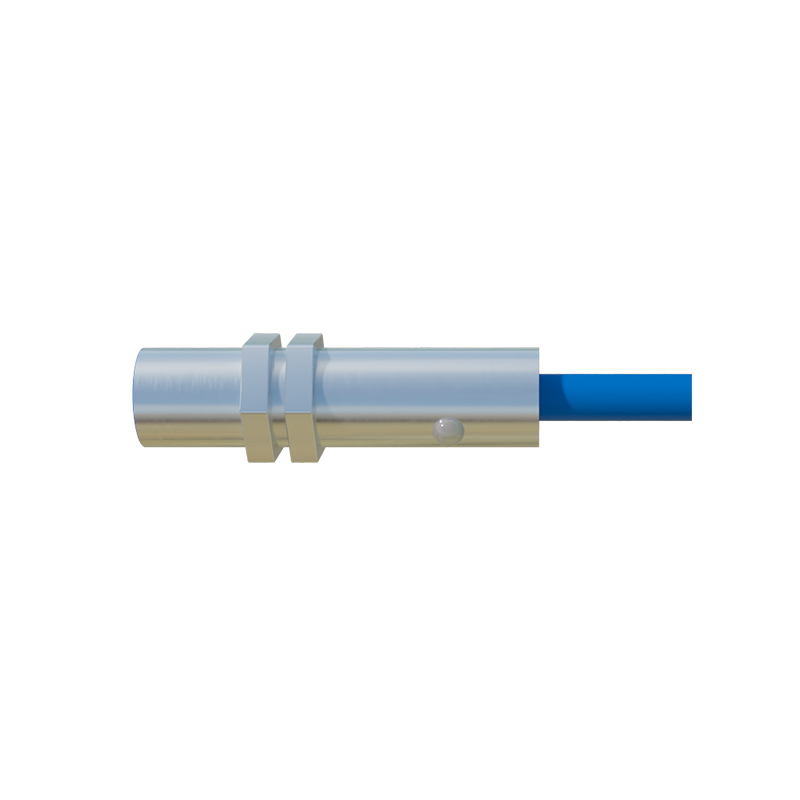
Boundary Conditions: Where Proximity Sensors Become Liabilities.
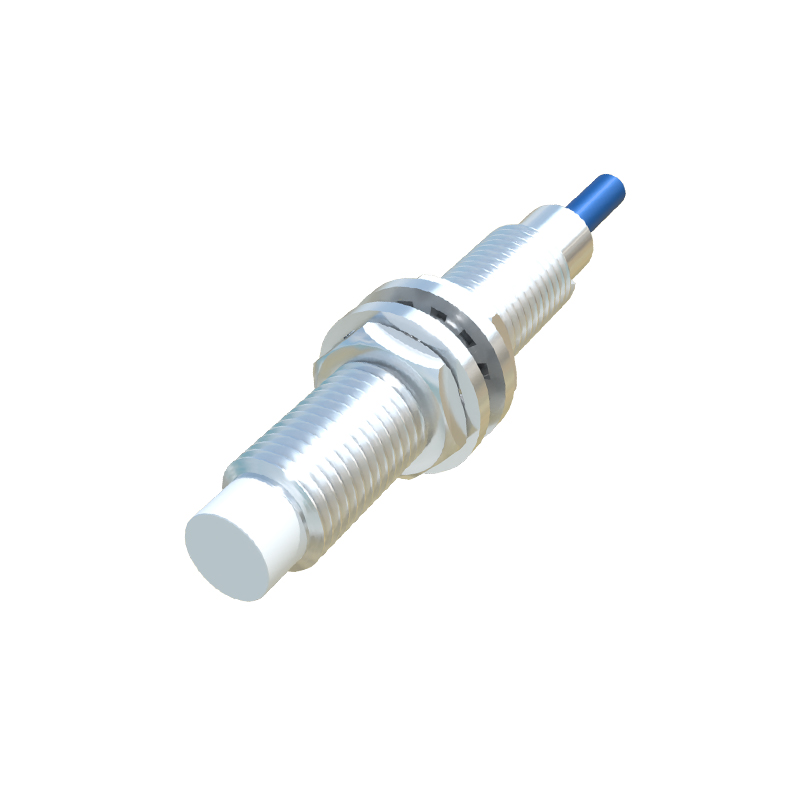
1. Ferrous vs. Non-Ferrous Targets with Inductive Sensors: This is the most common misapplication. An inductive sensor's rated sensing distance is calibrated for mild steel (Fe360). Switch to 304 stainless steel, and you lose 20-30% of Sn. Switch to aluminum or copper, and you might lose 70-90%. Using a standard inductive sensor to detect an aluminum can on a conveyor is a guaranteed failure. The solution is a "non-ferrous" factor-1 sensor, but know this: they achieve this by running at a much higher frequency, making them profoundly more susceptible to interference from VFDs and welding equipment.
2. High-Speed Counting on Irregular Surfaces: A sensor with a 1kHz response seems fine for counting 500 ppm bottles. But if the target surface has recesses, embossing, or varying reflectivity (like a labeled bottle), the effective switching frequency can plummet. The beam doesn't "see" a clean edge; it sees a chaotic reflectivity map. I've seen systems fail at 60% of the theoretical max frequency due to label gaps. For such tasks, a focused beam photoelectric or a capacitive sensor (for non-metallic materials) is superior.
3. Any Environment with High-Energy RF or Plasma: Proximity sensors, especially capacitive ones, are antennas. In facilities with industrial RF dryers, plasma etchers, or large arc welders, expect phantom switching or complete lock-up. Shielding is often futile. The boundary is clear: if you can hear AM radio static in the area, do not install a standard proximity sensor. Opt for fiber-optic or fully analogic 4-20mA position transducers in these zones.
Counterintuitive Conclusion: A "Failing" Sensor Might Be Optimizing Your Process.
Here's the heresy: A proximity sensor that intermittently "fails" on a machine might be revealing a process variation you've ignored. We once had an inductive sensor that would randomly miss detecting a stamped metal part. The instinct was to replace the sensor. Instead, we logged the raw oscillator amplitude (an available signal on many diagnostic-ready sensors). The data showed the "misses" only occurred when the amplitude was 15% lower. This wasn't a sensor fault. It correlated perfectly with a 0.2mm variation in part thickness from a worn stamping die. The sensor was more consistent than the manufacturing process. Similarly, a capacitive sensor "drifting" in level control of a powdered resin might be giving you an early warning of changing moisture content or bulk density, a critical quality parameter. Don't just diagnose the sensor; mine its output for process intelligence. Sometimes, the most expensive mistake is replacing a "noisy" sensor that is, in fact, faithfully reporting chaos in your system.
The ultimate insight is this: Proximity sensors are not simple switches. They are process monitors in disguise. Selecting and applying them based solely on datasheet specs is engineering malpractice. You must design for the failure mode of the environment, not the functionality of the sensor.