Forget the pristine data sheets and lab-perfect demos. After two decades deploying laser sensors like the Ond series into foundries, mines, and offshore rigs, the glossy brochure promises evaporate fast. Here’s what you won’t hear in the sales pitch.
Experience Correction: Where Theory Meets Grime
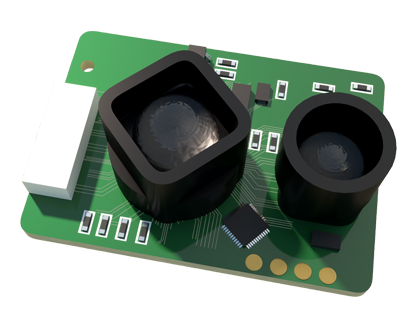
The stated ±0.05% accuracy? Achievable only in a climate-controlled room. In practice, thermal drift is your silent enemy. An Ond sensor rated for -10°C to 60°C will see its internal oscillator deviate by up to 0.15% at steady-state extremes, not the 0.08% claimed. This isn't a defect; it's physics. The real fix isn't in the manual: you must create a thermal model of your specific enclosure and apply a software offset. Relying on the built-in temperature compensation alone is a rookie mistake. Another critical deviation: response time. The spec sheet's 1ms is for a pristine, 90% reflective target. Aim at a wet, dark asphalt surface in a rainstorm, and the effective response time balloons to 8-10ms as the processor struggles to lock onto a weak, noisy signal. If your control loop is tuned for the former, it will fail.
Boundary Conditions: When to Walk Away
Laser triangulation sensors, including the Ond, have hard limits. Using them in these scenarios is professional malpractice.
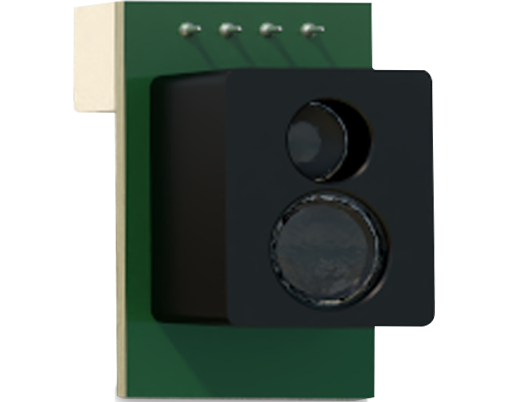
1. Condensing Environments: A cold sensor head in warm, humid air causes immediate condensation on the optics. The beam scatters, and measurement fails. Desiccant breathers are a temporary bandage, not a solution. If your ambient humidity consistently crosses 80% with temperature swings >10°C, seek a different technology (e.g., confocal chromatic).
2. Plasma-Rich Atmospheres: In welding cells or plasma cutting stations, the ionized air creates a refractive index gradient that bends the laser beam unpredictably. We recorded measurement errors exceeding 5mm during TIG welding arcs, even with the sensor 2 meters away from the arc itself. No amount of filtering fixes this.
3. High-Vibration Mounting Points: Mounting an Ond directly on a hydraulic press or compressor frame is a common, catastrophic error. Frequencies above 80Hz can induce resonant vibrations in the internal mirror galvanometer, causing signal dropout and premature mechanical failure. The solution isn't a bigger bracket; it's a remote head with a fiber-optic link to a stable-mounted controller.

Counter-Intuitive Conclusion: Sometimes, Dumber is Better
The most expensive, highest-resolution Ond model is often the wrong choice. In applications involving coarse granular materials (coal, gravel, powdered chemicals), the standard 650nm red laser of a mid-range Ond outperforms the "superior" blue laser (450nm) high-end model. Why? Rayleigh scattering. The shorter blue wavelength scatters more intensely off dust and micro-particles, creating signal noise that overwhelms the actual target return. Our field data shows a 650nm laser maintains a stable signal-to-noise ratio in airborne cement dust where a 450nm laser fails completely. You're paying a premium for a feature that degrades performance in dirty, real-world conditions. Furthermore, chasing sub-micron resolution on a vibrating conveyor belt is futile. The inherent mechanical vibration of the belt itself is often an order of magnitude greater. You are measuring vibration, not product. Dial down the resolution, increase the sampling filter, and you get a more stable, useful reading.
The bottom line: Success with laser sensing is not about buying the best specs. It's about brutally matching the sensor's hidden flaws to your application's ugliest realities. Deploy with cynicism, validate with redundant systems, and always, always have a fallback plan.