For two decades, I've watched proximity sensors fail in ways the glossy brochures never mention. Forget the idealized lab specs. Real-world performance is a negotiation between the sensor and a hostile environment. Here’s the unvarnished truth from the field.
Experience Correction: The Myth of "Stated Range"
The rated sensing distance on a datasheet is a fantasy under industrial duress. A 10mm inductive sensor rated for mild steel? In practice, that distance collapses by 30-50% when targeting oxidized, scaly hot-rolled steel, or when coated with even a thin, inconsistent layer of mill grease. The electromagnetic field dampens unpredictably. For capacitive sensors touting non-metallic detection, ambient humidity is the silent killer. A 20% shift in relative humidity can cause a 15% drift in the sensing point for materials like wood or granular polymers, leading to false triggers or missed detections. The fix isn't a "better" sensor; it's a mandatory 50% derating of the nominal range during system design and a rigorous environmental lockout procedure during calibration.
Boundary Conditions: When to Walk Away
These technologies have hard failure modes. Understanding them is cheaper than the downtime they cause.
1. Inductive Sensors in Swarf-Coolant Soup: The omnipresent slurry in CNC machining will eventually infiltrate the "sealed" housing. More critically, conductive metallic particles (aluminum, iron fines) suspended in coolant can form a pseudo-shield, attenuating the sensing field and causing intermittent failure. Do not use standard inductive sensors here. If you must, specify a factor-1 (all-metal) sensor with a PTFE-faced sensing surface and plan for aggressive, quarterly maintenance.
2. Capacitive Sensors for Bulk Material Level: Using them to detect the level of powdered or granular materials in a silo is a high-stakes gamble. Material dielectric constant varies with compaction, moisture content, and particle size distribution. You're not sensing level; you're sensing a composite electrical property that correlates poorly with volume under dynamic conditions. The result is overfill or run-out. In these applications, they are a diagnostic aid at best, never a primary control sensor.
3. Ultrasonic Proximity in Vacuum or High-Noise Environments: No medium, no signal. This is obvious for vacuum. Less obvious is a high-pressure air exhaust zone. The aerodynamic noise can saturate the receiver, causing a complete lock-up. Similarly, a stepper motor's ultrasonic frequency vibration can be misinterpreted as a return echo.
Counterintuitive Conclusion: Sometimes a "Less Accurate" Sensor is More Reliable
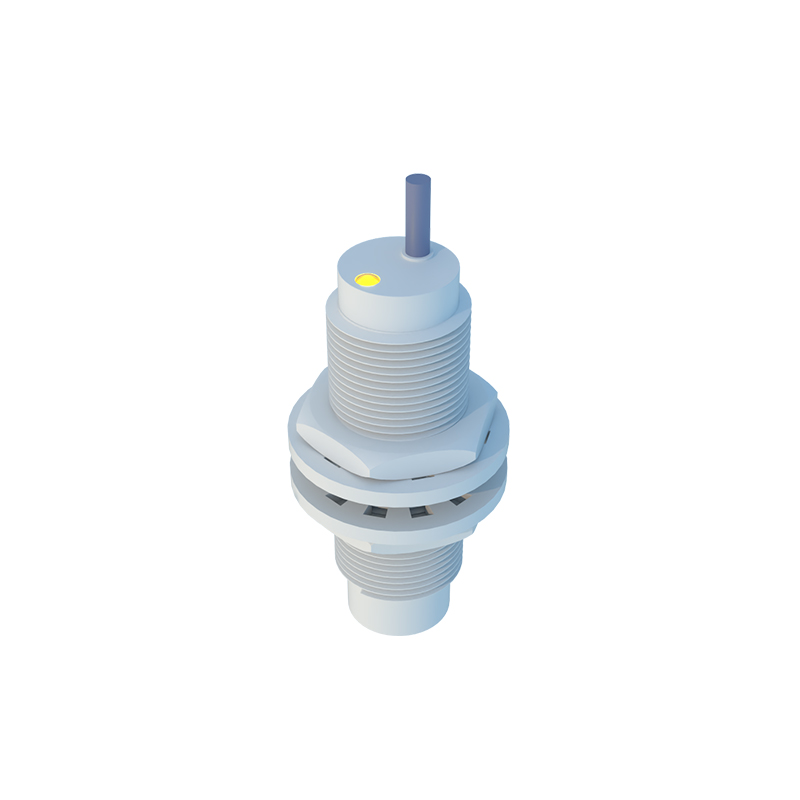
The pursuit of micron-level precision in proximity sensing is often misguided. A high-resolution, laser-based triangulation sensor on a vibrating conveyor belt will output beautifully precise, utterly useless data as the target oscillates. The noise becomes the signal. In high-vibration, dirty environments, a rugged, low-resolution, binary "on/off" inductive barrel sensor with a wide hysteresis band provides a more stable and reliable logic signal. Its "inaccuracy" – its inherent damping and slower response – acts as a mechanical low-pass filter, rejecting the environmental noise that cripples a more sophisticated device. The key metric shifts from "precision" to "predictable repeatability under stress." Often, the solution is not a more complex sensor, but a simpler one paired with intelligent mechanical design (e.g., a stabilizing target flag) to create a cleaner sensing condition.
The ultimate insight is this: sensor selection is not about matching a catalog number to an application name. It is a systems engineering discipline that must account for the true state of the target material, the environmental contaminants, and the mechanical chaos of the installation. The datasheet is the starting point for an argument with reality, and you must argue from a position of hardened experience.